- Hans Weber
- March 21, 2026
DON CAMILLO’S REBELLIOUS FATHER
The Miner in the Writing Room
With Don Camillo and Peppone, Giovannino Guareschi created one of the most beloved literary worlds in Italy—humorous, humane, and at the same time politically sharp. Yet behind the cheerful village stories stood an author who regarded writing as a hard duty and who, throughout his life, had the courage to dissent against the spirit of the age, against parties, and even against his own camp. Marco Gallina’s biography paints the portrait of an inconvenient man of conscience whose stance seems more relevant today than ever.
Writing should be fun. At least, that is what a reader of one of the amusing Don Camillo and Peppone stories might assume. But for their creator, Giovannino Guareschi (1908–1968)—who, incidentally, bore an uncanny resemblance to the cinematic Peppone—it was above all one thing: work. Hard, daily work, like labor in a mine, which he pursued dutifully throughout his life. Work that made him one of Italy’s most popular authors—and also one of its most fiercely attacked.
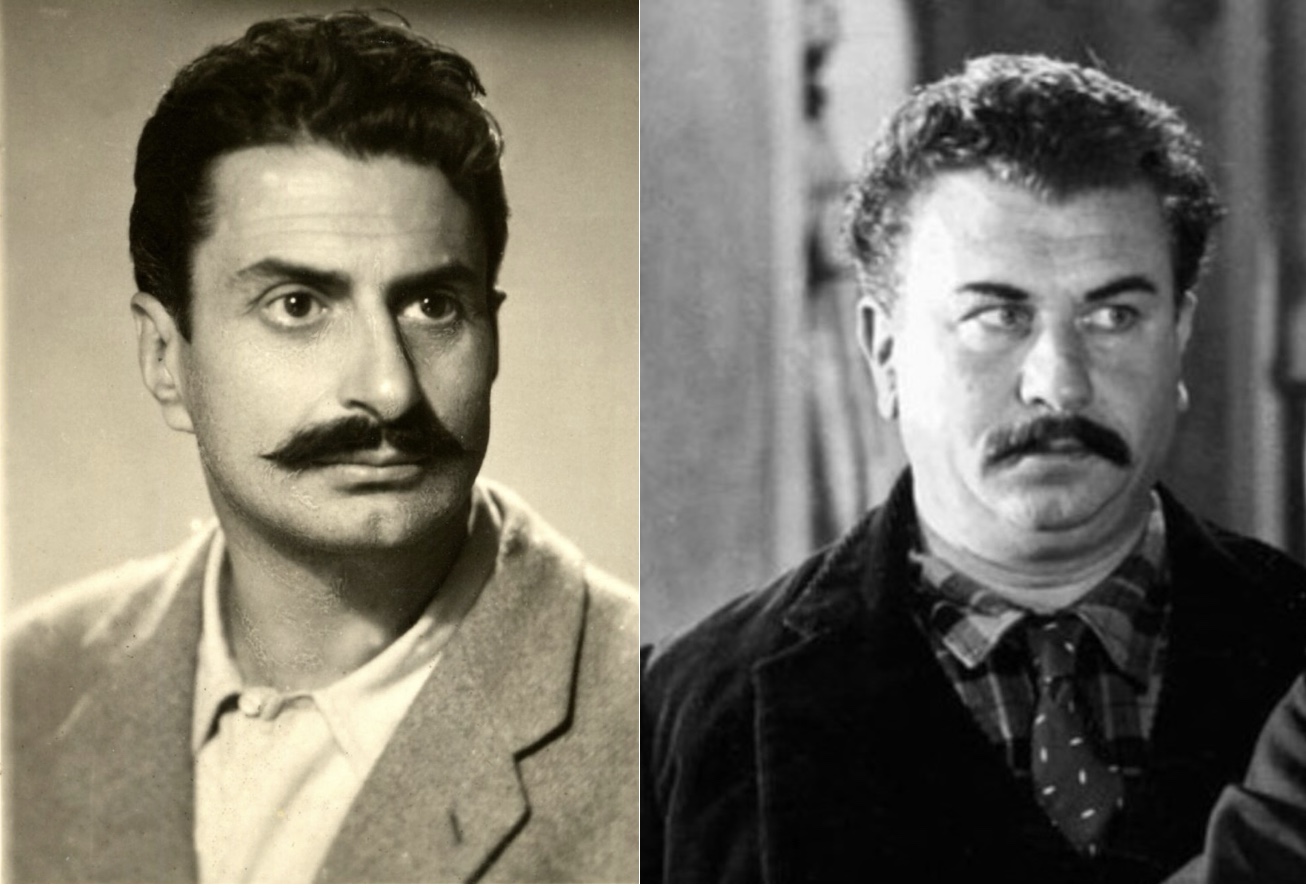
Author Marco Gallina has dedicated a book to this man that makes clear from the very first sentence that it is written in the spirit of Guareschi himself. Here is a story that wants to be told—and a storyteller who has the skill to tell it.
Gallina’s biography begins at the grave. On July 24, 1968, Guareschi is buried in Roncole, the birthplace of Giuseppe Verdi. A simple ceremony. No candles. No flowers. No music. No state wreath. Instead, a single prominent figure stands in the rain without an umbrella, water droplets on his white hair: Enzo Ferrari. The legendary engineer and the writer had been friends. Neither had ever boasted of knowing the other. On the coffin lies the tricolor bearing the coat of arms of the House of Savoy. It is a confession of loyalty to a nation that no longer exists. It is the first—but certainly not the last—time that Gallina leads the reader through a scene that feels almost cinematic.
Four No’s, Four Decisions of Conscience
Anyone who wants to understand Guareschi must understand four conflicts that shaped his life—four great “No’s” that transformed him from a dandy reporter into an Athanasius of the twentieth century. The first “No” is spoken by the young lieutenant in 1943 to the Germans: “I am a soldier of the Royal Italian Army.” He chooses internment over collaboration with the Republic of Salò. For two years he languishes in Częstochowa, Sandbostel, and Wietzendorf, wasting away to 46 kilograms, writing stories, reading them to his comrades, building a nativity scene out of cardboard and postcards. In a scene—admittedly somewhat embellished by Gallina—that could almost come from an Indiana Jones film, Guareschi coolly tells a Gestapo officer who wants to recruit him for a fascist satirical newspaper that he had refused to shoot at his Italian brothers and now refuses even more to “shoot at them with lies.” The boots clatter away on the stone floor; the great tempter withdraws—for the time being.
Guareschi’s second “No” is directed at the Communists. Back home, he founds Candido with his colleague Giovanni Mosca, a satirical newspaper that becomes a thorn in the side of the Left. Emilia-Romagna, Guareschi’s homeland, is the epicenter of the so-called “Triangle of Death,” where communist partisans murder thousands after the war, including fascists, alleged fascists, but also priests and civilians. The mass media remain silent. Guareschi does not. He invents the “Trinariciuti,” the three-nostriled ones—caricatures of dull party soldiers who obey every command, no matter how absurd. The term enters the Italian language. Communist leader Togliatti publicly calls him a “triple idiot.” Guareschi wears it as his highest honor.
His third “No” is aimed at his own camp—and perhaps costs him the most. The Christian Democrats under Alcide De Gasperi, whom Guareschi had helped to victory in 1948 with brilliant campaign posters, deeply disappoint him through corruption, partitocracy, and countless broken promises. When Guareschi publishes letters in 1954 implicating De Gasperi, the full machinery turns against him. The Christian Democratic youth paper writes that he is “the kind of Italian who must be erased from our society”—using the word cancellare. Cancel culture, anno 1954—but not from the Left, rather from the Christian Democrats! The court refuses to examine the documents and convicts him of defamation. Guareschi waives his right to appeal. He packs the same bag he had packed for the German camp and voluntarily reports to the authorities. In the end, he serves 409 days in prison in Parma—his city. “I prefer to be condemned by justice and acquitted by my conscience than to be acquitted by justice and condemned by my conscience.”
The fourth and final “No” is directed at the post-conciliar Church. In his last Don Camillo volume, published posthumously in 1969, Guareschi introduces the young priest Don Chichì, intoxicated by the Second Vatican Council, preaching to the poor who scarcely exist in the village and willing to marry a couple during a parachute jump in order not to lose contact with the youth. Don Camillo, the old parish priest who still celebrates Mass in Latin, offers the most beautiful of all responses: “My Church is not the great ship you keep talking about, but only a poor little boat—and yet I have always sailed it from one shore to the other.”
Personal Conscience as the Ultimate Guide
What holds these four conflicts together is Guareschi’s core idea, which Gallina weaves through all chapters as a red thread: personal conscience as the final authority. Don Camillo, Peppone, and Christ on the cross are, as Guareschi himself says, ultimately one single figure—himself. The voice of Christ is the voice of his conscience. And this Christ cannot be brought into line with any party. When Don Camillo invokes “public opinion,” Jesus replies dryly: “I know. It was public opinion that nailed me to the cross.” There are no collective souls. Each person is born for himself and dies for himself. Woe to him who abandons his personal conscience in order to partake in a collective one. What might be dismissed in better times as naïve Sunday philosophy increasingly reveals itself as a timeless—and highly topical—challenge to every form of conformism.
What Gallina makes of this material goes far beyond a conventional biography, even though the historical facts are, of course, all in their proper place. Each chapter is a fresco that brings a world back to life before the reader’s eyes: the Bassa with its poplars and mists, fascist Milan with its surprising experimental spirit, the barracks nights in northern Germany and Poland, the postwar Italy of massacres and miracles. The author embarks on historical excursions—from the Guelphs and Ghibellines and the War of the Bucket to the small Renaissance principalities of the Po Valley—which do not distract from the subject but rather ground it. Anyone who wants to understand why Don Camillo and Peppone “work” must know the “fertile river humus” from which they grew. Gallina provides it, telling the story so vividly that one might think he has internalized Guareschi’s maxim: if it is not true, it is well invented.
DEFENDER OF THE FAITH
Guareschi remains relevant not because of his postwar anti-communism—that would be merely historical—but because of his anthropology. The mass, the apparatus, and the collective conscience are not ghosts of the past. Anyone today who says “No” to the spirit of the age, who does not unconditionally support his own camp, or who refuses to parrot prescribed opinions, quickly finds himself where Guareschi stood—on the outside, between chairs, in the dock, labeled a cockroach by his own milieu. The polarization that dominates our present is something Guareschi not only knew—he experienced it firsthand. His remedy is not a false middle, not compromise at any price, but the upright individual conscience that can neither be bought nor intimidated.
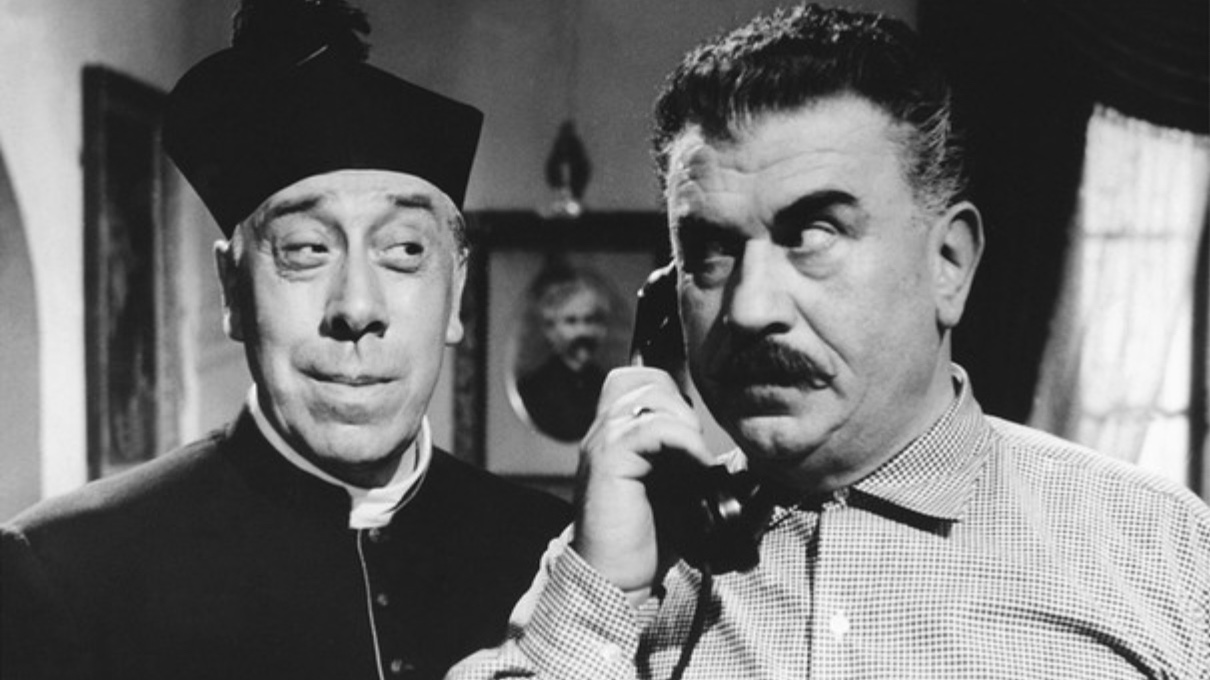
There is a certain irony in the fact that Cardinal Gerhard Ludwig Müller, in the worthwhile afterword, quotes passages on conscience from the pastoral constitution Gaudium et Spes of the Second Vatican Council—the very council with which Guareschi had dealt so harshly a few chapters earlier. But such is life: not always neatly resolved and rounded, but full of edges and contradictions. Like Guareschi himself—the monarchist republican, the Catholic critic of the Church, and the reactionary rebel. In the end, the council wrote about conscience what Guareschi had long lived. Perhaps that is the final point.
Gallina’s book comes at the right time. The spirit of the age had tried to silence Guareschi into oblivion. The folders in the family archive tell the story: after 1968, only obituaries. In the 1970s, a single file. Then, from the 1980s onward, the entries begin to multiply again. And from the 2000s, the reception exploded. Guareschi’s son Alberto, who has guarded the legacy for sixty years, sums it up: “They tried to silence him. He won.” With over twenty million books sold, translations into fifty-nine languages, and a cultural impact that eclipses Umberto Eco’s The Name of the Rose, this craftsman in the writing room ultimately proved right. The message of this laborer in the vineyard of the Lord is simple yet weighty: in the end, each man stands alone before God. No collective, no party, no spirit of the age can take that responsibility from him.
Writing does not always have to be fun. But reading the work of Guareschi—and Gallina—certainly is.
Marco Gallina. Giovannino Guareschi. Don Camillo’s Rebellious Father. Westend Verlag, hardcover, 208 pages, price €24.00.
Recent posts
See AllPrague Forum Membership
Join us
Be part of building bridges and channels to engage all the international key voices and decision makers living in the Czech Republic.
Become a member