- Hans Weber
- October 8, 2026
35 Years of Independence: Moldova Celebrates its European Future in Prague
Article by Hans Weber
Ambassador Gabriela Moraru Welcomes Czech Political Leaders, Diplomats, Artists and Friends of Moldova to an Evening of History, Culture and European Optimism
On 27 August 2026, the Republic of Moldova celebrated one of the most significant anniversaries in its modern history: 35 years since the proclamation of its independence.
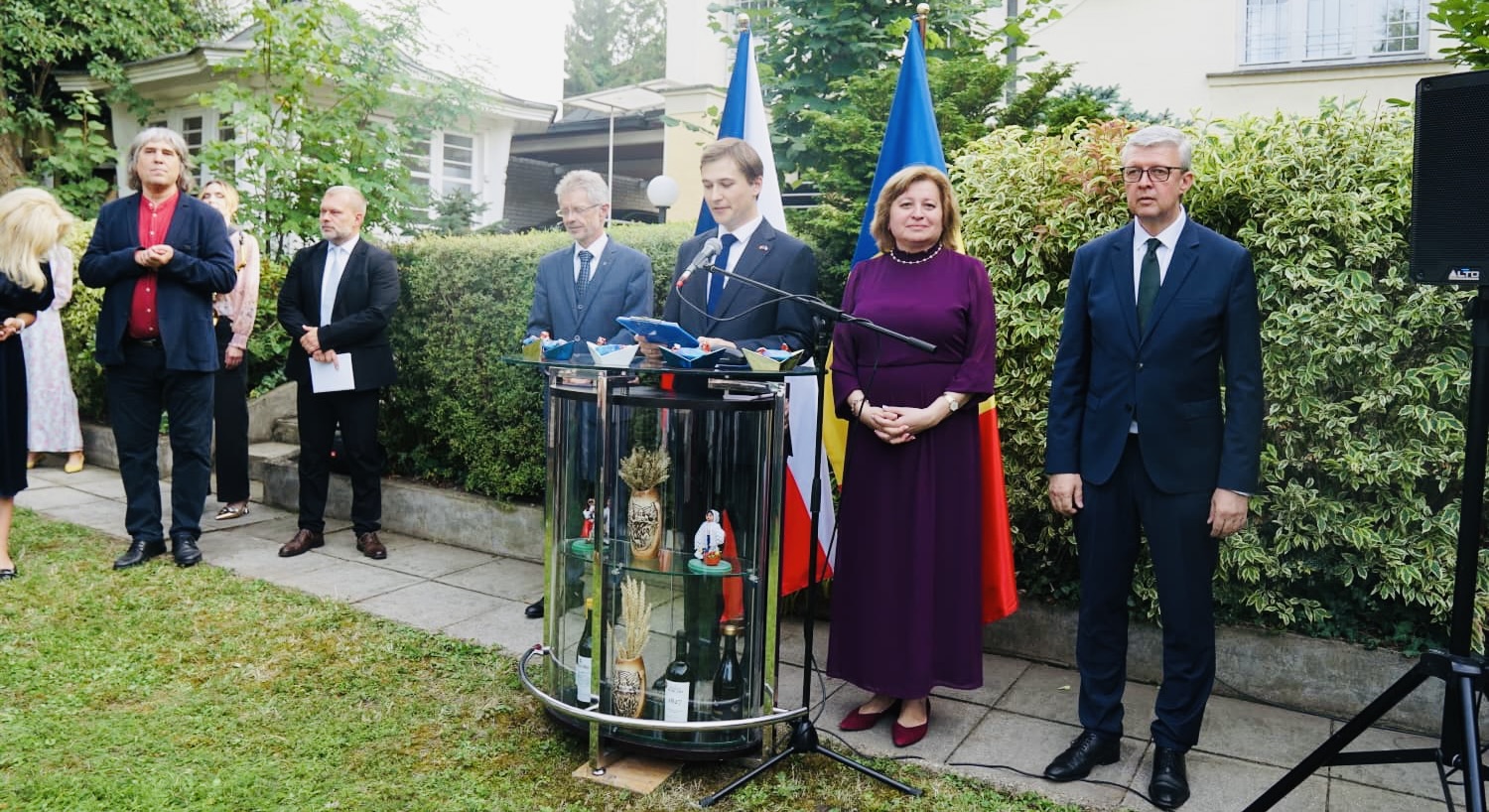
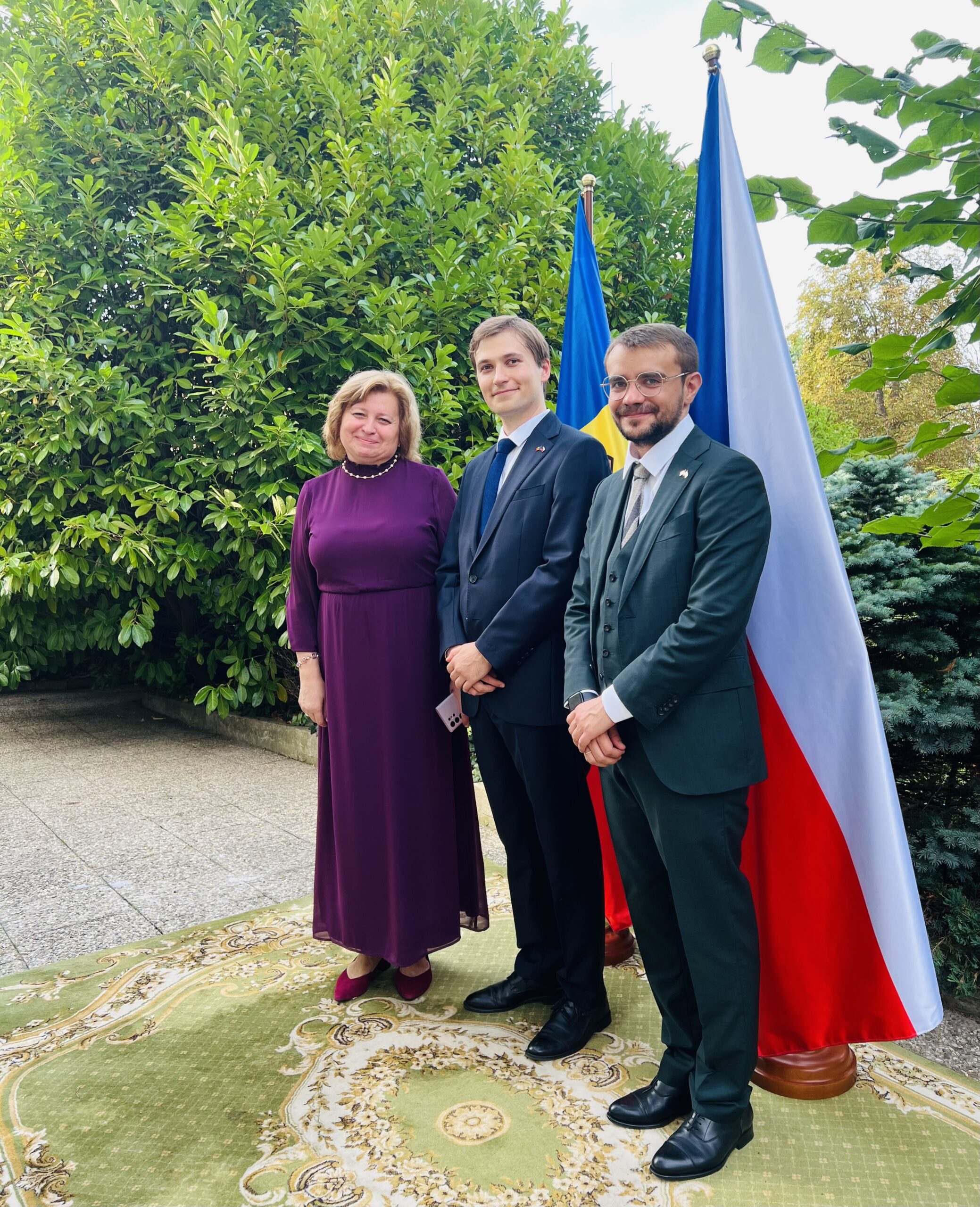
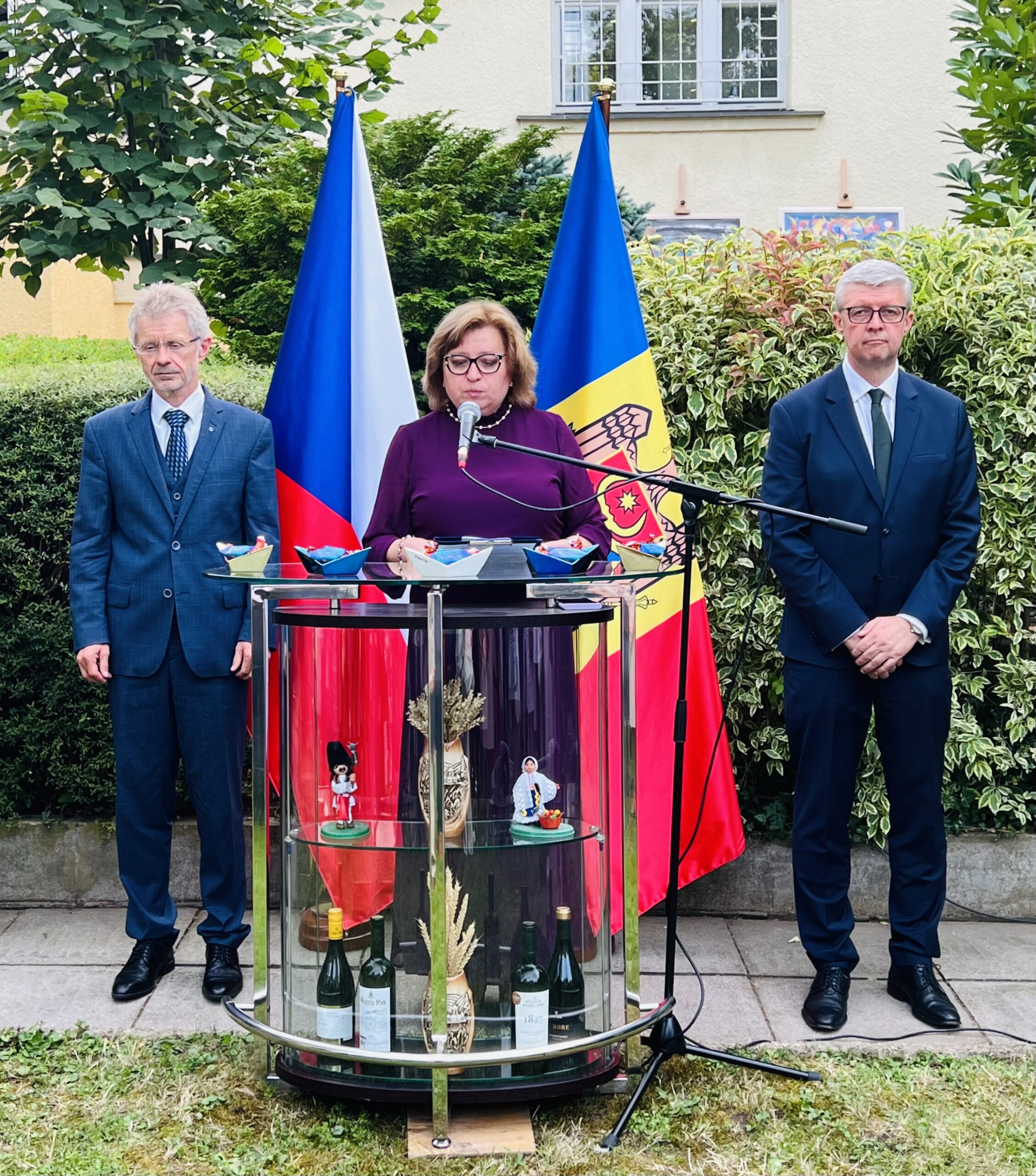
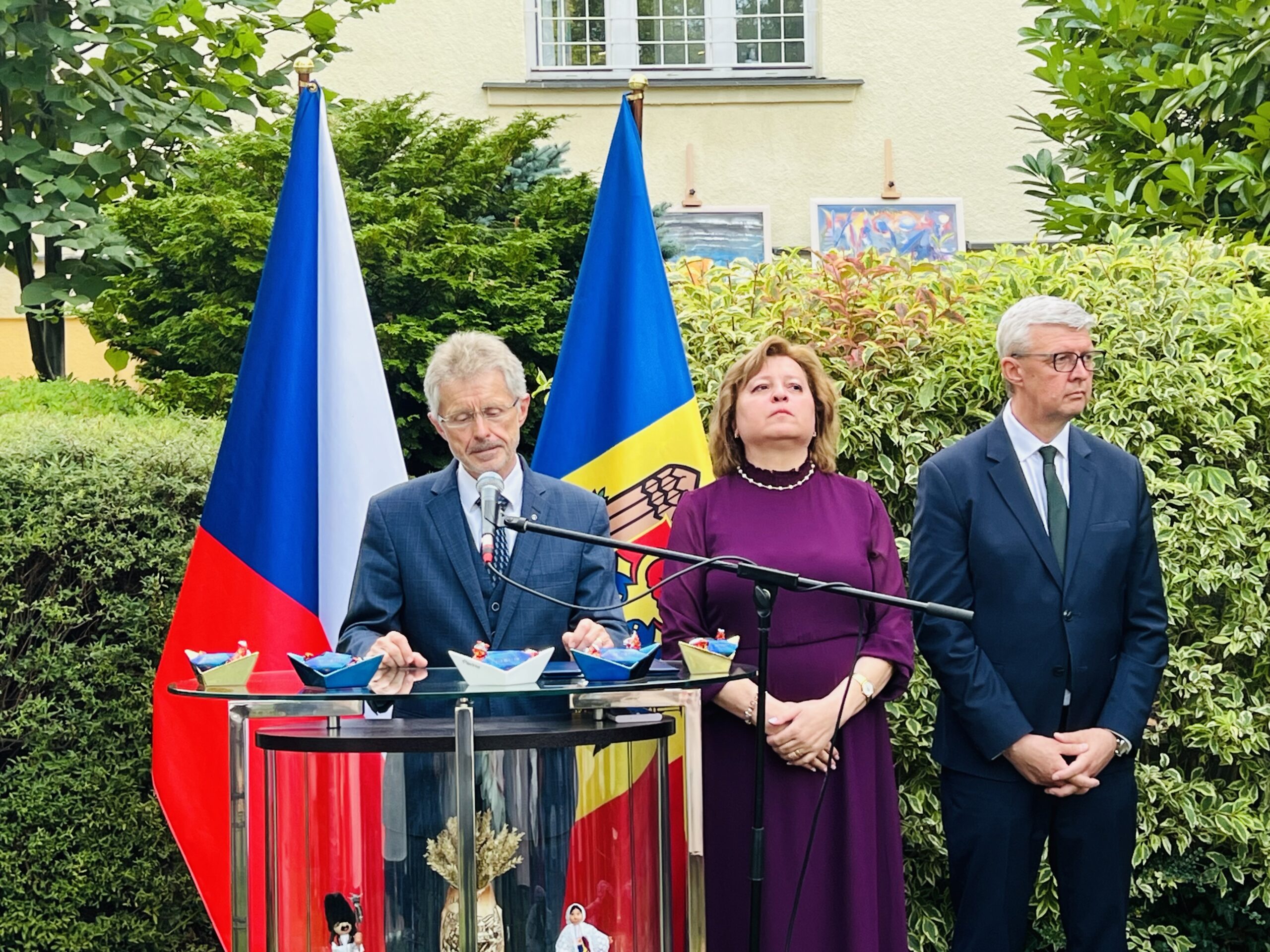
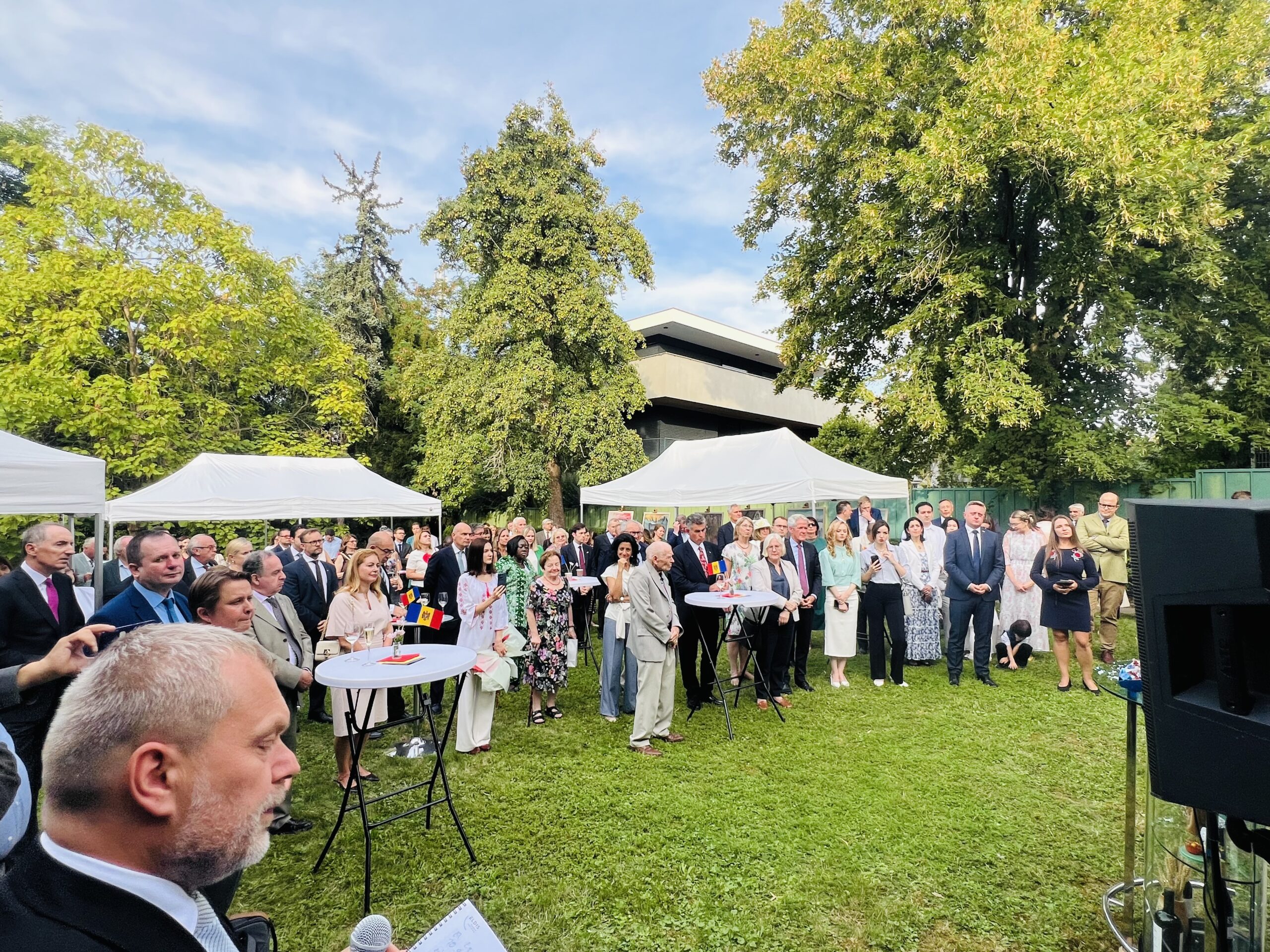
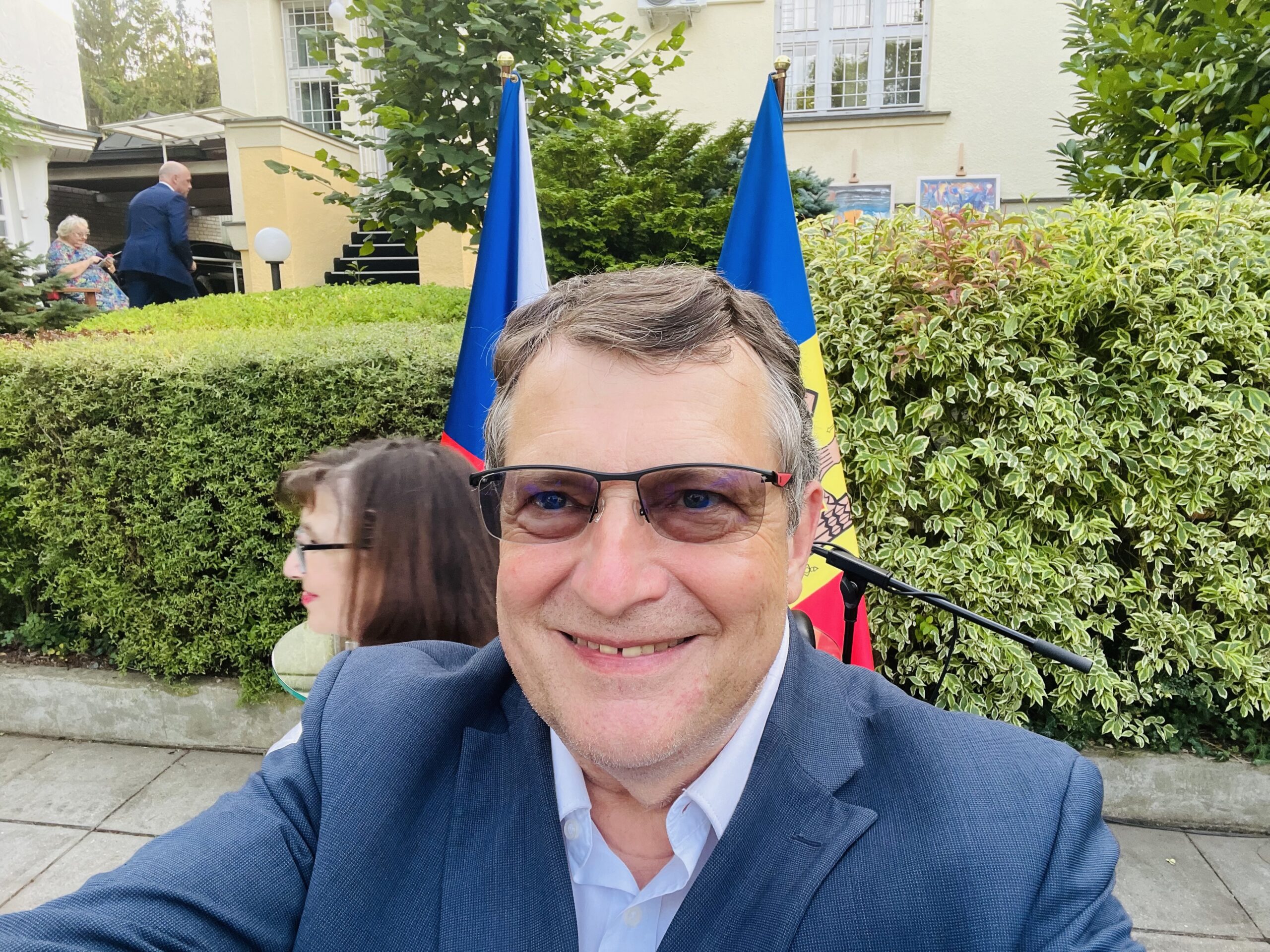
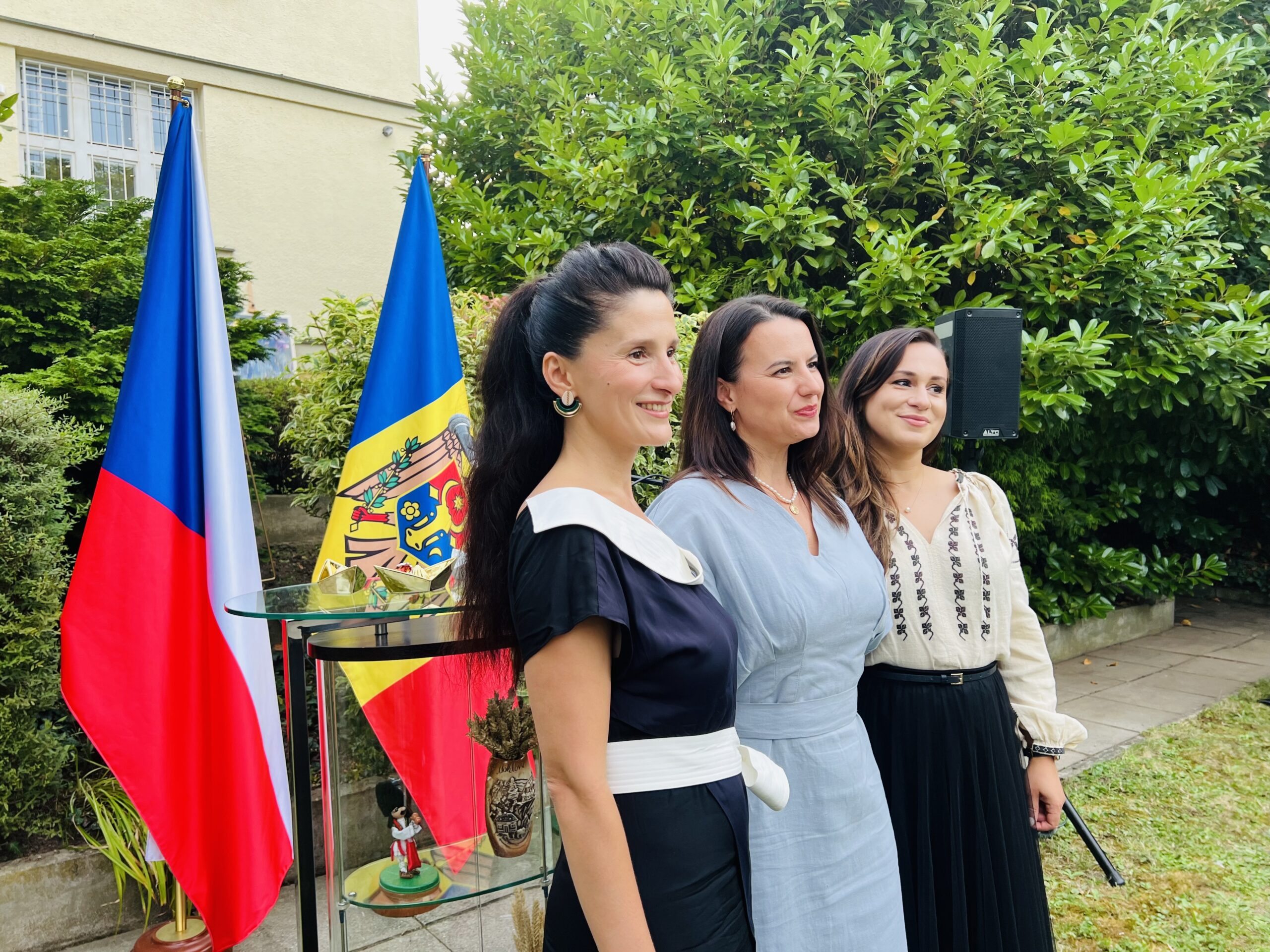
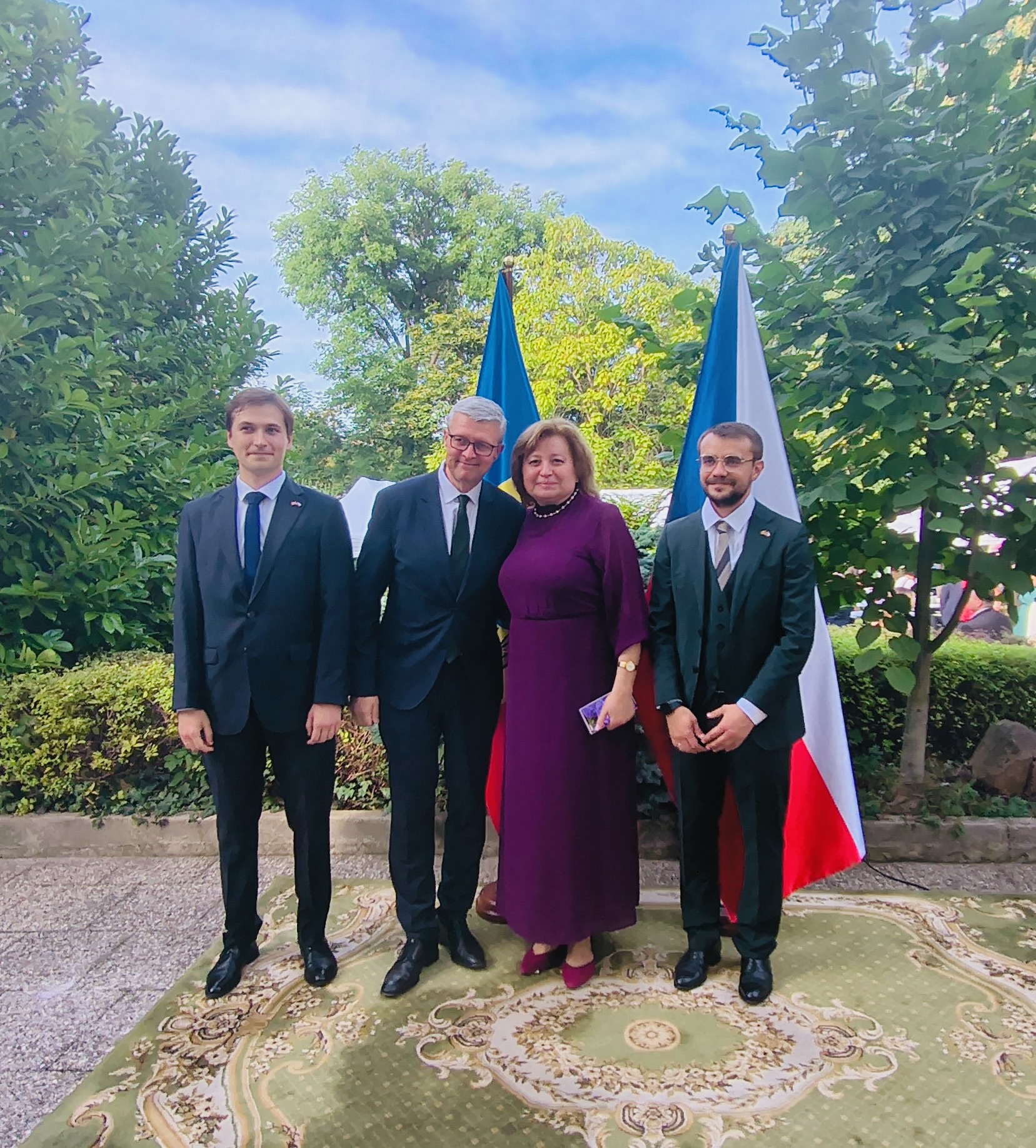
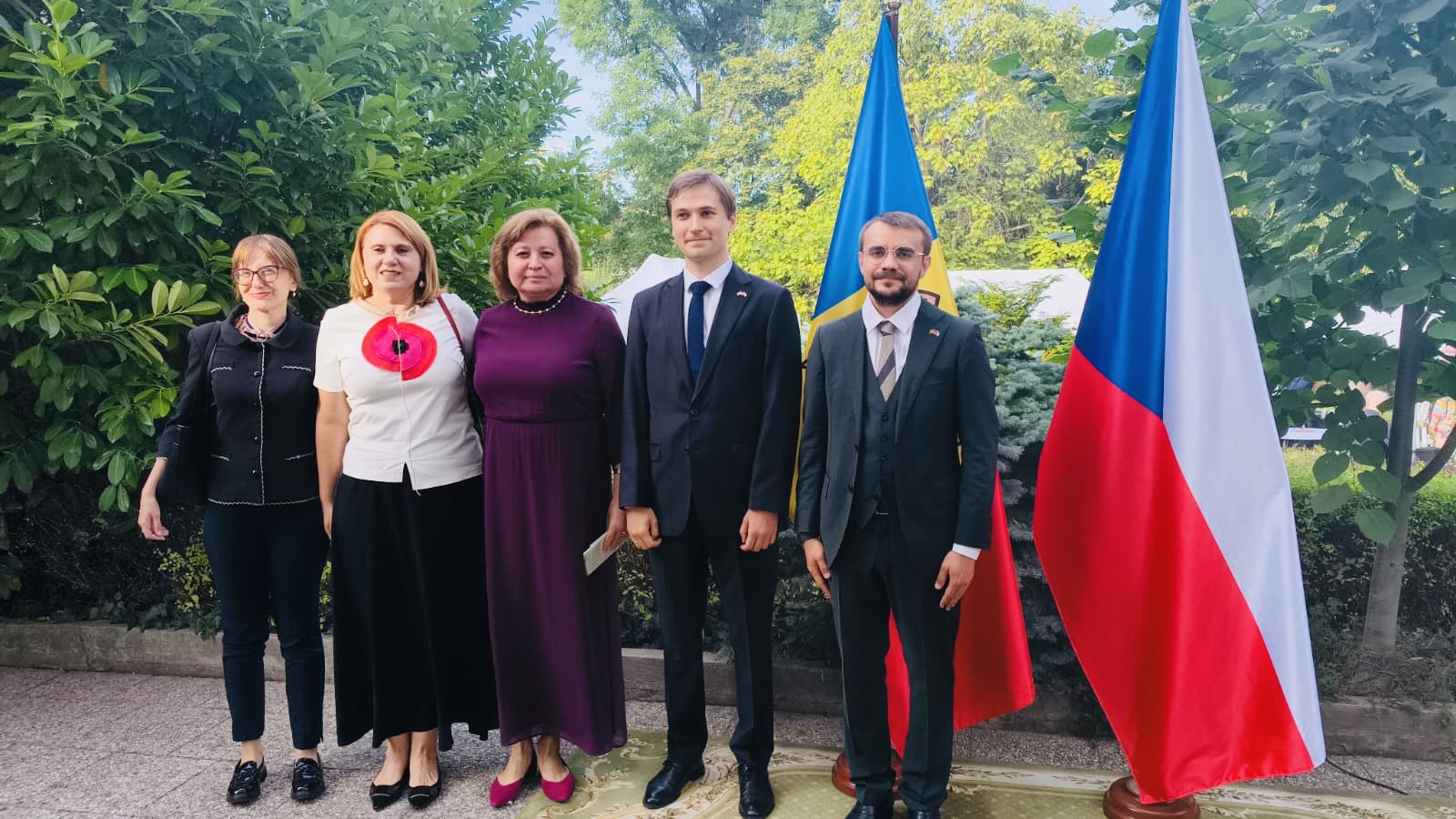
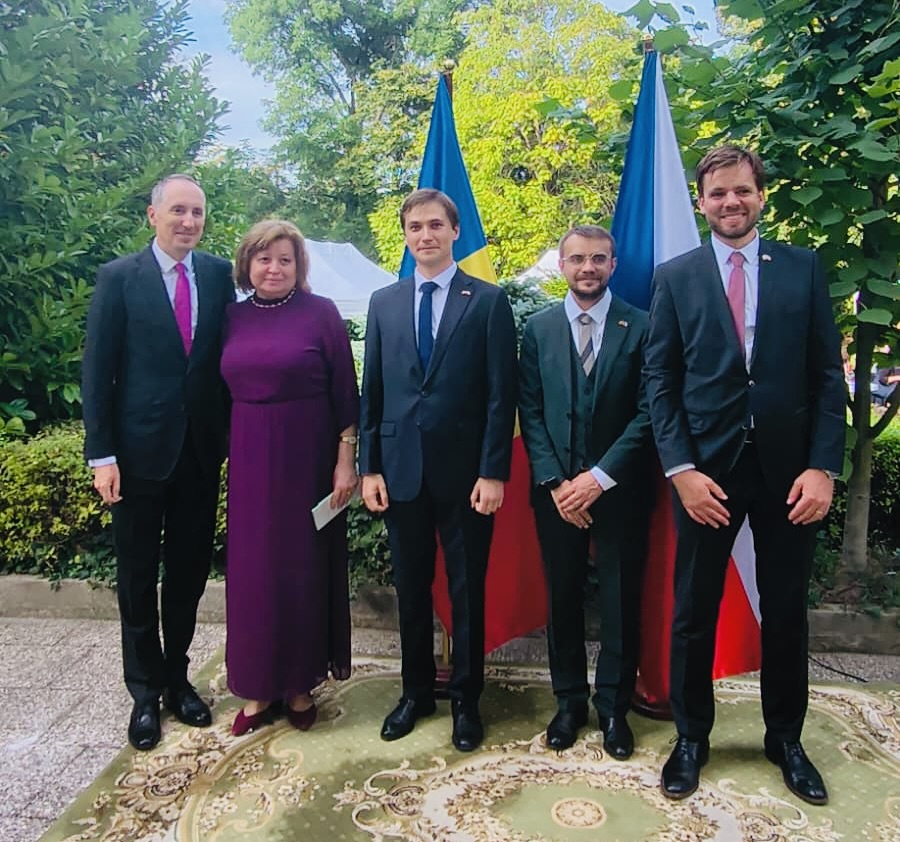
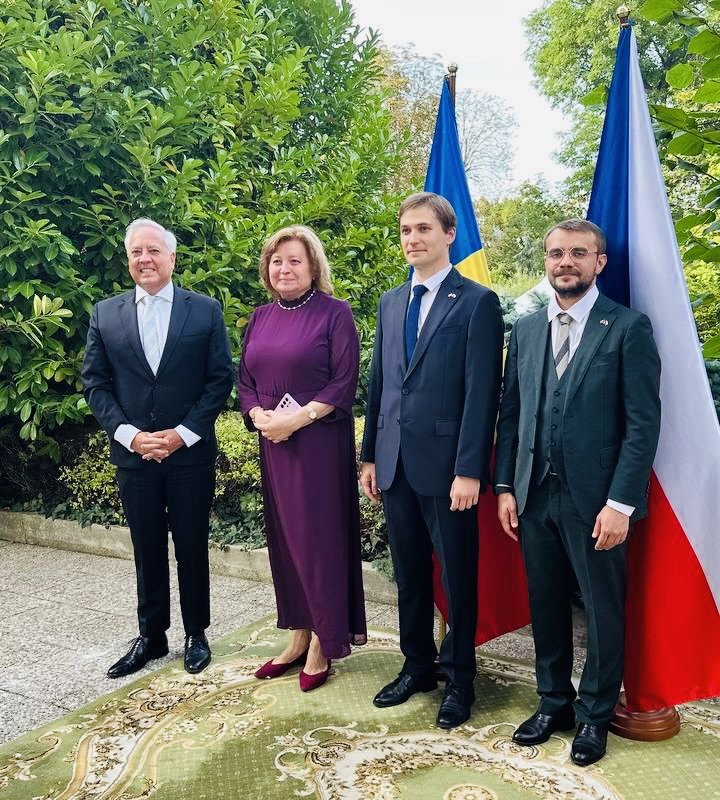
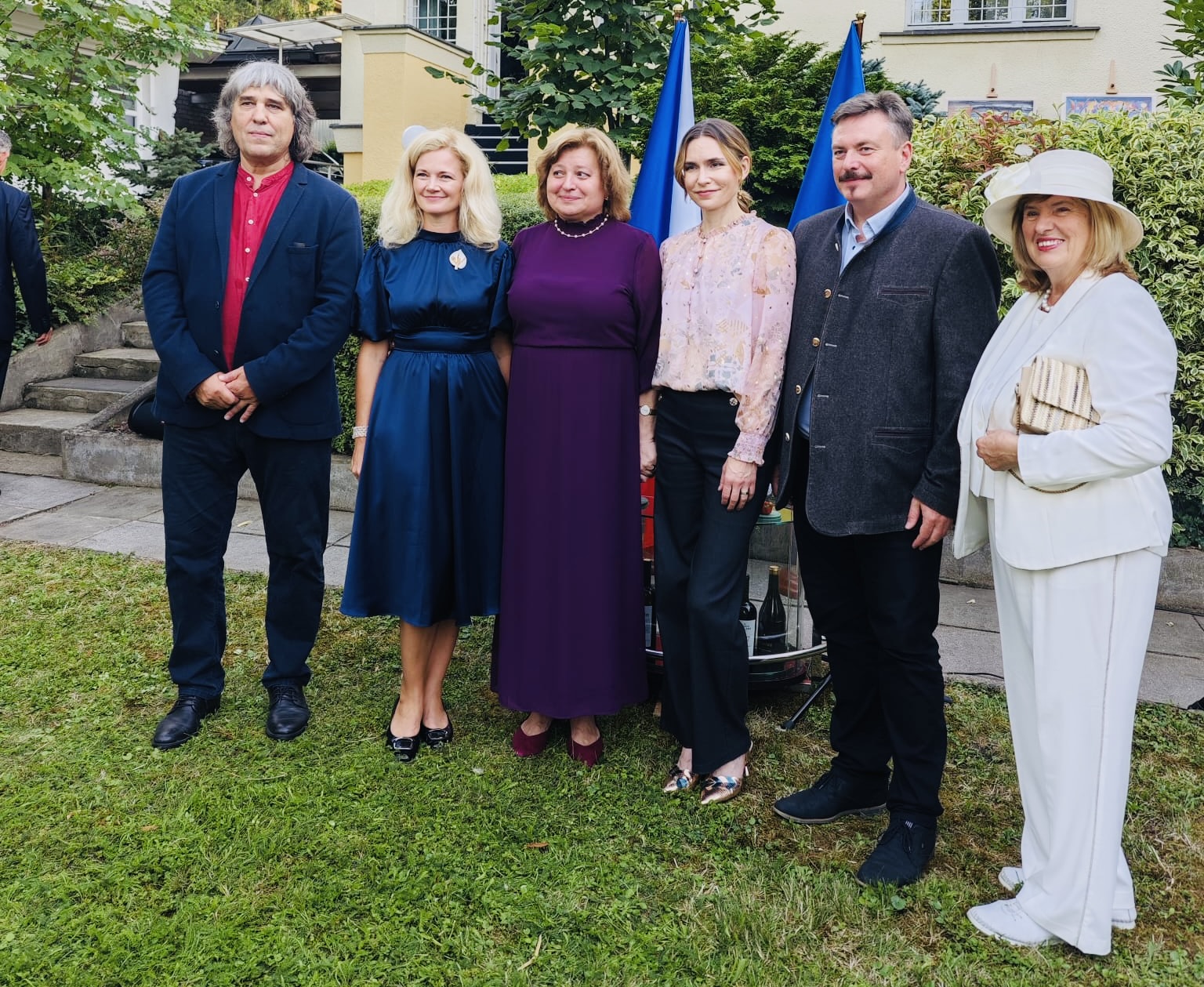
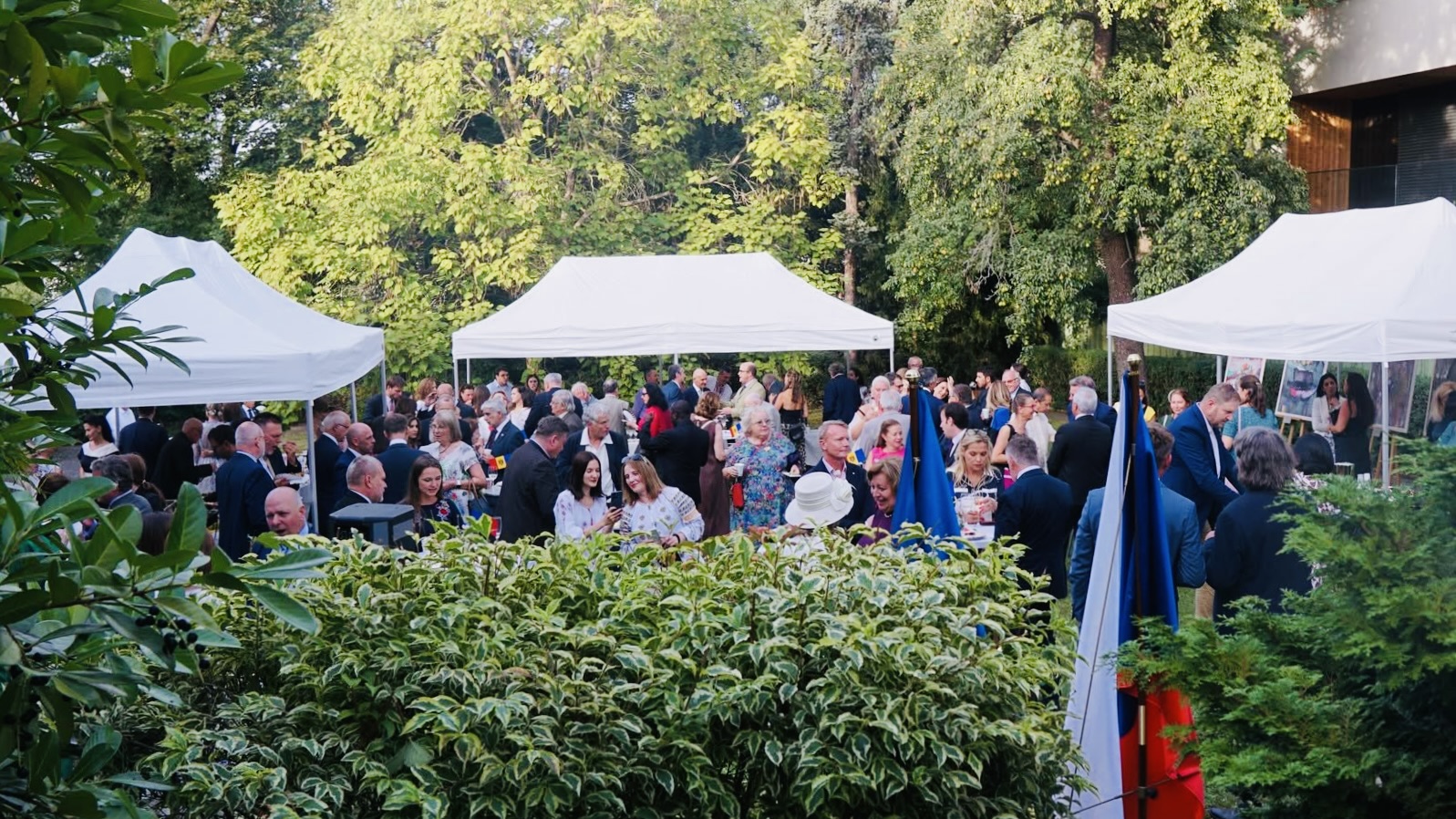
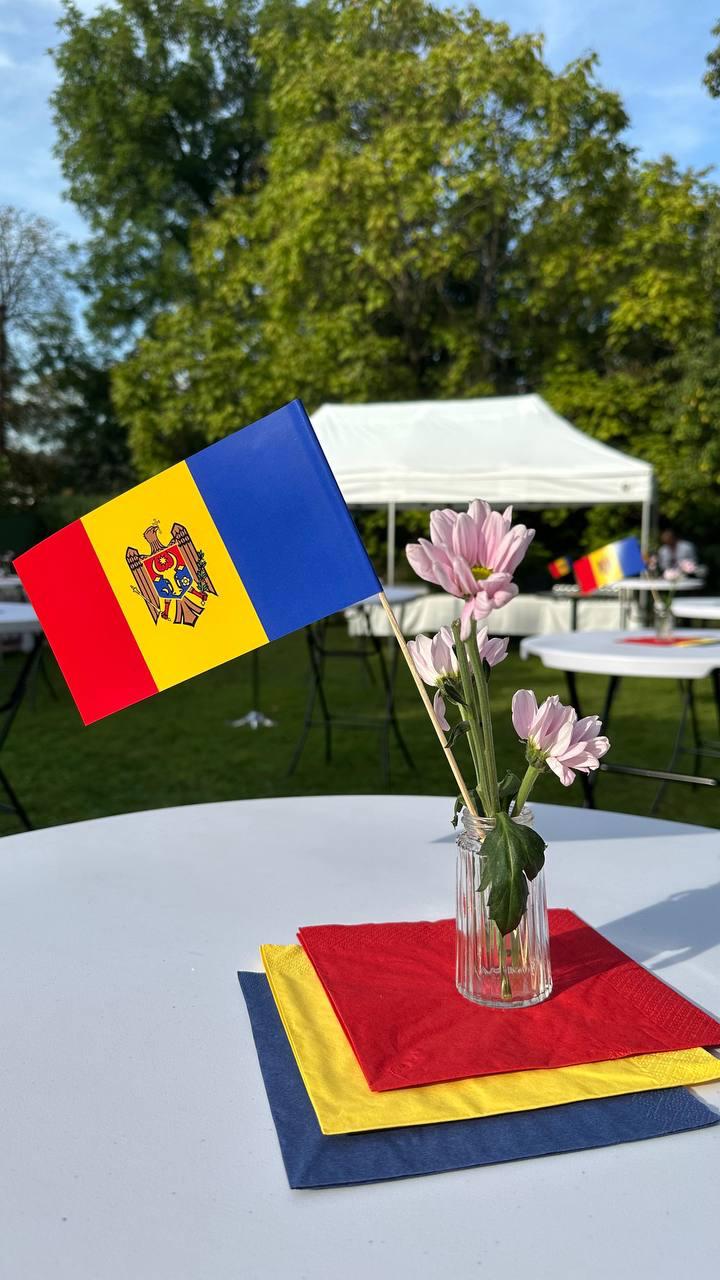
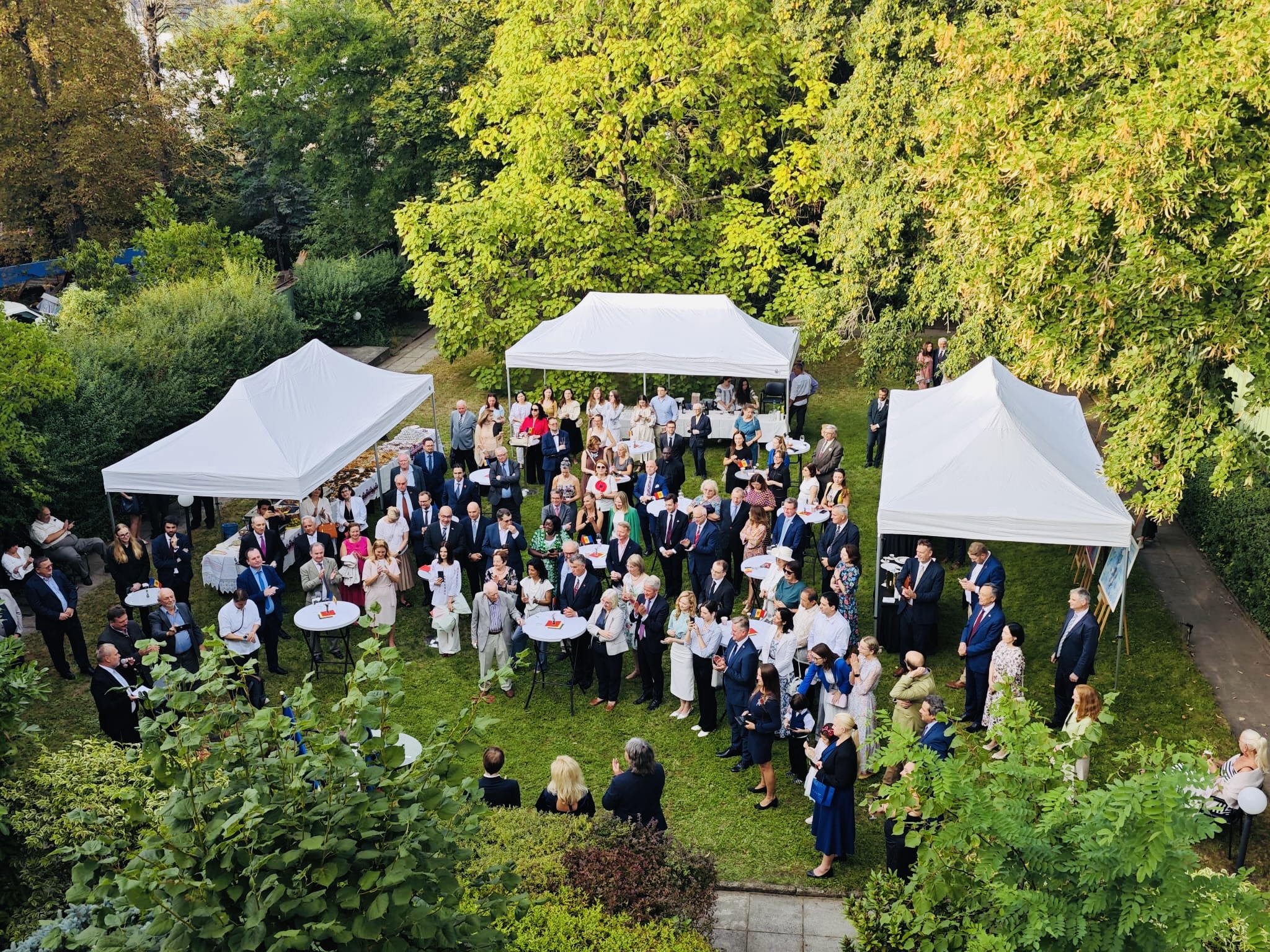
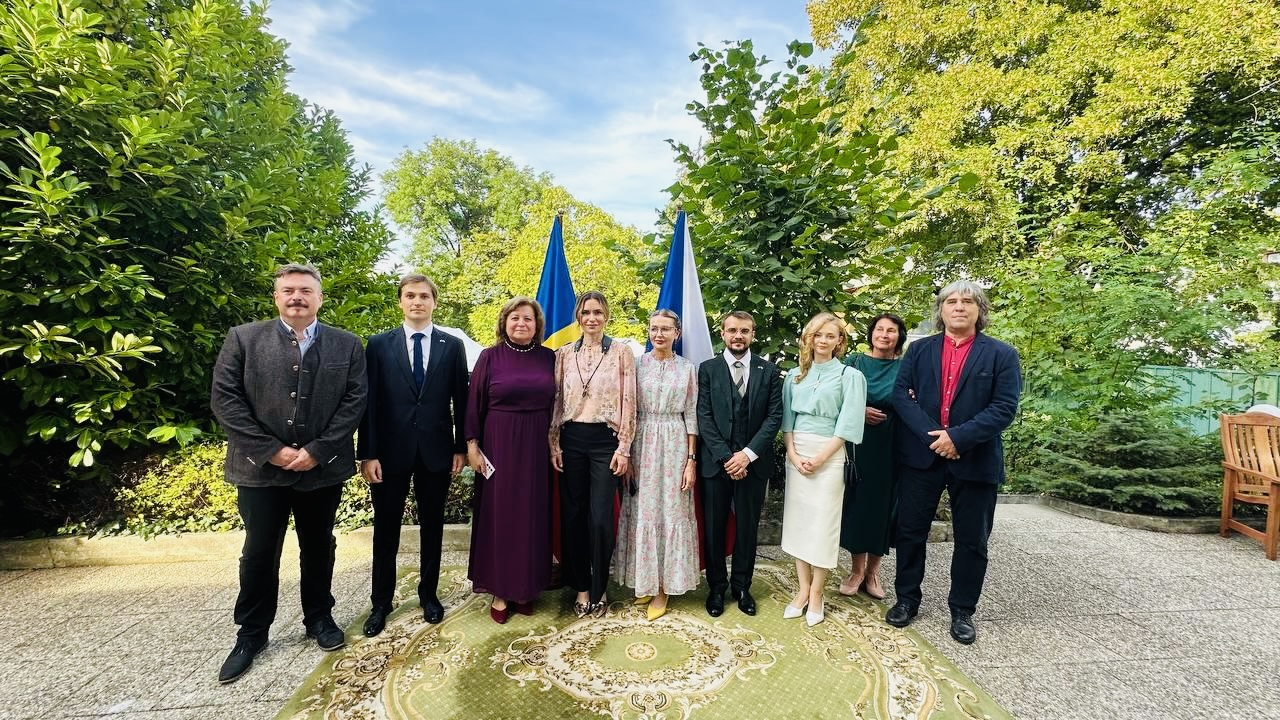
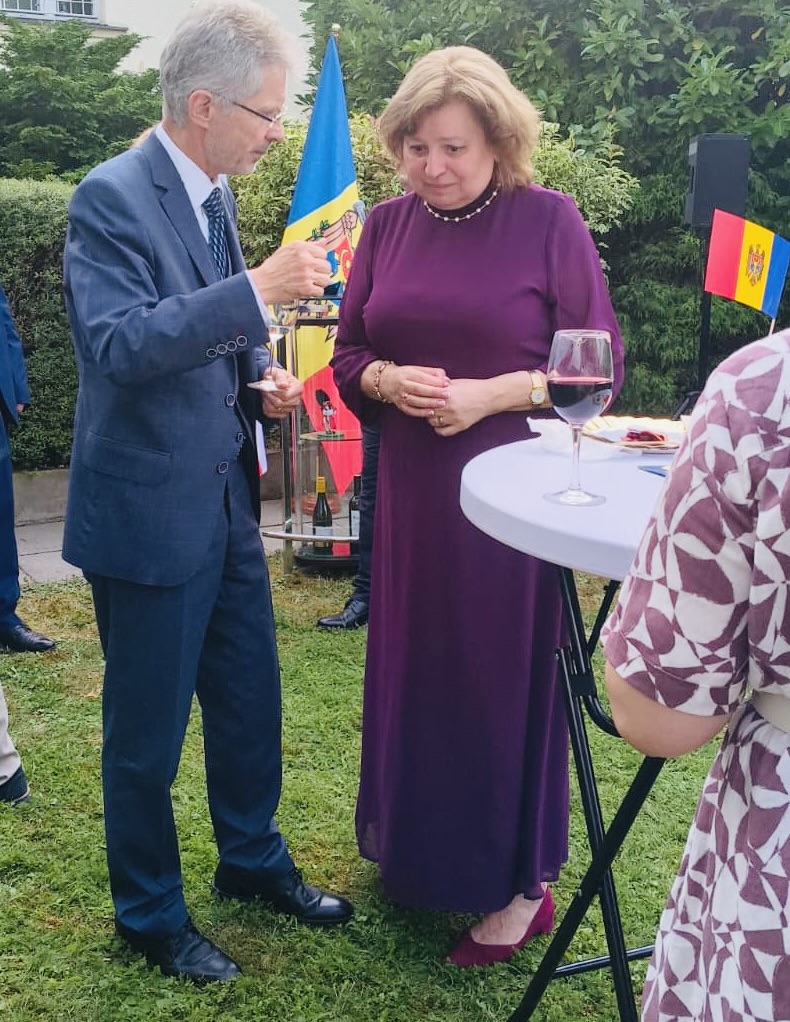
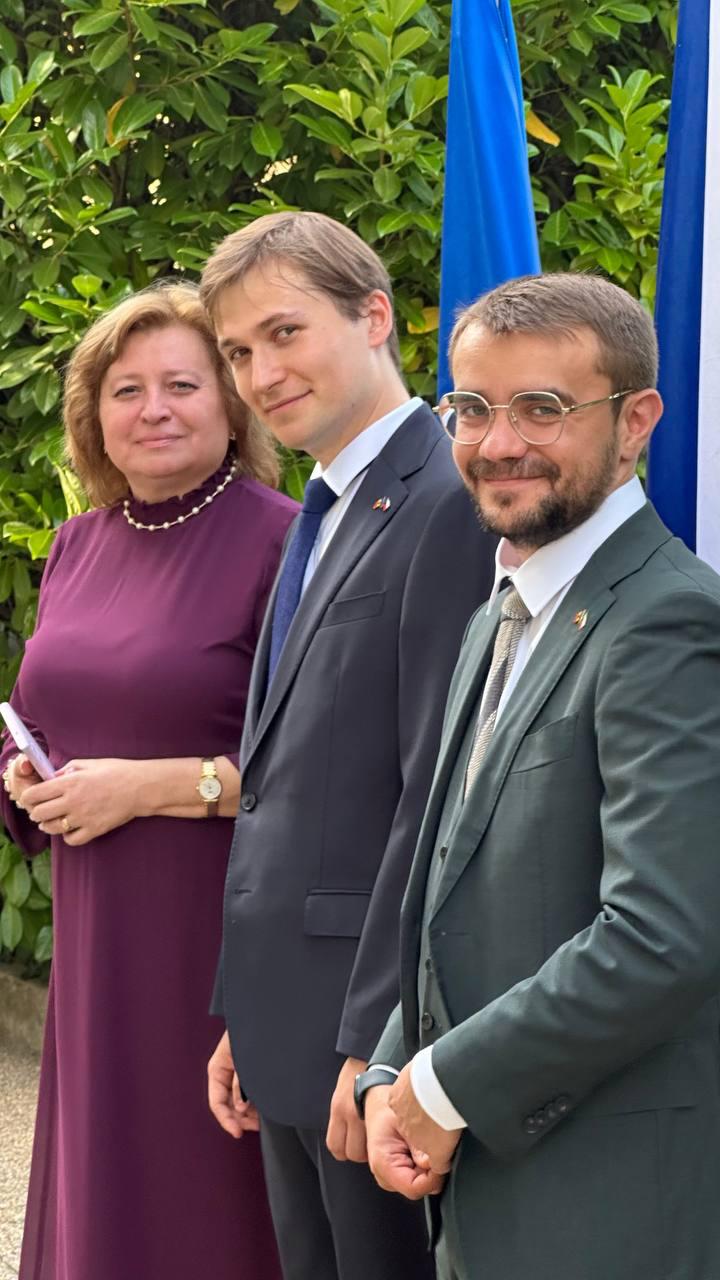
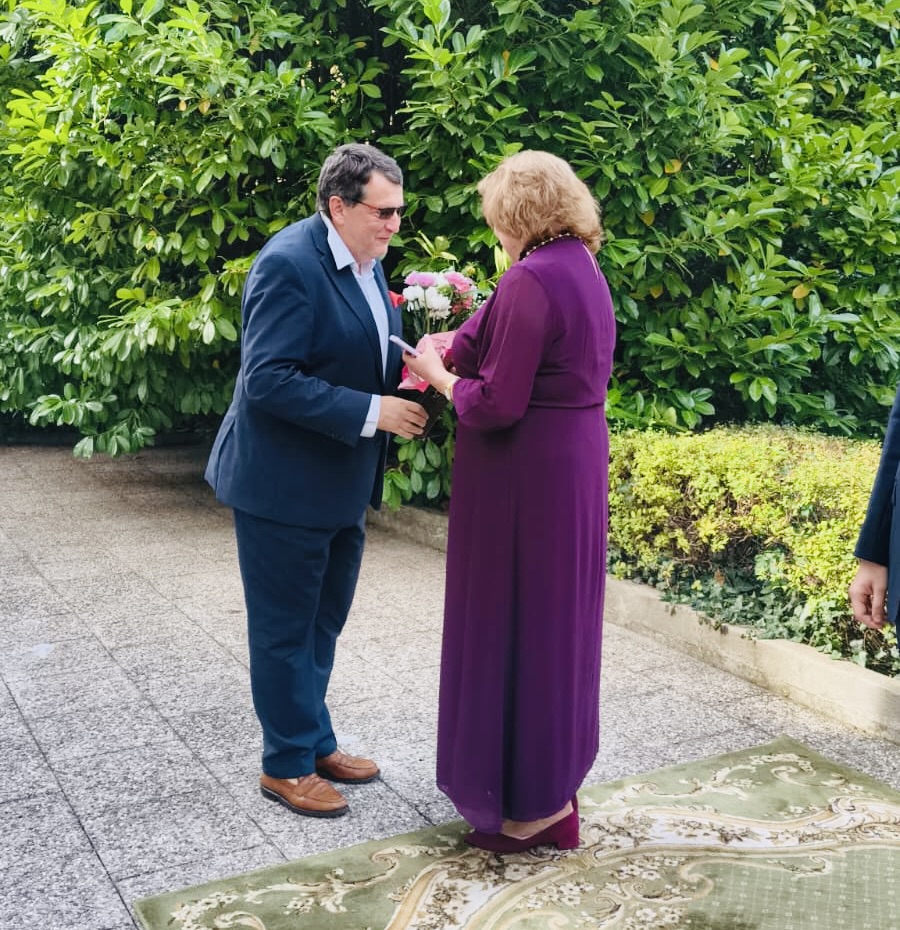
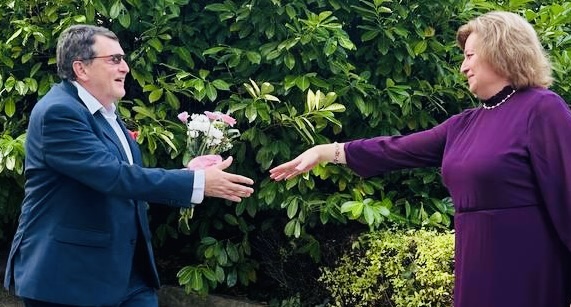
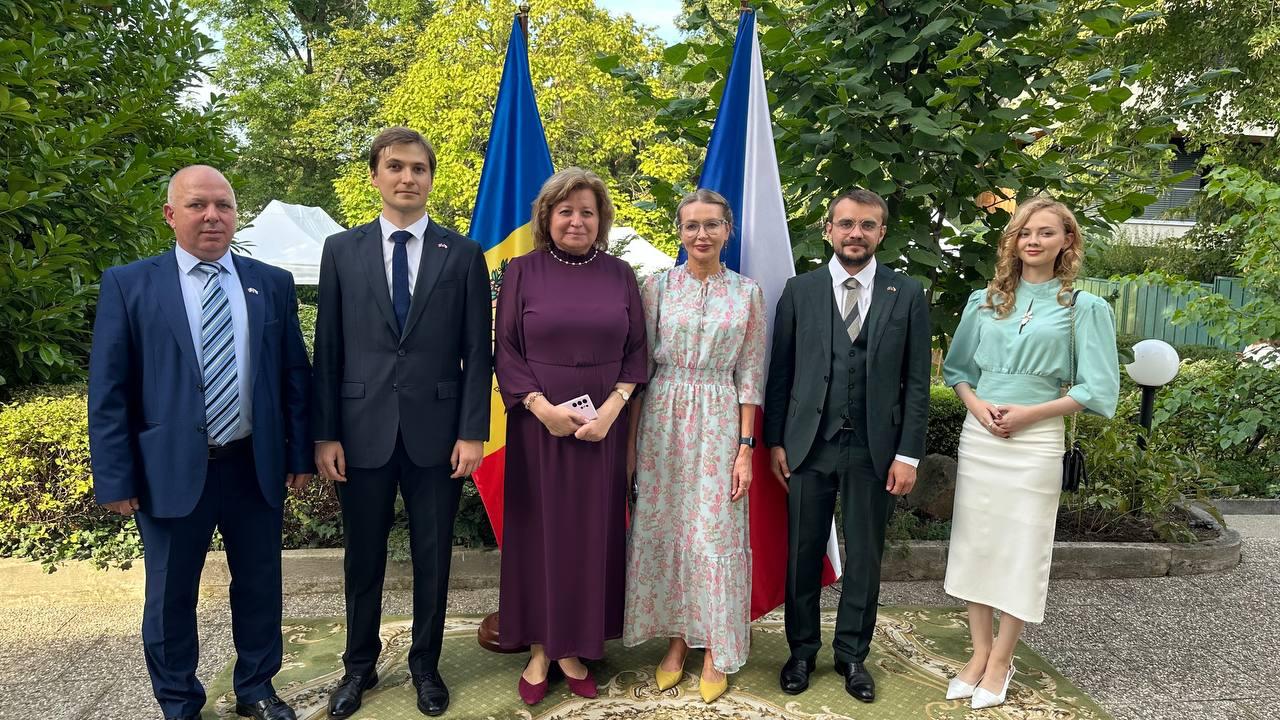
In Prague, the anniversary was marked by an elegant and particularly warm reception hosted by H.E. Gabriela Moraru, Ambassador Extraordinary and Plenipotentiary of the Republic of Moldova to the Czech Republic, in the garden of the Moldovan Embassy in Prague 6.
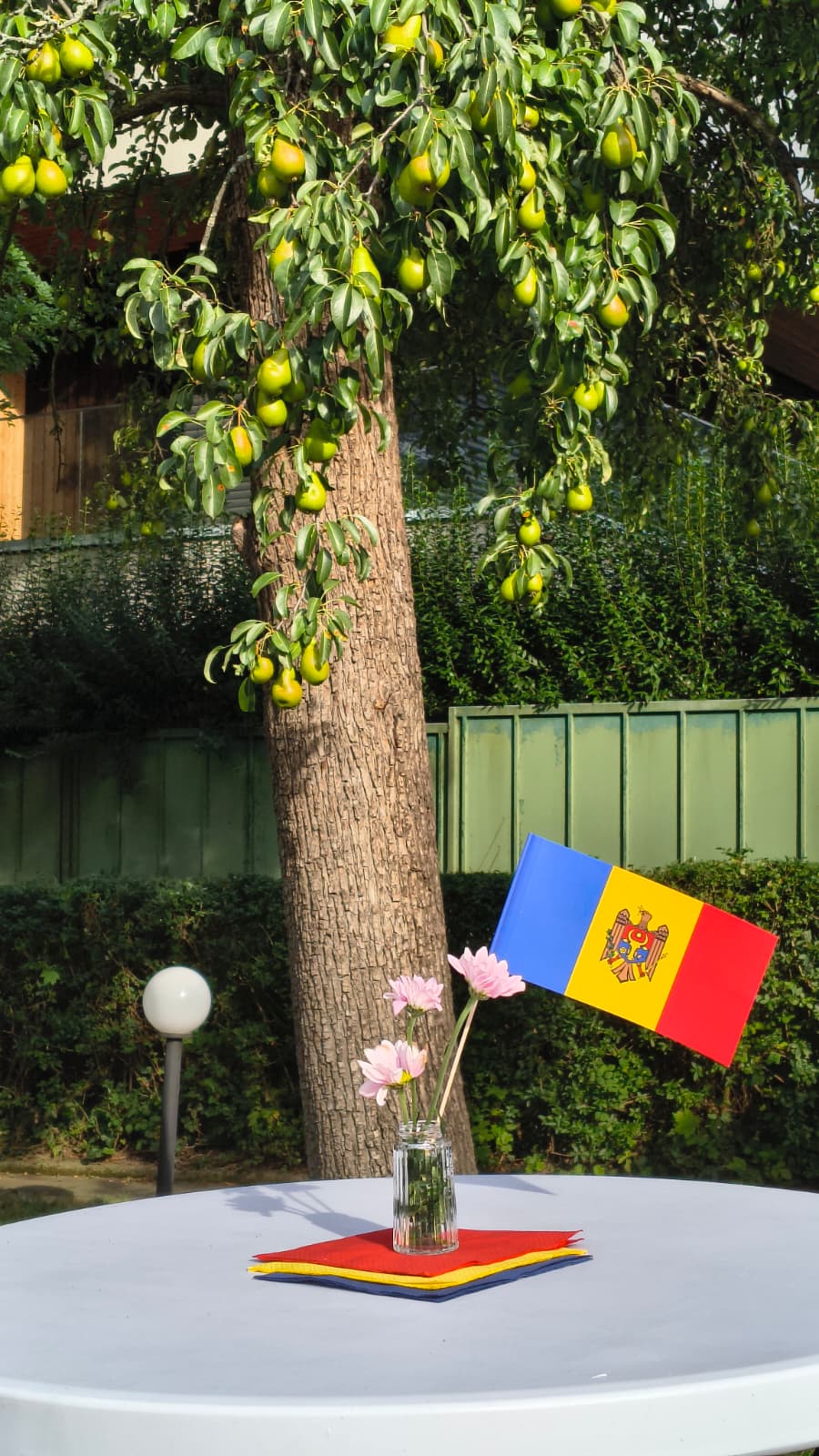
The Embassy is located at Juárezova 14 in Bubeneč, in one of Prague’s traditional diplomatic districts. The attractive garden provided an ideal summer setting for an evening that combined high-level political diplomacy with art, music, Moldovan cuisine and, naturally, an impressive selection of wines from one of Europe’s oldest wine-producing regions.
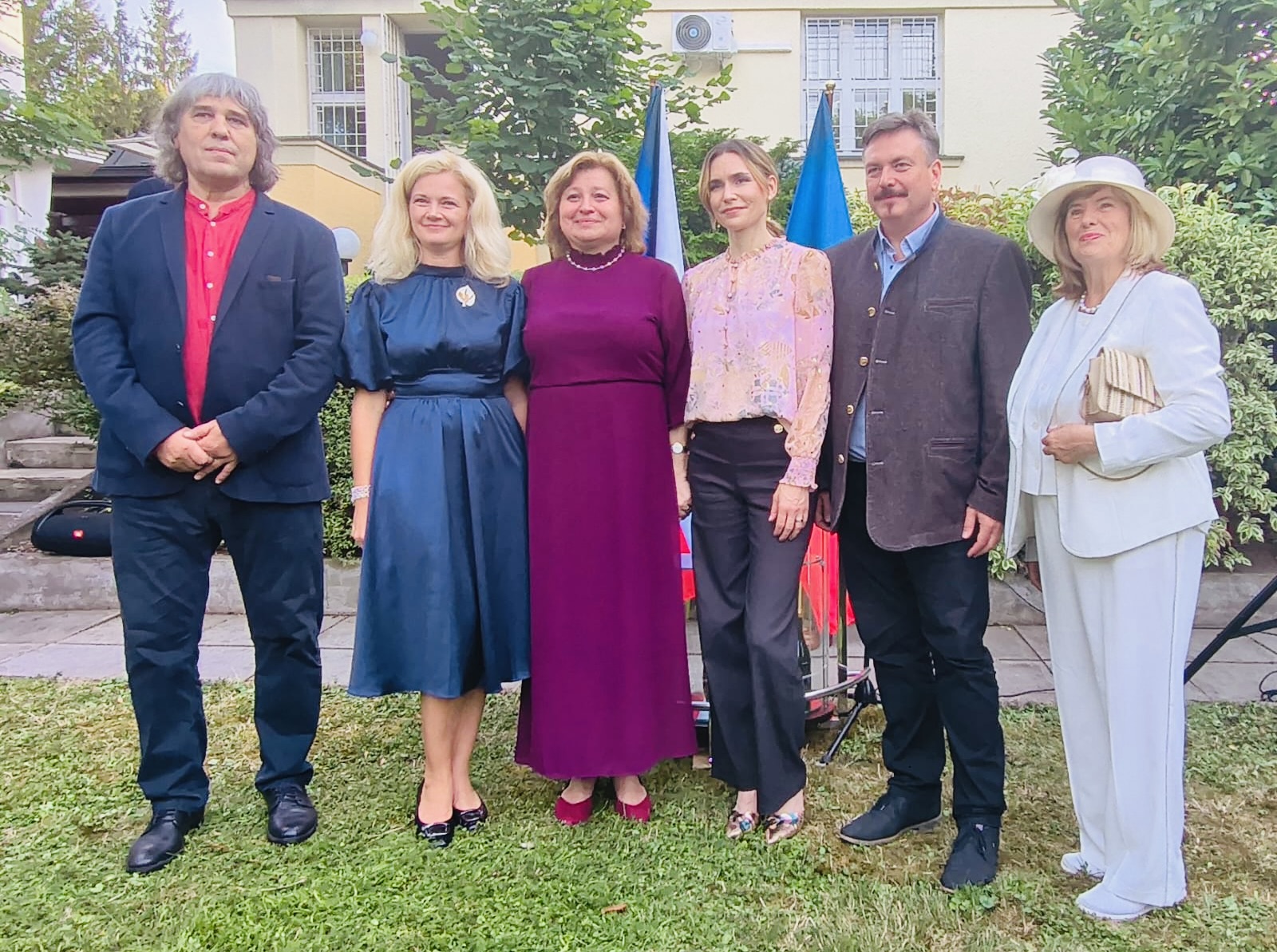
The celebration was attended by representatives of Prague’s diplomatic corps, Czech political and public life, business, culture and numerous friends of Moldova.
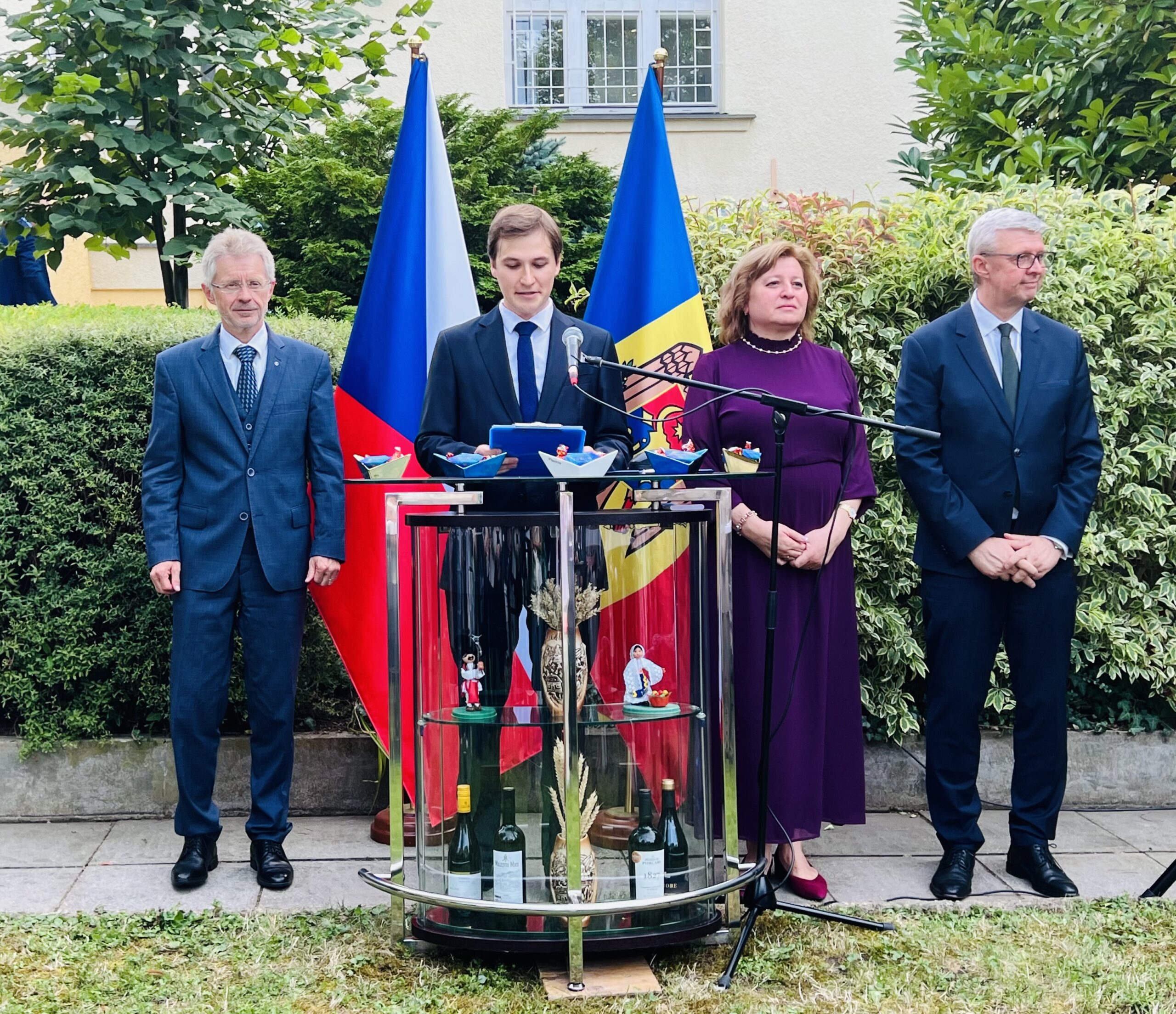
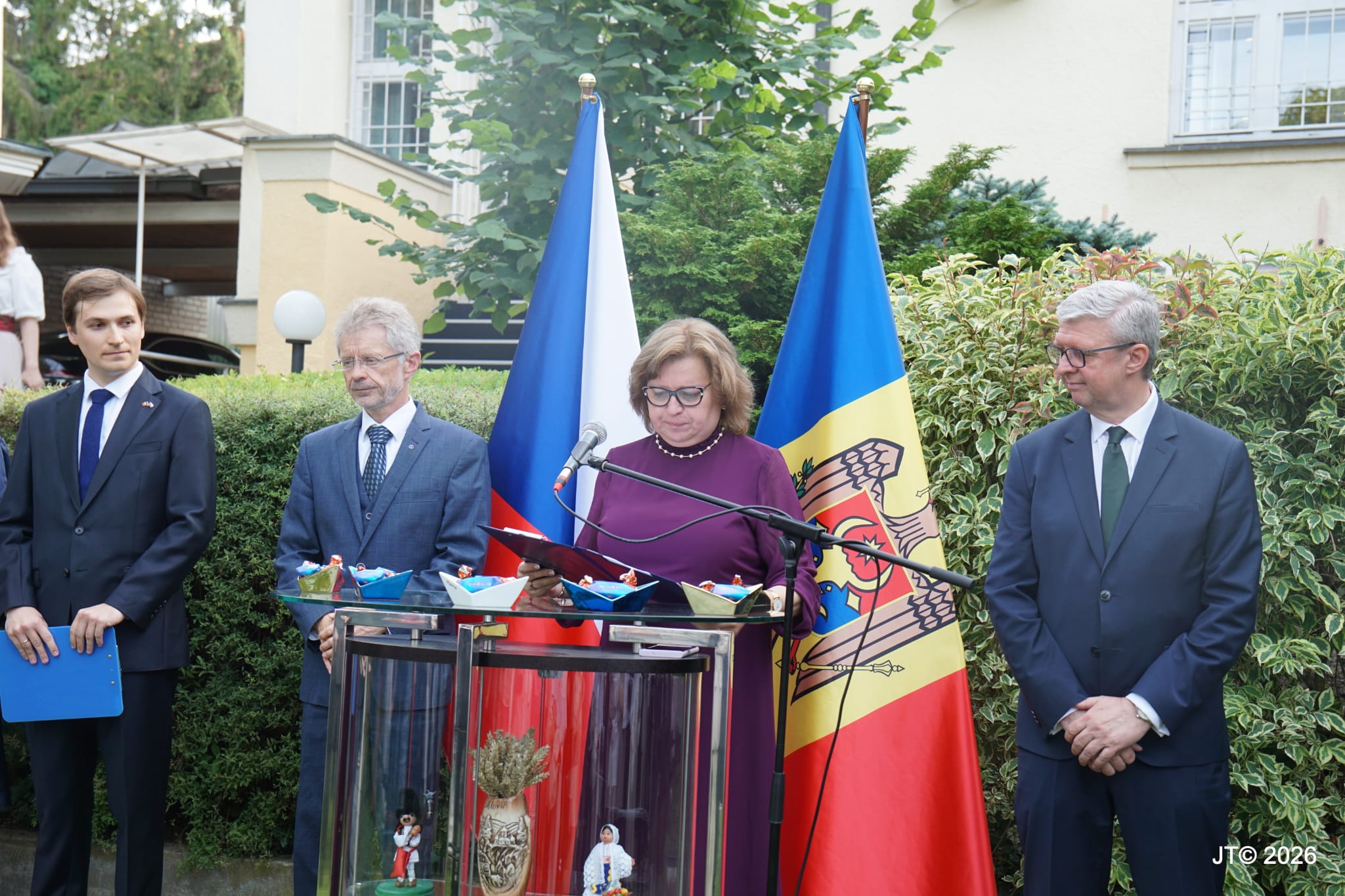
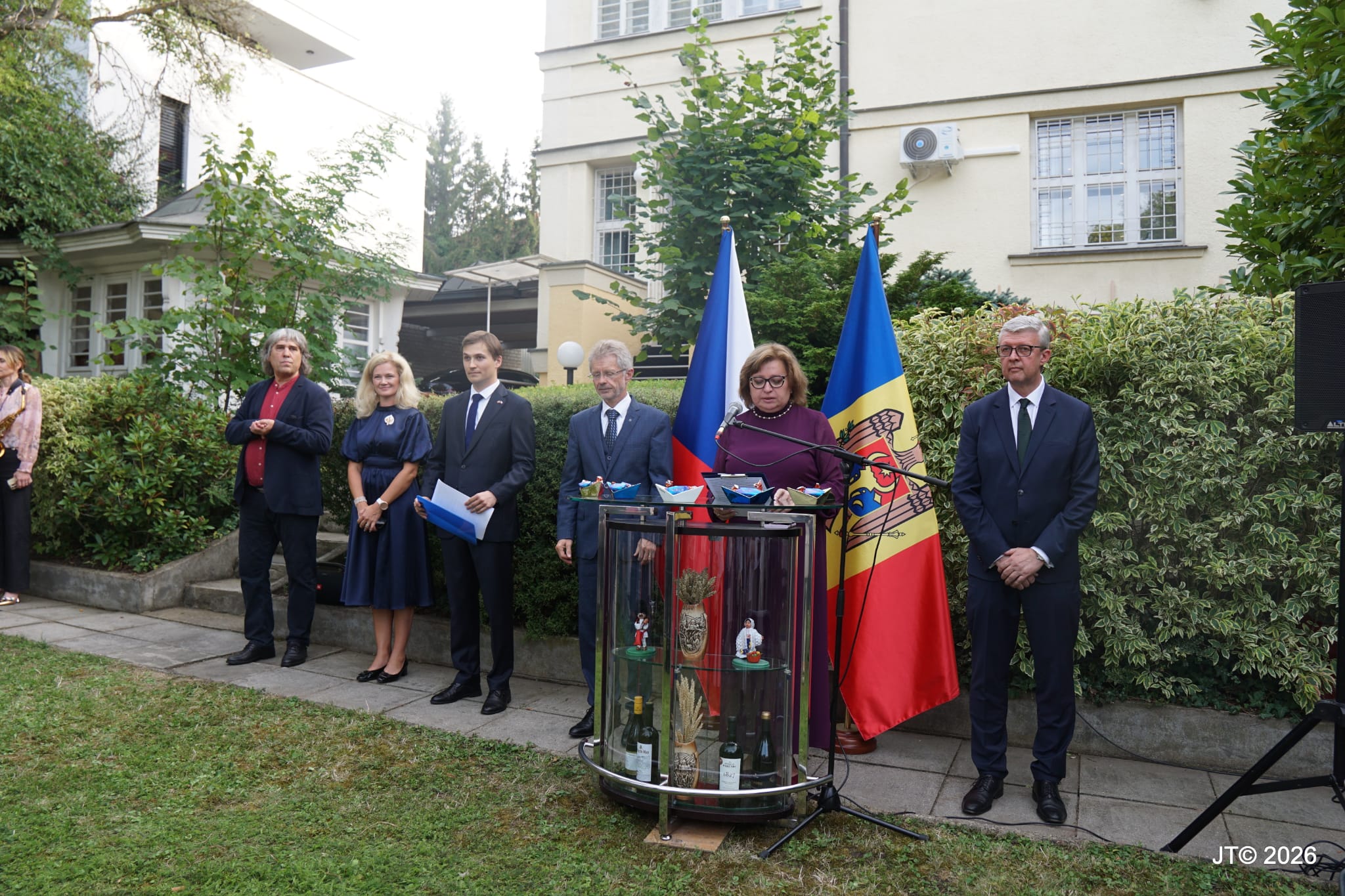
Two particularly distinguished Czech guests addressed the gathering.
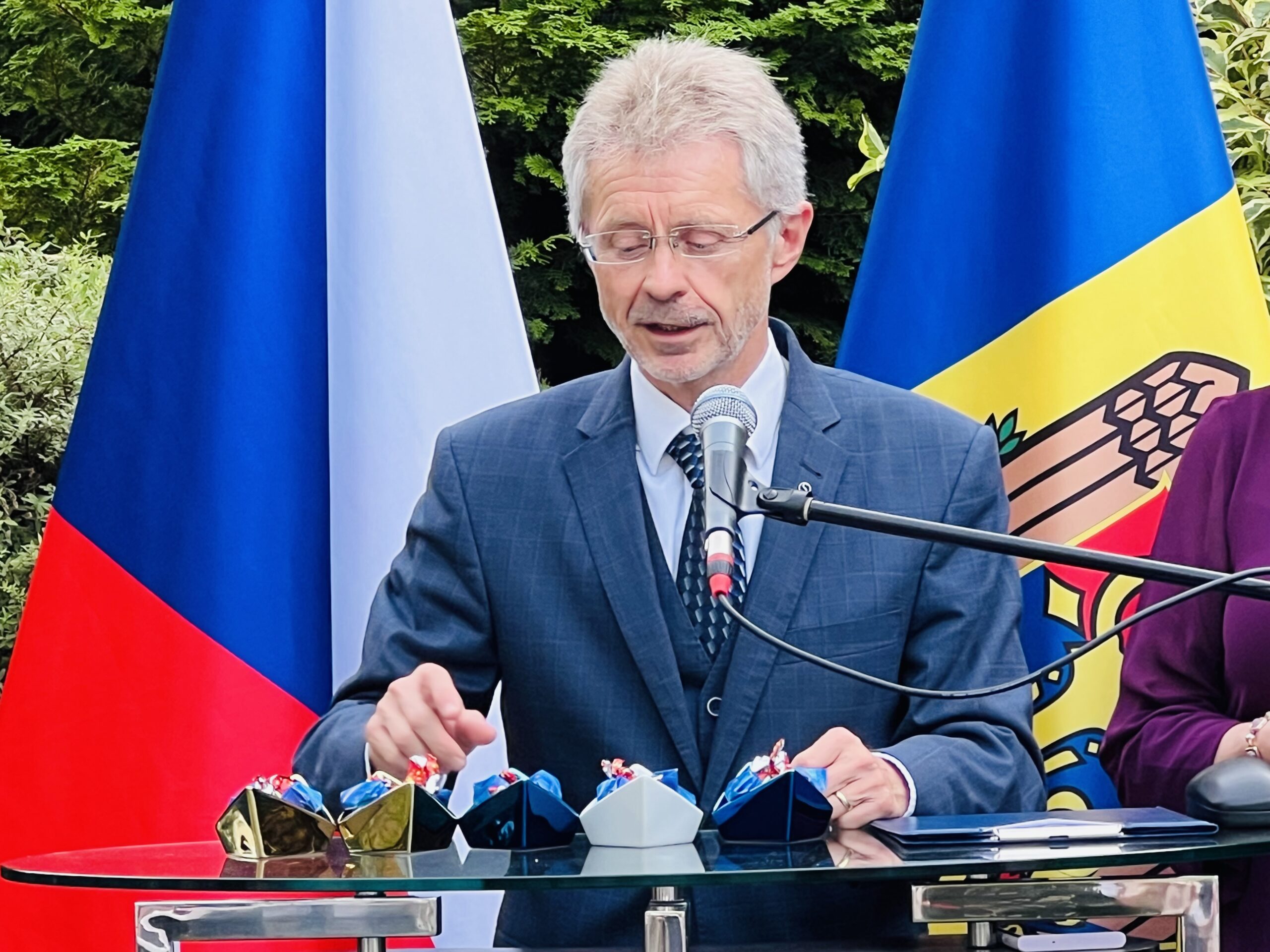
The first was H.E. Miloš Vystrčil, President of the Senate of the Parliament of the Czech Republic.
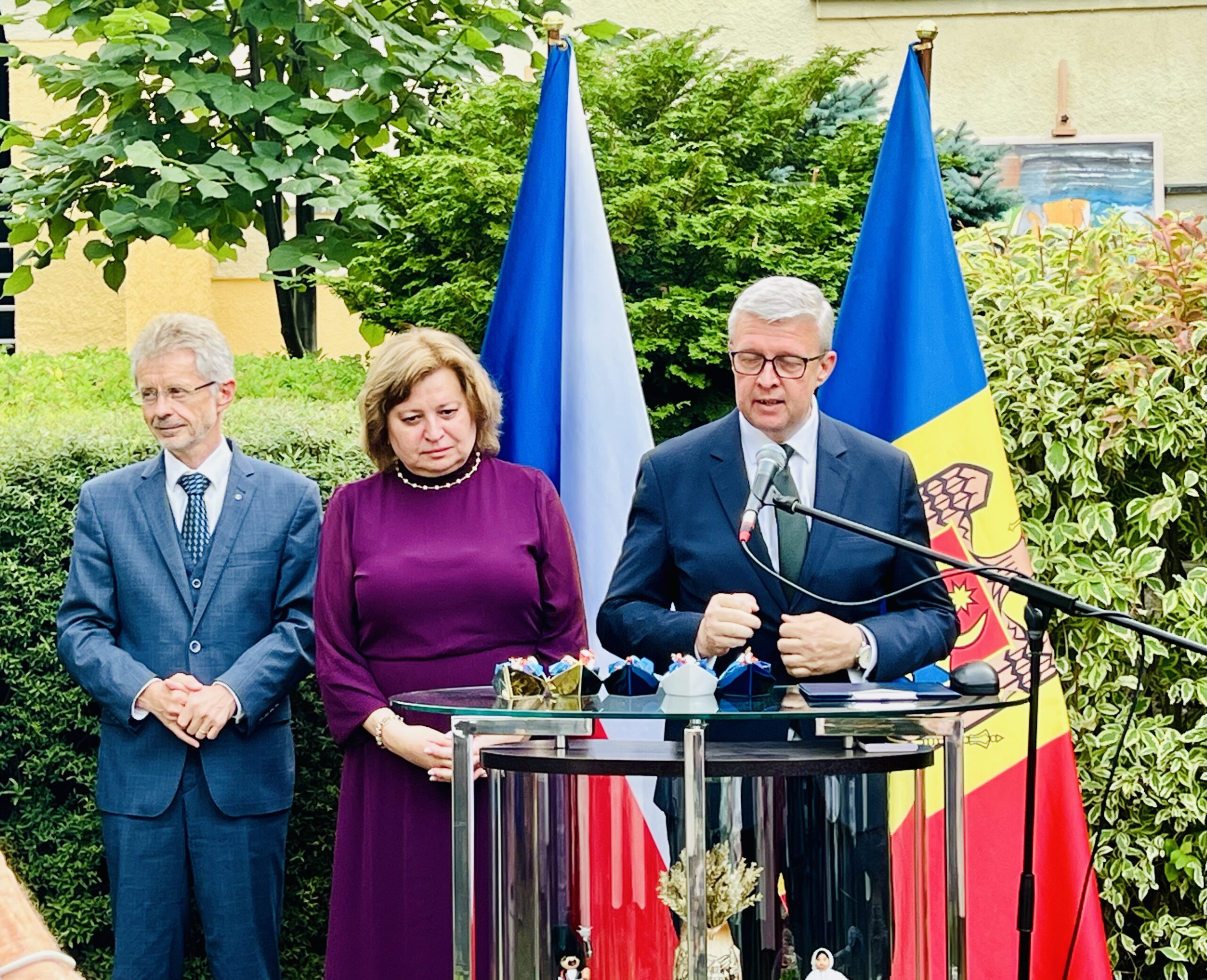
The second was H.E. Karel Havlíček, First Deputy Prime Minister and Minister of Industry and Trade of the Czech Republic.
Ambassador Moraru explicitly thanked the Czech Senate for its support for Moldova and the Ministry of Industry and Trade for continuing the bilateral economic dialogue, including preparations for another session of the intergovernmental commission on economic cooperation.
The presence of two such senior Czech political personalities was more than ceremonial.
It demonstrated the unusually close relationship that has developed between Czechia and Moldova – a relationship increasingly shaped by a common European future.
Gabriela Moraru: Thirty-Five Years of Independence and a European Destination
Ambassador Moraru opened her address by placing the anniversary in a broader historical perspective.
The 35 years since independence, she said, have been years of consolidating Moldovan statehood and national identity, strengthening democratic institutions and continuously working to create a European future.
Her message was strongly European.
For Moraru, Moldova’s European orientation is not simply another foreign-policy option.
She described it as a strategic and irreversible choice, based upon democracy, the rule of law, fundamental rights and the modernization of Moldova’s state institutions.
This was not merely diplomatic rhetoric.
By the summer of 2026, Moldova’s EU accession process had moved considerably beyond the symbolic stage.
Moldova formally applied for EU membership in March 2022 and received candidate status in June of the same year. Accession negotiations formally opened in June 2024.
In June 2026, negotiations were opened on the crucial Fundamentals cluster, encompassing the rule of law, fundamental rights, democratic institutions, public administration and economic criteria.
Only one month later, on 14 July, another negotiating cluster covering external relations and foreign, security and defense policy was opened.
In other words, Moldova’s European ambition is today backed by a functioning accession process.
The question is no longer whether Moldova wishes to become part of the European Union.
The question increasingly concerns when the reforms and negotiations required for membership can be completed.
Miloš Vystrčil and the Boats in a Storm
One of the most memorable moments of the official program came during Senate President Miloš Vystrčil’s address.
Speaking about Moldova’s European future and the importance of solidarity, he used a remarkably simple but effective image.
A single small boat in rough seas can be thrown violently from side to side and remains vulnerable to every wave.
Vystrčil then placed several boats close together.
Together, he explained, they become far more stable.
When the boats remain closely connected, even difficult seas become less threatening.
It was an easily understood metaphor for European integration.
For a relatively small country such as Moldova – located between Romania and Ukraine and confronted with an exceptionally difficult geopolitical environment – membership in a larger political and economic community provides something a small state can never create entirely on its own: greater stability, resilience, economic weight and collective strength.
The symbolism fitted the evening particularly well.
Moldova is not seeking to disappear inside Europe.
It is seeking to bring its own identity, culture, traditions and experience into a wider European family – and, by joining that family, to become stronger.
A Small Ship That Will Withstand the Storm
Intriguingly, Ambassador Moraru herself used a related maritime image in her speech.
Introducing Czech artist Lenka Mališka Šárová, she referred to the artist’s Plavírna symbol – a small ship – and said that in her mind she associated this little vessel with her own small country, “which will withstand.”
Whether planned or coincidental, the two images complemented one another beautifully.
Moldova may indeed be a relatively small European state.
But throughout its history, it has survived between much larger powers.
And today it is seeking not isolation but precisely the kind of European anchoring that can help a smaller state maintain its sovereignty while developing economically and institutionally.
A Country at a Decisive Moment
Ambassador Moraru was also very open about the challenges facing her country.
She identified strengthening national security, securing energy independence, sustainable economic growth, combating corruption, depopulation and infrastructure modernization among Moldova’s most important tasks.
Climate change, economic pressure and the wider geopolitical situation, she said, make reforms and greater resilience even more urgent.
At the same time, however, her message was fundamentally optimistic.
The European path provides not just a political objective but a framework for modernizing institutions, developing the economy and improving citizens’ living standards.
This distinction matters.
European integration is sometimes discussed as though it consisted mainly of flags, institutions and political declarations.
For Moldova, its real significance is much more practical.
It means judicial reform.
Modern public administration.
Infrastructure.
Investment.
Energy connections.
Better environmental standards.
Access to European markets.
Educational opportunities.
And eventually full participation in the world’s largest integrated economic and political community.
Moldova Through the Centuries
The significance of independence can only truly be understood against Moldova’s unusually complex history.
The historical Principality of Moldavia emerged in the 14th century and developed into an important state between the Carpathians and the Dniester.
One of its most famous rulers was Stephen the Great – Ștefan cel Mare, who ruled from 1457 until 1504 and remains one of the most important figures in Moldovan and Romanian historical memory.
From the 16th century onwards, Moldavia increasingly came under Ottoman suzerainty, although it retained considerable internal autonomy rather than becoming an ordinary Ottoman province.
A major geopolitical turning point came in 1812, following the Russo-Turkish War.
The Russian Empire annexed the eastern part of the Principality of Moldavia between the Prut and Dniester rivers.
This territory became widely known as Bessarabia.
After the collapse of the Russian Empire during the First World War and the Russian Revolution, Bessarabia declared independence and subsequently united with Romania in 1918.
Another dramatic change came in 1940, following the Molotov-Ribbentrop Pact and Soviet pressure on Romania.
The Soviet Union occupied Bessarabia, and much of the territory became the Moldavian Soviet Socialist Republic.
During the Second World War, the territory changed hands again before Soviet forces re-established control in 1944.
For almost five subsequent decades, Moldova remained one of the republics of the Soviet Union.
This long history of repeatedly finding itself between empires and competing geopolitical spheres helps explain why independence, sovereignty and the right to choose its own international orientation carry such emotional and political significance in Moldova today.
27 August 1991
The decisive moment came as the Soviet Union began to disintegrate.
On 27 August 1991, Moldova’s Parliament adopted the Declaration of Independence.
Ambassador Moraru described the date as a defining moment in the modern history of the country – an expression of the Moldovan people’s determination to decide their own destiny and establish their own place within the international community.
Romania became the first country to recognize independent Moldova.
Within months, the Soviet Union itself ceased to exist.
The Moldovan state then faced the enormous challenge many newly independent post-Soviet republics faced: establishing functioning democratic institutions, a market economy, and an independent foreign policy virtually simultaneously.
The years that followed were not always easy.
Most seriously, armed conflict broke out in Transnistria in 1992.
The unresolved Transnistrian question, together with the presence of Russian forces in the region and the Russian invasion of neighboring Ukraine since 2022, has given questions of security and sovereignty immediate relevance for modern Moldova.
Independence Day Today
Today, 27 August – Ziua Independenței – is Moldova’s principal national holiday.
It is celebrated throughout the country with official ceremonies, concerts, cultural events and public festivities.
For the 35th anniversary in 2026, the celebrations in Chișinău were particularly extensive.
The official program included commemorations at the Eternity Memorial and the monument to Stephen the Great, followed by a major military parade in the Great National Assembly Square involving around 2,000 members of the armed forces and other security structures.
Romanian President Nicușor Dan and Ukrainian President Volodymyr Zelenskyy also traveled to Chișinău for the anniversary.
Their presence carried obvious symbolism.
Moldova celebrated its independence between its closest EU neighbor, Romania, and Ukraine, which continues to defend its own sovereignty against Russian aggression.
Moldova and European Security
Geography makes security impossible to ignore.
Russia’s war against Ukraine has fundamentally altered the security environment surrounding Moldova.
Moldova has also faced cyberattacks, disinformation, attempts at political interference, energy pressure and other hybrid threats.
The Czech Republic has repeatedly expressed strong support for Moldova’s territorial integrity and European orientation and has provided assistance to strengthen its resilience.
However, an important distinction exists between Moldova’s EU and NATO relationships.
EU membership is an official Moldovan strategic objective, and accession negotiations are underway.
Moldova, by contrast, remains constitutionally neutral and is not currently pursuing NATO membership.
Nevertheless, cooperation between Moldova and NATO is already extensive.
Relations began in 1992, and Moldova joined NATO’s Partnership for Peace in 1994. NATO today assists Moldova with defense reform, institutional resilience and modernization while explicitly respecting its constitutional neutrality.
For a country exposed to the consequences of war immediately across its eastern border, closer integration into European political, economic and security structures can undoubtedly increase resilience.
Whether Moldova ever chooses to change its constitutional neutrality and seek NATO membership is ultimately a decision for the Moldovan people and their democratic institutions.
Its European Union trajectory, however, is already clearly defined.
Ambassador Gabriela Moraru – A Career European Diplomat
The personality at the center of the Prague celebration has participated in Moldova’s European development for three decades.
Gabriela Moraru, born in 1972, joined Moldova’s Ministry of Foreign Affairs in 1996 after studying philology at the State University of Moldova and international relations in Bucharest, Italy, and at the Diplomatic Academy in Athens.
Her diplomatic career has been unusually broad.
She began in diplomatic protocol before serving as a political counselor at Moldova’s Embassy in Hungary, where her responsibilities also extended to the Czech Republic, Slovakia, Croatia, Slovenia, Bosnia and Herzegovina, the Holy See and the Danube Commission.
She subsequently headed Moldova’s State Protocol Department and served at the Moldovan Embassy in Poland.
Within the Foreign Ministry in Chișinău, she held senior positions focused on European integration and regional cooperation.
She later served in Estonia and became Chief of Staff to Moldova’s Minister of Foreign Affairs and European Integration.
From 2015 until 2021, Moraru served as Ambassador of Moldova to Israel.
After returning to Chișinău, she again occupied senior positions dealing with regional and bilateral European relations before becoming head of the Department of Bilateral Cooperation in 2024.
She has served as Ambassador to the Czech Republic since September 2024 and is additionally accredited to the Holy See.
Her career therefore mirrors many themes of her Independence Day address: European integration, bilateral partnerships, and Moldova’s gradual emergence as an increasingly confident actor in European diplomacy.
Czechia – More Than a Political Friend
One of the strongest sections of Moraru’s address concerned the Czech Republic.
She thanked Czechia not simply for political declarations but for practical assistance.
Czech development cooperation, she said, has contributed to infrastructure modernization, environmental protection, agriculture and rural development as well as stronger state institutions.
This partnership has unusually deep roots.
Moldova has been a priority country for Czech development cooperation since 2005 and remains one of the program countries for the 2024–2030 period.
Current Czech cooperation focuses particularly on good governance and resilient institutions, inclusive social development, and sustainable agriculture and rural prosperity.
This is significant precisely because Czechia can offer experience that many older EU states cannot.
The Czech Republic itself underwent the transition from a centrally planned communist economy to a democratic market economy and then went through the long process of preparing for EU membership.
It therefore understands many of the institutional, political and economic transformations Moldova is now undertaking.
Czechia does not merely tell Moldova that European integration is possible.
It has itself made that journey.
An Intensifying Political Relationship
Ambassador Moraru emphasized just how active bilateral relations had become during 2026.
During the first half of the year, Czech ministers responsible for foreign affairs, social affairs and defense visited Moldova.
At the same time, the Czech Republic received both the President of Moldova and the President of the Moldovan Parliament, while Moldova’s Defense Minister subsequently visited Czechia.
This density of high-level contacts shows that Prague no longer views Moldova merely as a recipient of development assistance.
It is becoming an increasingly important political, economic and security partner.
An Economic Relationship with Considerable Potential
The economic relationship also has substantial room to expand.
Moldova offers opportunities in agriculture and food processing, renewable energy, infrastructure, water management, environmental technologies, engineering, information technology and other sectors in which Czech companies possess considerable expertise.
EU accession itself will accelerate many of these opportunities.
Every stage of accession requires infrastructure modernization, higher environmental standards, institutional reform and adaptation of Moldovan companies to European standards.
For Czech businesses, this means Moldova should increasingly be viewed not simply as a small market outside the European Union but as a future member of the European economic space undergoing rapid transformation.
Karel Havlíček’s participation in the Prague celebration therefore carried obvious significance.
As First Deputy Prime Minister and Minister of Industry and Trade, his presence underlined that Czech-Moldovan relations increasingly concern not only development assistance and diplomacy, but also trade, investment and industrial cooperation.
Ambassador Moraru specifically thanked his ministry for maintaining the dialogue and preparing the next intergovernmental commission on economic cooperation.
Art as a Bridge Between Moldova and Czechia
The reception also demonstrated that relations between countries cannot be measured only in trade statistics and ministerial visits.
Culture plays an equally important role.
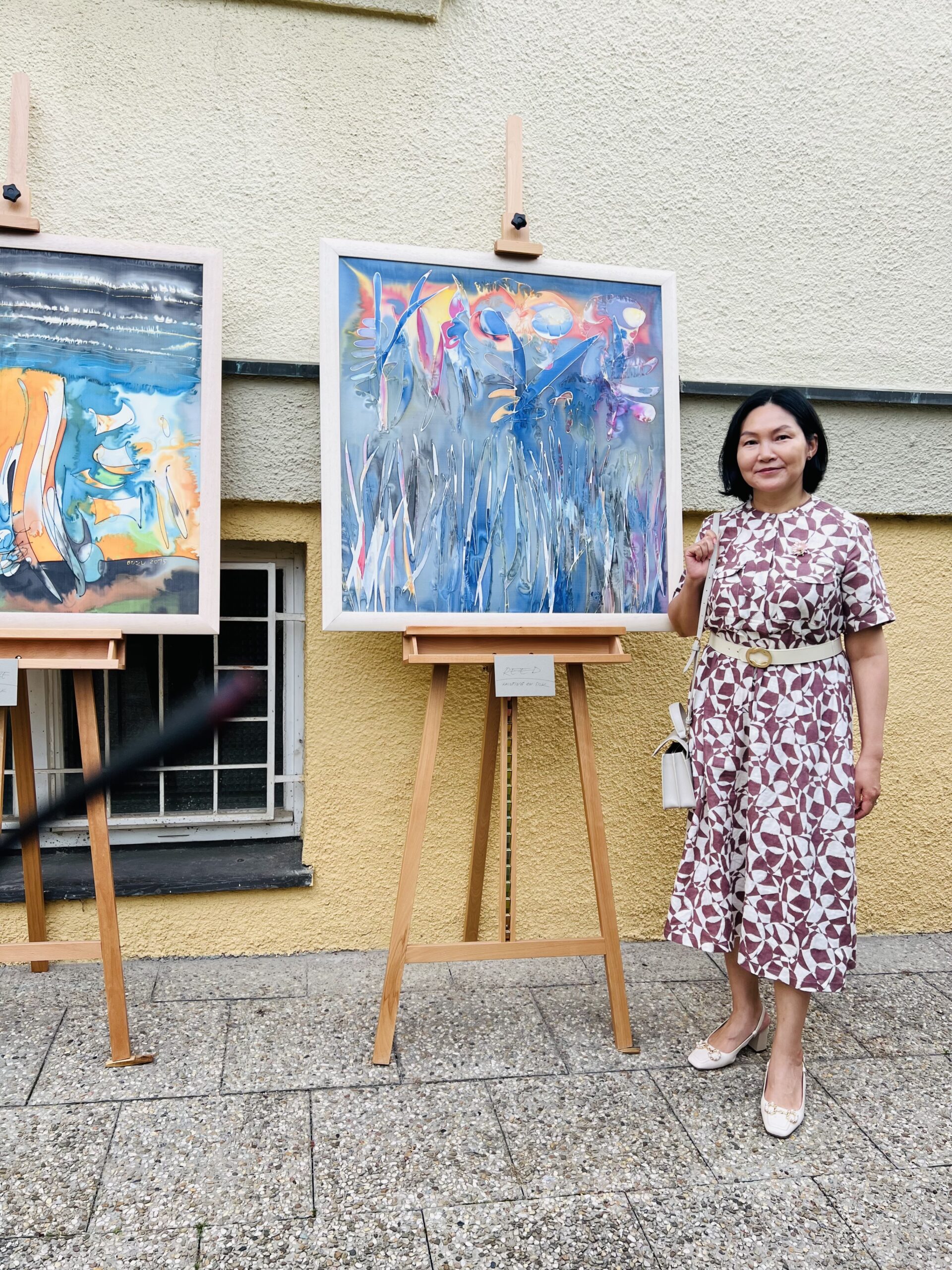
Ambassador Moraru introduced two artists whose biographies symbolize the connection between Moldova and Czechia.
The first was Teodor Buzu, born in Moldova in 1960.
Buzu studied art in Chișinău and at the Academy of Arts and Design in Kharkiv, and has since built an extensive career in the Czech Republic and internationally.
He works across painting, monumental art, graphic design, illustration and other media and is associated with artists’ organizations in both Moldova and Czechia.
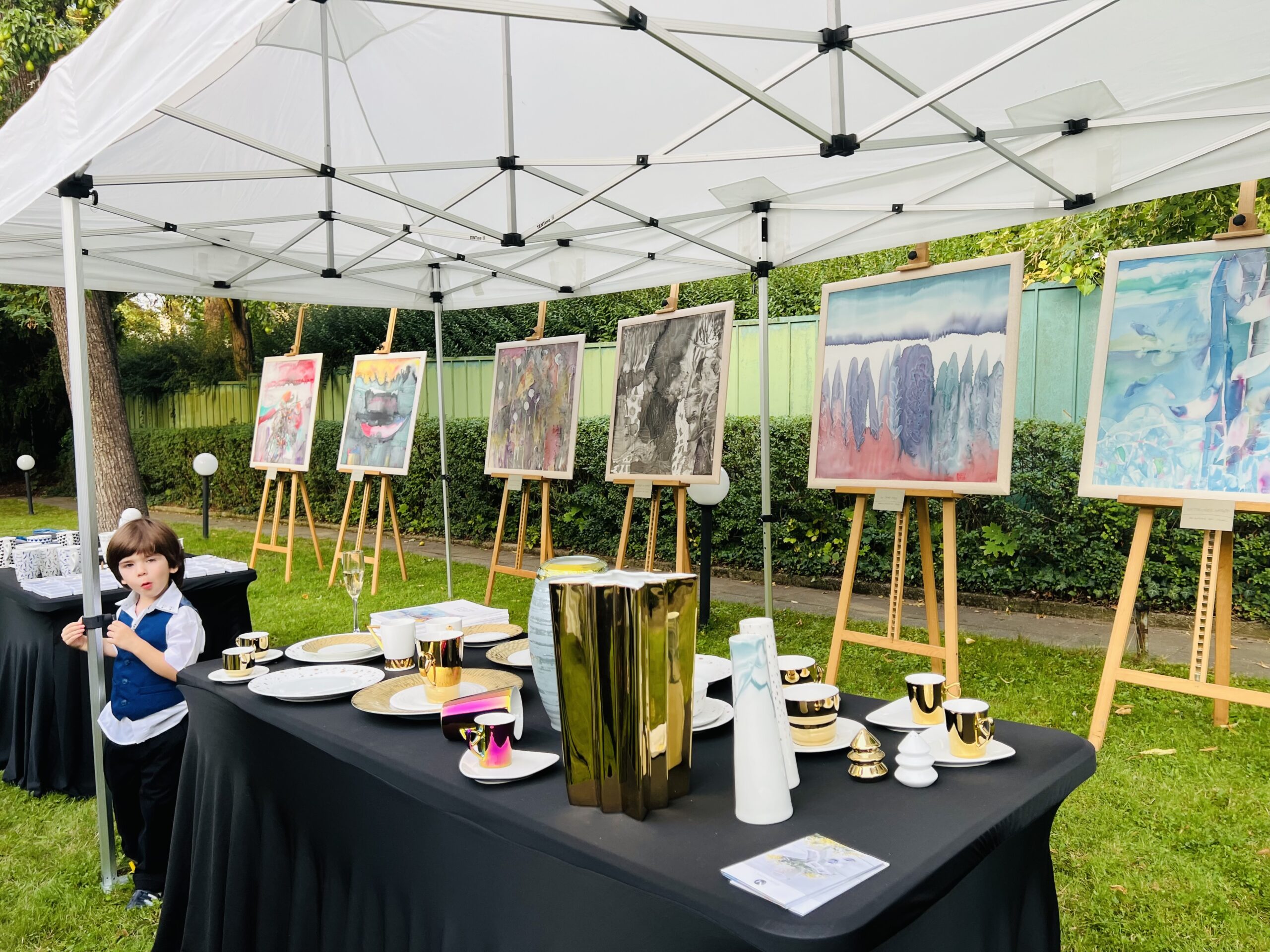
The second was Czech artist Lenka Mališka Šárová, a painter and porcelain artist with particularly close ties to Moldova.
Ambassador Moraru announced that Šárová would soon represent Moldova as an Honorary Consul, transforming a cultural friendship into an institutional bridge between the two countries.
Works by the two artists formed part of the cultural setting of the Independence Day reception.
It was a fitting choice.
Diplomatic relationships are strongest not only between governments but between people.
A National Anthem in the Garden
The formal part of the program also included a live instrumental rendition of the Moldovan national anthem.
The performance gave the ceremony an intimate character particularly suited to a garden reception.
The exact name of the musician and whether the instrument was saxophone or clarinet should be confirmed before publication;
Moldova – A Land of Wine
No serious celebration of Moldova could be complete without wine.
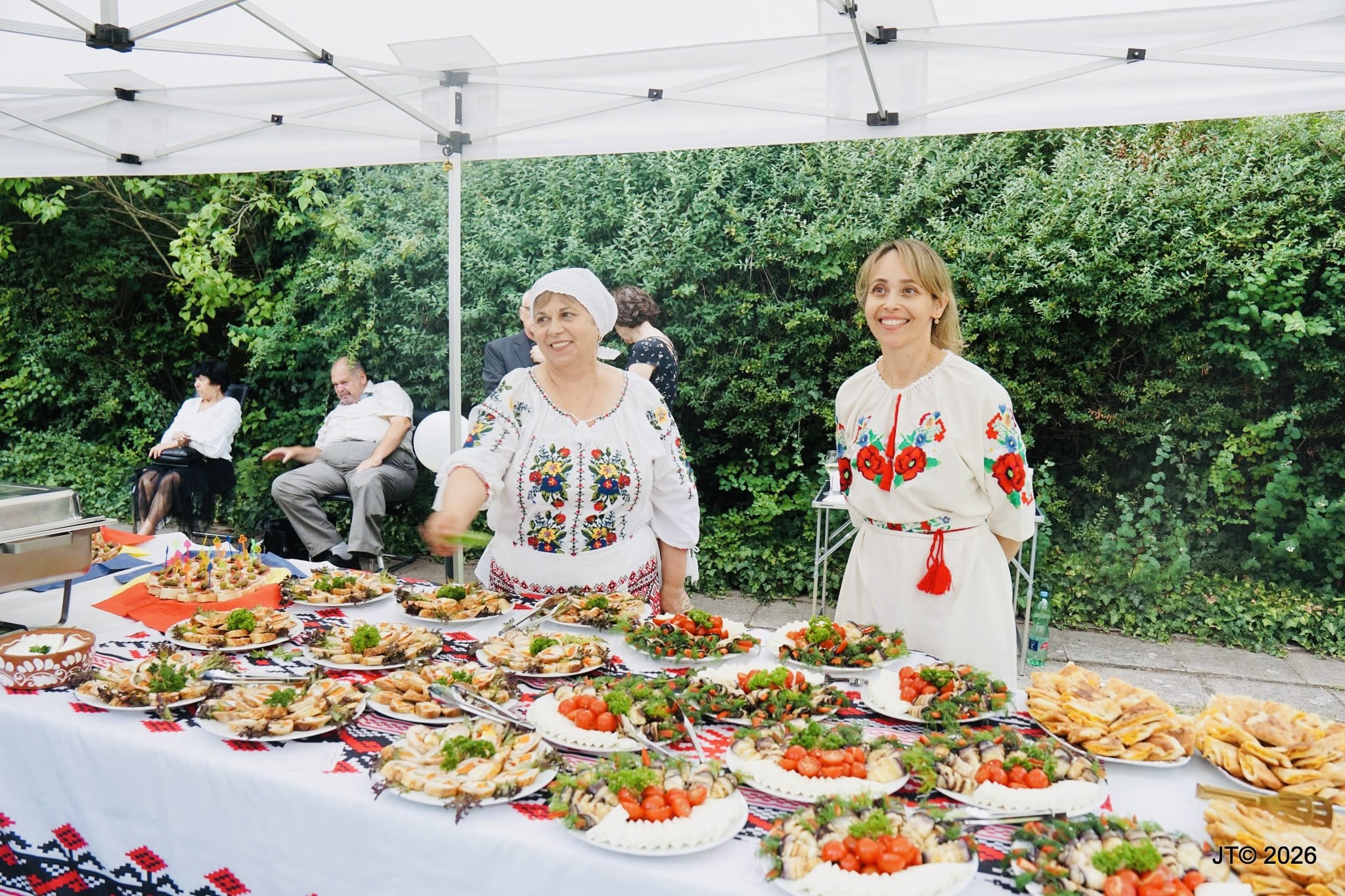
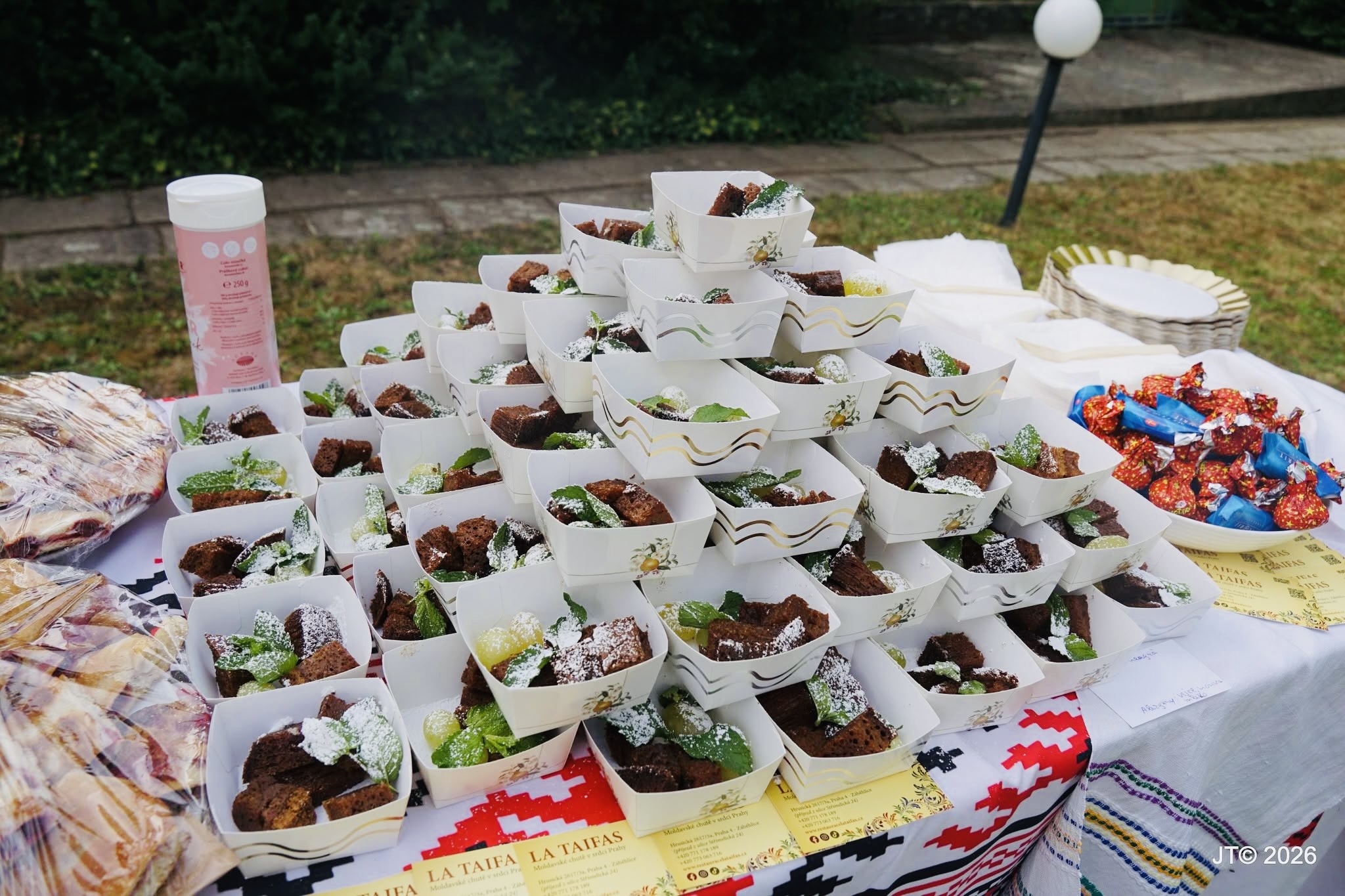
After the official program, guests were invited to enjoy a selection of delicately prepared dishes in traditional Moldovan style together with a broad choice of Moldovan wines.
This was more than simply hospitality.
Wine is part of Moldova’s cultural identity.
The favorable continental climate, fertile soils, and rolling landscape between the Prut and Dniester have supported viticulture for centuries.
Today Moldova produces everything from dry whites and structured reds to rosé, sparkling, and dessert wines.
Internationally known Moldovan grape varieties and blends increasingly appear in European markets alongside local varieties and familiar European grapes such as Cabernet Sauvignon, Merlot, Chardonnay and Sauvignon Blanc.
Perhaps the most spectacular symbol of Moldovan wine culture lies beneath the ground.
The limestone galleries of Mileștii Mici form an extraordinary underground wine complex containing kilometers of cellars and a renowned collection of bottles, while Cricova is another famous underground wine city and an important symbol of the country’s viticultural tradition.
Moldovan wine has also undergone an important transformation in recent decades.
Rather than relying mainly on former Soviet markets, producers have increasingly turned to the EU and international consumers, raising quality, modernizing wineries, and developing a much stronger national wine brand.
The excellent wines served in Prague offered perhaps the most enjoyable demonstration of that evolution.
Moldova at 35: A Country Looking Forward
National anniversaries often encourage countries to look backward.
Ambassador Moraru certainly honored Moldova’s history.
But her speech was overwhelmingly oriented toward the future.
Her central message was not one of nostalgia for 1991.
It was one of transformation.
Thirty-five years after independence, Moldova has a functioning democratic state, increasingly close relations with European partners, an active EU accession process and a generation of citizens who see their country’s future as European.
The challenges remain considerable.
There is an unresolved territorial conflict.
Russia’s war against neighboring Ukraine creates an unprecedented security environment.
Energy security remains essential.
Reforms must continue.
Corruption must be fought.
Infrastructure needs investment.
And demographic pressures are real.
But the Moldova presented in Prague was not a country defined by its problems.
It was a dynamic European candidate state determined to overcome them.
Standing with Ukraine – and with Europe
Moraru also used her speech to send a clear message regarding neighboring Ukraine.
Addressing Ukrainian Ambassador Vasyl Zvarych, she stressed Moldova’s determination to support Ukraine and work for peace and security in the region.
She also addressed Romanian Ambassador Antoaneta Barta, thanking Romania for its support and referring to the shared understanding of freedom and democracy shaped by Central and Eastern Europe’s historical experience.
This triangle – Moldova, Romania and Ukraine – has acquired enormous significance since 2022.
Romania anchors Moldova directly to the European Union and provides vital political, economic and energy connections.
Ukraine’s continued independence prevents Moldova from sharing a much larger direct frontier with Russian-controlled territory.
Moldova’s own European integration strengthens regional stability between the EU and Ukraine.
The security and European future of these countries are therefore increasingly interconnected.
“We Want to Become Part of This Beautiful European Family”
Perhaps the most moving moment in Ambassador Moraru’s speech came near its conclusion.
She switched into Czech.
Addressing the Czech people directly, she spoke about Moldovans integrated into everyday life in Czechia and expressed pride in the friendship between the two peoples.
Her appeal was simple: continue supporting Moldova so that it too can become part of the European family.
It summed up the evening.
Moldova is no longer asking Europe whether it belongs there.
It has made its choice.
Its institutions are adapting.
Negotiations are progressing.
And European partners such as Czechia are helping it along the path.
A Valuable Future Member of the European Union
The European debate about enlargement is sometimes framed in terms of what candidate countries will receive from the European Union.
There is another side to that equation.
Moldova also has something to contribute.
It brings an educated and multilingual population.
A strategic location between Central Europe, the Black Sea region, and Ukraine.
A significant agricultural tradition.
A growing technology sector.
A rich cultural heritage combining Romanian, Eastern European and regional influences.
Experience of democratic resilience under extremely difficult geopolitical pressure.
And a population that has repeatedly had to make fundamental choices about sovereignty and political orientation.
A successful, democratic and prosperous Moldova inside the European Union would not merely be good for Moldova.
It would strengthen Europe’s eastern frontier, expand the single market and demonstrate that democratic reform and European integration remain credible instruments for creating stability.
In that sense, Miloš Vystrčil’s boats in rough water were an exceptionally appropriate image.
The larger European vessel becomes more stable not because smaller boats disappear into it, but because each contributes to the stability of the whole.
Thirty-Five Years – and the Beginning of a New Chapter
On 27 August 1991, Moldova declared that it would determine its own future.
Thirty-five years later, that journey continues.
But its direction has rarely been clearer.
At the Embassy in Prague, surrounded by diplomats, Czech political leaders, artists, and friends, Ambassador Gabriela Moraru celebrated independence while also looking toward integration.
The works of Teodor Buzu and Lenka Mališka Šárová demonstrated the cultural bonds already linking Moldova and Czechia.
The Moldovan food and excellent wines demonstrated a national culture with much to offer Europe.
Karel Havlíček’s presence underlined the economic opportunities ahead.
And Miloš Vystrčil’s simple image of several small boats holding tightly together in rough seas captured something fundamental about the European project itself.
Moldova has spent centuries at the intersection of larger empires and competing geopolitical interests.
Today, for perhaps the first time in its modern history, it has the opportunity to anchor itself permanently within a European community it has freely chosen.
That is why the 35th anniversary was more than a celebration of an event in 1991.
It was also a celebration of where Moldova intends to be in the decades ahead.
And, as Ambassador Moraru concluded in Prague:
“Thank you, Czech Republic, for the friendship and support.”
Recent posts
See AllPrague Forum Membership
Join us
Be part of building bridges and channels to engage all the international key voices and decision makers living in the Czech Republic.
Become a member