- Hans Weber
- October 8, 2026
DON CAMILLO’S REBELLIOUS FATHER
Versione italiana qui sotto
The Miner in the Writing Room
With Don Camillo and Peppone, Giovannino Guareschi created one of the most beloved literary worlds in Italy—humorous, humane, and at the same time politically sharp. Yet behind the cheerful village stories stood an author who regarded writing as a hard duty and who, throughout his life, had the courage to dissent against the spirit of the age, against parties, and even against his own camp. Marco Gallina’s biography paints the portrait of an inconvenient man of conscience whose stance seems more relevant today than ever.
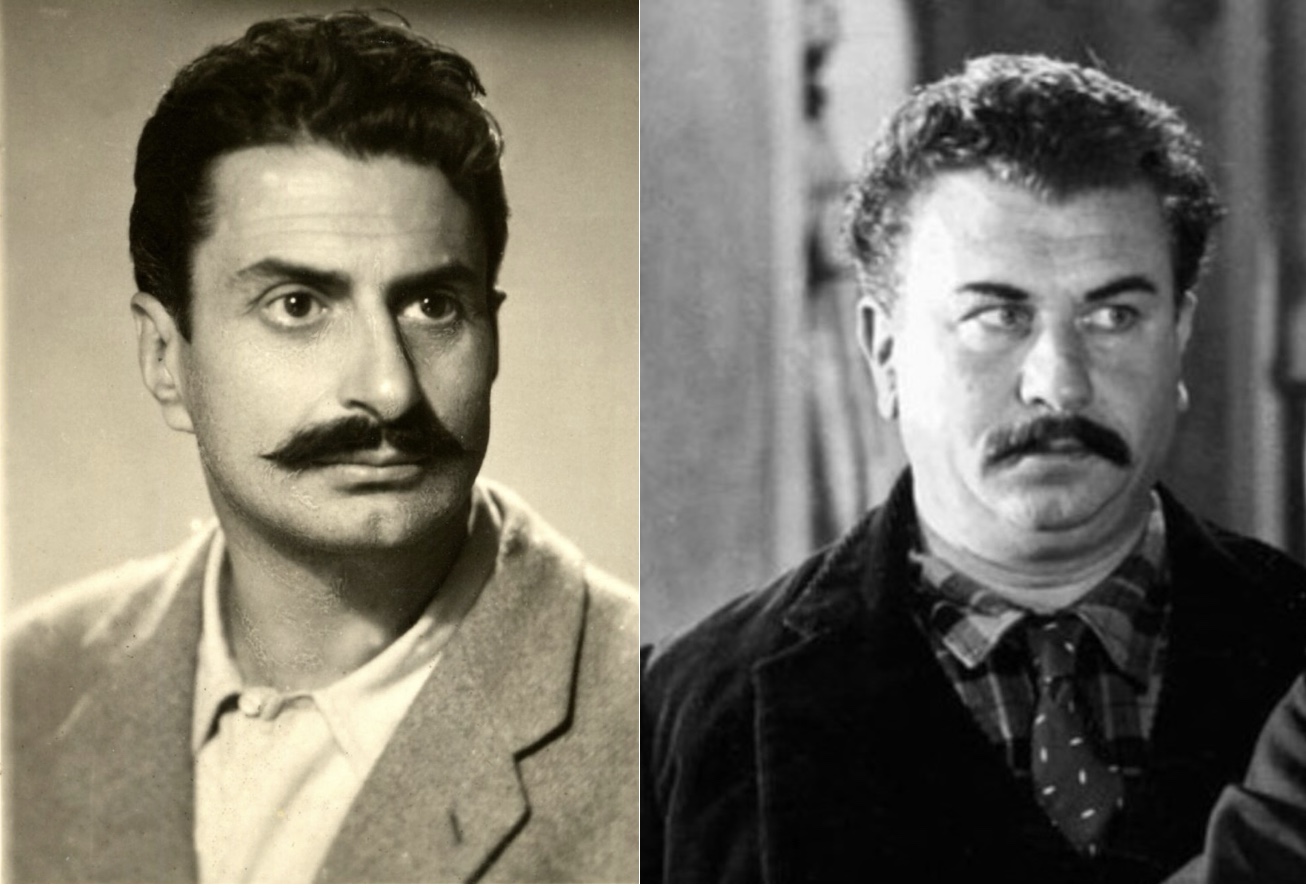
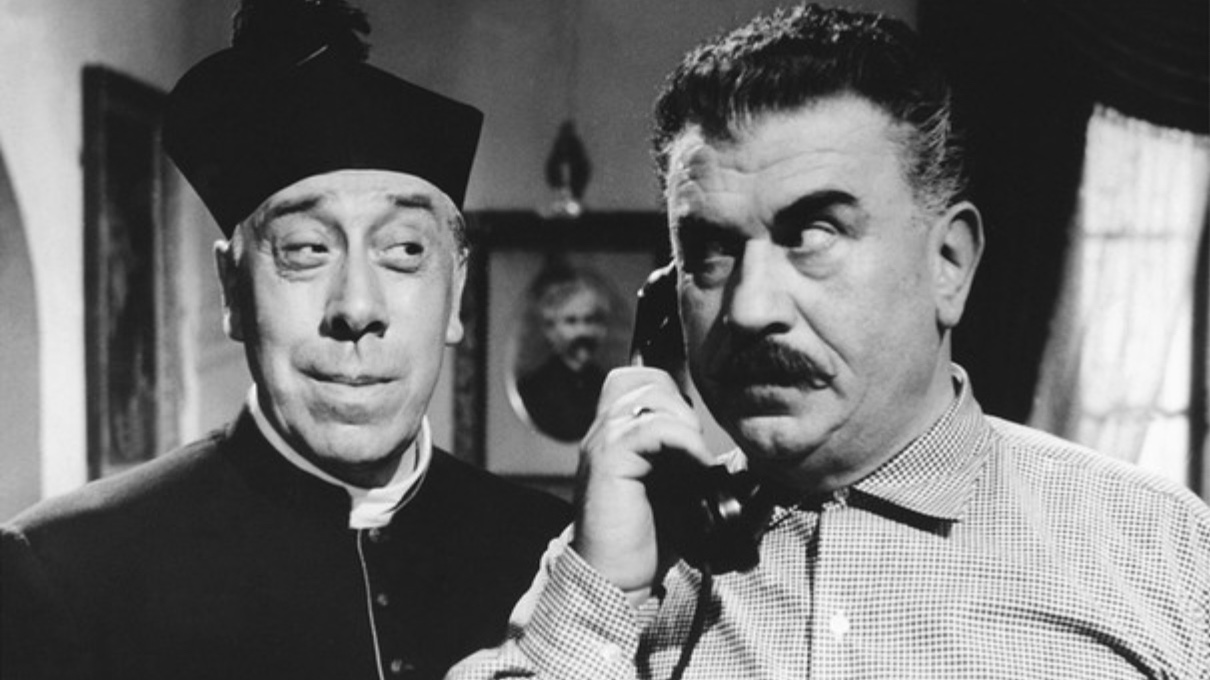
Writing should be fun. At least, that is what a reader of one of the amusing Don Camillo and Peppone stories might assume. But for their creator, Giovannino Guareschi (1908–1968)—who, incidentally, bore an uncanny resemblance to the cinematic Peppone—it was above all one thing: work. Hard, daily work, like labor in a mine, which he pursued dutifully throughout his life. Work that made him one of Italy’s most popular authors—and also one of its most fiercely attacked.
Author Marco Gallina has dedicated a book to this man that makes clear from the very first sentence that it is written in the spirit of Guareschi himself. Here is a story that wants to be told—and a storyteller who has the skill to tell it.
Gallina’s biography begins at the grave. On July 24, 1968, Guareschi is buried in Roncole, the birthplace of Giuseppe Verdi. A simple ceremony. No candles. No flowers. No music. No state wreath. Instead, a single prominent figure stands in the rain without an umbrella, water droplets on his white hair: Enzo Ferrari. The legendary engineer and the writer had been friends. Neither had ever boasted of knowing the other. On the coffin lies the tricolor bearing the coat of arms of the House of Savoy. It is a confession of loyalty to a nation that no longer exists. It is the first—but certainly not the last—time that Gallina leads the reader through a scene that feels almost cinematic.
Four No’s, Four Decisions of Conscience
Anyone who wants to understand Guareschi must understand four conflicts that shaped his life—four great “No’s” that transformed him from a dandy reporter into an Athanasius of the twentieth century. The first “No” is spoken by the young lieutenant in 1943 to the Germans: “I am a soldier of the Royal Italian Army.” He chooses internment over collaboration with the Republic of Salò. For two years he languishes in Częstochowa, Sandbostel, and Wietzendorf, wasting away to 46 kilograms, writing stories, reading them to his comrades, building a nativity scene out of cardboard and postcards. In a scene—admittedly somewhat embellished by Gallina—that could almost come from an Indiana Jones film, Guareschi coolly tells a Gestapo officer who wants to recruit him for a fascist satirical newspaper that he had refused to shoot at his Italian brothers and now refuses even more to “shoot at them with lies.” The boots clatter away on the stone floor; the great tempter withdraws—for the time being.
Guareschi’s second “No” is directed at the Communists. Back home, he founds Candido with his colleague Giovanni Mosca, a satirical newspaper that becomes a thorn in the side of the Left. Emilia-Romagna, Guareschi’s homeland, is the epicenter of the so-called “Triangle of Death,” where communist partisans murder thousands after the war, including fascists, alleged fascists, but also priests and civilians. The mass media remain silent. Guareschi does not. He invents the “Trinariciuti,” the three-nostriled ones—caricatures of dull party soldiers who obey every command, no matter how absurd. The term enters the Italian language. Communist leader Togliatti publicly calls him a “triple idiot.” Guareschi wears it as his highest honor.
His third “No” is aimed at his own camp—and perhaps costs him the most. The Christian Democrats under Alcide De Gasperi, whom Guareschi had helped to victory in 1948 with brilliant campaign posters, deeply disappoint him through corruption, partitocracy, and countless broken promises. When Guareschi publishes letters in 1954 implicating De Gasperi, the full machinery turns against him. The Christian Democratic youth paper writes that he is “the kind of Italian who must be erased from our society”—using the word cancellare. Cancel culture, anno 1954—but not from the Left, rather from the Christian Democrats! The court refuses to examine the documents and convicts him of defamation. Guareschi waives his right to appeal. He packs the same bag he had packed for the German camp and voluntarily reports to the authorities. In the end, he serves 409 days in prison in Parma—his city. “I prefer to be condemned by justice and acquitted by my conscience than to be acquitted by justice and condemned by my conscience.”
The fourth and final “No” is directed at the post-conciliar Church. In his last Don Camillo volume, published posthumously in 1969, Guareschi introduces the young priest Don Chichì, intoxicated by the Second Vatican Council, preaching to the poor who scarcely exist in the village and willing to marry a couple during a parachute jump in order not to lose contact with the youth. Don Camillo, the old parish priest who still celebrates Mass in Latin, offers the most beautiful of all responses: “My Church is not the great ship you keep talking about, but only a poor little boat—and yet I have always sailed it from one shore to the other.”
Personal Conscience as the Ultimate Guide
What holds these four conflicts together is Guareschi’s core idea, which Gallina weaves through all chapters as a red thread: personal conscience as the final authority. Don Camillo, Peppone, and Christ on the cross are, as Guareschi himself says, ultimately one single figure—himself. The voice of Christ is the voice of his conscience. And this Christ cannot be brought into line with any party. When Don Camillo invokes “public opinion,” Jesus replies dryly: “I know. It was public opinion that nailed me to the cross.” There are no collective souls. Each person is born for himself and dies for himself. Woe to him who abandons his personal conscience in order to partake in a collective one. What might be dismissed in better times as naïve Sunday philosophy increasingly reveals itself as a timeless—and highly topical—challenge to every form of conformism.
What Gallina makes of this material goes far beyond a conventional biography, even though the historical facts are, of course, all in their proper place. Each chapter is a fresco that brings a world back to life before the reader’s eyes: the Bassa with its poplars and mists, fascist Milan with its surprising experimental spirit, the barracks nights in northern Germany and Poland, the postwar Italy of massacres and miracles. The author embarks on historical excursions—from the Guelphs and Ghibellines and the War of the Bucket to the small Renaissance principalities of the Po Valley—which do not distract from the subject but rather ground it. Anyone who wants to understand why Don Camillo and Peppone “work” must know the “fertile river humus” from which they grew. Gallina provides it, telling the story so vividly that one might think he has internalized Guareschi’s maxim: if it is not true, it is well invented.
DEFENDER OF THE FAITH
Guareschi remains relevant not because of his postwar anti-communism—that would be merely historical—but because of his anthropology. The mass, the apparatus, and the collective conscience are not ghosts of the past. Anyone today who says “No” to the spirit of the age, who does not unconditionally support his own camp, or who refuses to parrot prescribed opinions, quickly finds himself where Guareschi stood—on the outside, between chairs, in the dock, labeled a cockroach by his own milieu. The polarization that dominates our present is something Guareschi not only knew—he experienced it firsthand. His remedy is not a false middle, not compromise at any price, but the upright individual conscience that can neither be bought nor intimidated.
There is a certain irony in the fact that Cardinal Gerhard Ludwig Müller, in the worthwhile afterword, quotes passages on conscience from the pastoral constitution Gaudium et Spes of the Second Vatican Council—the very council with which Guareschi had dealt so harshly a few chapters earlier. But such is life: not always neatly resolved and rounded, but full of edges and contradictions. Like Guareschi himself—the monarchist republican, the Catholic critic of the Church, and the reactionary rebel. In the end, the council wrote about conscience what Guareschi had long lived. Perhaps that is the final point.
Gallina’s book comes at the right time. The spirit of the age had tried to silence Guareschi into oblivion. The folders in the family archive tell the story: after 1968, only obituaries. In the 1970s, a single file. Then, from the 1980s onward, the entries begin to multiply again. And from the 2000s, the reception exploded. Guareschi’s son Alberto, who has guarded the legacy for sixty years, sums it up: “They tried to silence him. He won.” With over twenty million books sold, translations into fifty-nine languages, and a cultural impact that eclipses Umberto Eco’s The Name of the Rose, this craftsman in the writing room ultimately proved right. The message of this laborer in the vineyard of the Lord is simple yet weighty: in the end, each man stands alone before God. No collective, no party, no spirit of the age can take that responsibility from him.
Writing does not always have to be fun. But reading the work of Guareschi—and Gallina—certainly is.
___________________________________________________________________________________________
IL PADRE RIBELLE DI DON CAMILLO
Il minatore nella stanza di scrittura
Con Don Camillo e Peppone, Giovannino Guareschi ha creato uno dei mondi letterari più amati d’Italia: umoristico, umano e, al tempo stesso, politicamente tagliente. Eppure, dietro le allegre storie di paese, c’era un autore che considerava la scrittura un duro dovere e che, per tutta la vita, ebbe il coraggio di dissentire dallo spirito del tempo, dai partiti e persino dal proprio schieramento. La biografia di Marco Gallina dipinge il ritratto di un uomo scomodo, un uomo di coscienza la cui posizione appare oggi più attuale che mai.
La scrittura dovrebbe essere divertente. Almeno così potrebbe pensare un lettore di una delle divertenti storie di Don Camillo e Peppone. Ma per il loro creatore, Giovannino Guareschi (1908–1968) – che, tra l’altro, somigliava in modo sorprendente al Peppone cinematografico – era soprattutto una cosa: lavoro. Lavoro duro, quotidiano, come quello in miniera, che ho svolto con dedizione per tutta la vita. Un lavoro che lo ha reso uno degli autori più popolari d’Italia, ma anche tra i più ferocemente attaccati.
L’autore Marco Gallina ha dedicato a quest’uomo un libro che, fin dalla prima frase, chiarisce di essere scritto nello spirito dello stesso Guareschi. È una storia che vuole essere raccontata – e un narratore capace di raccontarla.
La biografia di Gallina inizia dalla tomba. Il 24 luglio 1968 Guareschi viene sepolto a Roncole, il paese natale di Giuseppe Verdi. Una cerimonia semplice. Niente candele. Niente fiori. Niente musica. Niente corona di Stato. Al suo posto, sotto la pioggia e senza ombrello, c’è una sola figura di spicco: Enzo Ferrari. L’ingegnere leggendario e lo scrittore erano amici. Nessuno dei due aveva mai vantato questa amicizia. Sulla bara giace il tricolore con lo stemma di Casa Savoia. È una dichiarazione di fedeltà a una nazione che non esiste più. È la prima – ma certamente non l’ultima – volta che Gallina conduce il lettore attraverso una scena che sembra quasi cinematografica.
Quattro «No», quattro decisioni di coscienza
Chi vuole capire Guareschi deve comprendere quattro conflitti che hanno segnato la sua vita – quattro grandi «No» che lo hanno trasformato da dandy reporter in un Atanasio del XX secolo. Il primo «No» lo pronuncia il giovane tenente nel 1943 ai tedeschi: «Sono un soldato dell’Esercito Regio Italiano». Sceglie l’internamento piuttosto che collaborare con la Repubblica di Salò. Per due anni langue a Częstochowa, Sandbostel e Wietzendorf, arrivando a pesare 46 chili, scrivendo storie, leggendole ai compagni, costruendo un presepe con cartone e cartoline. In una scena – un po’ romanzata da Gallina – che potrebbe quasi venire da un film di Indiana Jones, Guareschi dice con freddezza a un ufficiale della Gestapo che vuole reclutarlo per un giornale satirico fascista di aver rifiutato di sparare ai suoi fratelli italiani e di rifiutare ancora di più di «sparare loro con le bugie». Gli stivali si allontanano rumorosamente sul pavimento di pietra; il grande tentatore si ritira – per il momento.
Il secondo «No» di Guareschi è rivolto ai comunisti. Tornato a casa, fonda con il collega Giovanni Mosca *Candido*, un giornale satirico che diventa una spina nel fianco della Sinistra. L’Emilia-Romagna, terra natale di Guareschi, è l’epicentro del cosiddetto «Triangolo della Morte», dove dopo la guerra i partigiani comunisti uccidono migliaia di persone: fascisti, presunti fascisti, ma anche preti e civili. I grandi media tacciono. Guareschi no. Inventa i «Trinariciuti», i tre-narici, caricature di ottusi soldati di partito che obbediscono a ogni ordine, per quanto assurdo. Il termine entra nella lingua italiana. Il leader comunista Togliatti lo definisce pubblicamente «triplo idiota». Guareschi lo porta come il più alto onore.
Il terzo «No» è rivolto al suo stesso campo – e forse gli costa di più. La Democrazia Cristiana di Alcide De Gasperi, che Guareschi aveva contribuito a far vincere nel 1948 con manifesti elettorali geniali, lo delude profondamente con corruzione, partitocrazia e promesse non mantenute. Quando nel 1954 Guareschi pubblica lettere che coinvolgono De Gasperi, l’intero apparato si scatena contro di lui. Il giornale della gioventù democristiana scrive che è «il tipo di italiano che deve essere cancellato dalla nostra società» – usando la parola *cancellare*. Cancel culture, anno 1954 – ma non da sinistra, bensì dalla Democrazia Cristiana! Il tribunale rifiuta di esaminare i documenti e lo condanna per diffamazione. Guareschi rinuncia al diritto di appello. Prepara la stessa valigia che aveva preparato per il campo tedesco e si presenta volontariamente alle autorità. Alla fine sconta 409 giorni di carcere a Parma – la sua città. «Preferisco essere condannato dalla giustizia e assolto dalla mia coscienza piuttosto che assolto dalla giustizia e condannato dalla mia coscienza».
Il quarto e ultimo «No» è rivolto alla Chiesa post-conciliare. Nell’ultimo volume di Don Camillo, pubblicato postumo nel 1969, Guareschi introduce il giovane prete Don Chichì, ubriaco di Concilio Vaticano II, che predica ai poveri che nel paese quasi non esistono e che è disposto a sposare una coppia durante un lancio con il paracadute pur di non perdere contatto con i giovani. Don Camillo, il vecchio parroco che celebra ancora la Messa in latino, offre la risposta più bella: «La mia Chiesa non è la grande nave di cui parli sempre, ma solo una povera barchetta – eppure io l’ho sempre portata da una riva all’altra».
La coscienza personale come guida ultima
Ciò che unisce questi quattro conflitti è l’idea centrale di Guareschi, che Gallina tesse come filo rosso in tutti i capitoli: la coscienza personale come autorità finale. Don Camillo, Peppone e Cristo in croce sono, come dice lo stesso Guareschi, in fondo una sola figura – se stesso. La voce di Cristo è la voce della sua coscienza. E questo Cristo non può essere allineato a nessun partito. Quando Don Camillo invoca «l’opinione pubblica», Gesù risponde seccamente: «Lo so. È stata l’opinione pubblica a inchiodarmi sulla croce». Non esistono anime collettive. Ognuno nasce per sé e muore per sé. Guai a chi abbandona la propria coscienza personale per partecipare a una coscienza collettiva. Ciò che in tempi migliori potrebbe essere liquidato come ingenua filosofia da sagrestia, si rivela sempre più una sfida senza tempo – e attualissima – a ogni forma di conformismo.
Ciò che Gallina fa di questo materiale va ben oltre una biografia convenzionale, anche se i fatti storici sono naturalmente tutti al loro posto. Ogni capitolo è un affresco che fa rivivere un mondo davanti agli occhi del lettore: la Bassa con i suoi pioppi e le sue nebbie, la Milano fascista con il suo sorprendente spirito sperimentale, le notti di caserma nel nord della Germania e in Polonia, l’Italia del dopoguerra tra massacri e miracoli. L’autore si concede escursioni storiche – dai Guelfi e Ghibellini alla Guerra della Secchia fino ai piccoli principati rinascimentali della Valle del Po – che non distraggono dal tema, ma lo radicano. Chi vuole capire perché Don Camillo e Peppone «funzionano» deve conoscere l’«humus fertile del fiume» da cui sono nati. Gallina lo fornisce, raccontando la storia in modo così vivido che si potrebbe pensare abbia interiorizzato la massima di Guareschi: se non è vero, è ben trovato.
DIFENSORE DELLA FEDE
Guareschi rimane attuale non per il suo anticomunismo del dopoguerra – che sarebbe solo storico – ma per la sua antropologia. La massa, l’apparato e la coscienza collettiva non sono fantasmi del passato. Chi oggi dice «No» allo spirito del tempo, chi non sostiene incondizionatamente il proprio campo o rifiuta di ripetere opinioni prescritte, si ritrova rapidamente dove stava Guareschi: fuori, tra due sedie, sul banco degli imputati, etichettato come scarafaggio dal proprio ambiente. La polarizzazione che domina il presente è qualcosa che Guareschi non solo conosceva: l’ha vissuta sulla propria pelle. Il suo rimedio non è una falsa via di mezzo, non è il compromesso a ogni costo, ma la coscienza individuale eretta che non può essere né comprata né intimidita.
C’è una certa ironia nel fatto che il cardinale Gerhard Ludwig Müller, nell’utile postfazione, citi passi sulla coscienza dalla costituzione pastorale *Gaudium et Spes* del Concilio Vaticano II – proprio quel concilio con cui Guareschi aveva fatto i conti così duramente nei capitoli precedenti. Ma così è la vita: non sempre ordinata e rotonda, ma piena di spigoli e contraddizioni. Come Guareschi stesso: il monarchico repubblicano, il cattolico critico della Chiesa, il reazionario ribelle. Alla fine il Concilio ha scritto sulla coscienza ciò che Guareschi aveva vissuto da tempo. Forse questo è il punto finale.
Il libro di Gallina arriva al momento giusto. Lo spirito del tempo aveva cercato di far tacere Guareschi nell’oblio. Le cartellette nell’archivio di famiglia raccontano la storia: dopo il 1968 solo necrologi. Negli anni Settanta un solo fascicolo. Poi, dagli anni Ottanta, le voci ricominciano a moltiplicarsi. E dagli anni Duemila la ricezione esplode. Il figlio di Guareschi, Alberto, che ha custodito il lascito per sessant’anni, lo riassume così: «Hanno cercato di farlo tacere. Ha vinto lui». Con oltre venti milioni di libri venduti, traduzioni in cinquantanove lingue e un impatto culturale che eclissa *Il nome della rosa* di Umberto Eco, questo artigiano della stanza di scrittura ha alla fine avuto ragione. Il messaggio di questo lavoratore nella vigna del Signore è semplice ma pesante: alla fine ogni uomo sta solo davanti a Dio. Nessun collettivo, nessun partito, nessun spirito del tempo può togliergli questa responsabilità.
La scrittura non deve sempre essere divertente. Ma leggere l’opera di Guareschi – e di Gallina – lo è certamente.
Recent posts
See AllPrague Forum Membership
Join us
Be part of building bridges and channels to engage all the international key voices and decision makers living in the Czech Republic.
Become a member