- Hans Weber
- September 4, 2026
From Czechoslovak Television to Ambassador in Prague
Article by Hans Weber
How András Baranyi Saw Three Dreams Come True
A feature for PRAGUE FORUM
A Summer Evening Above Prague
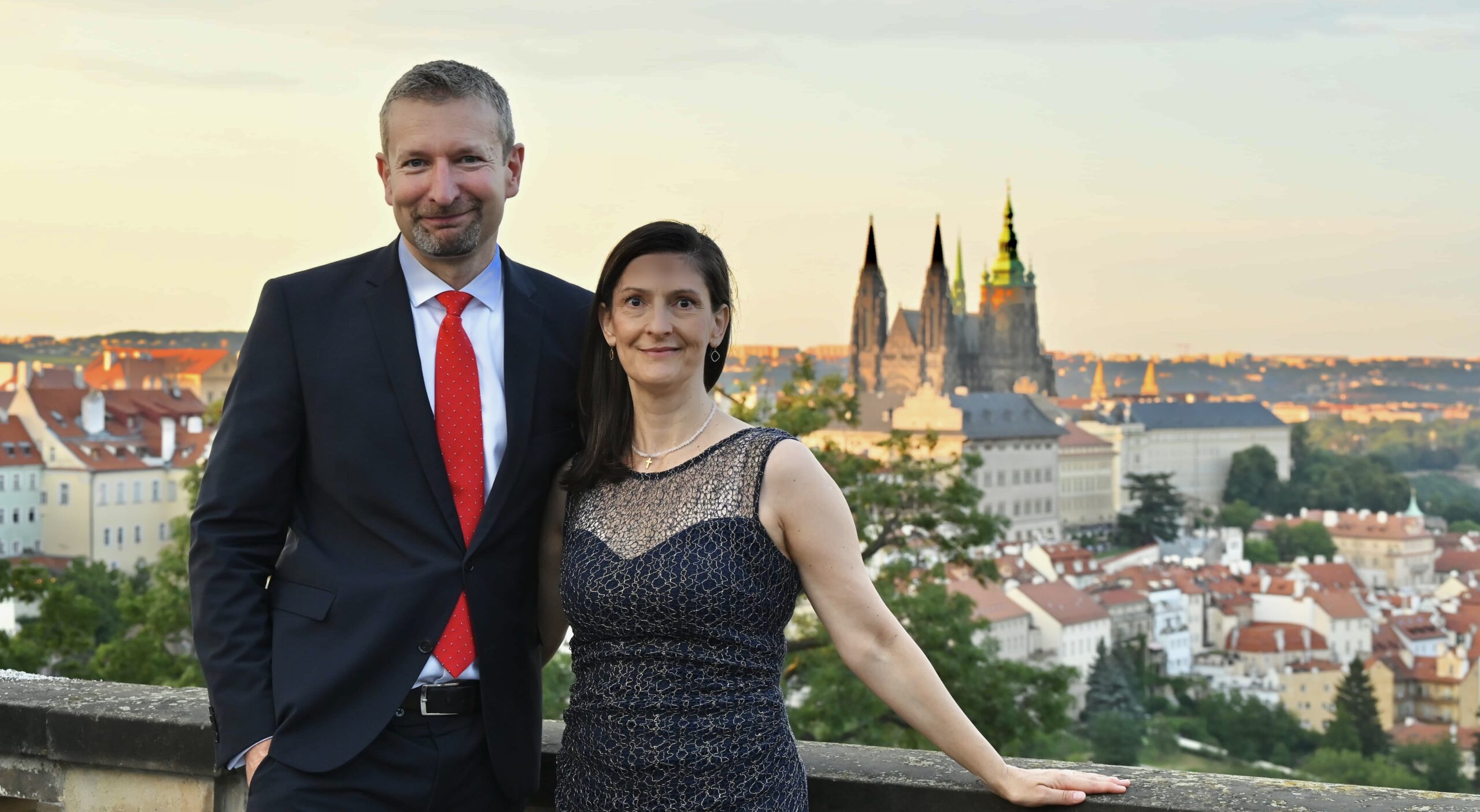
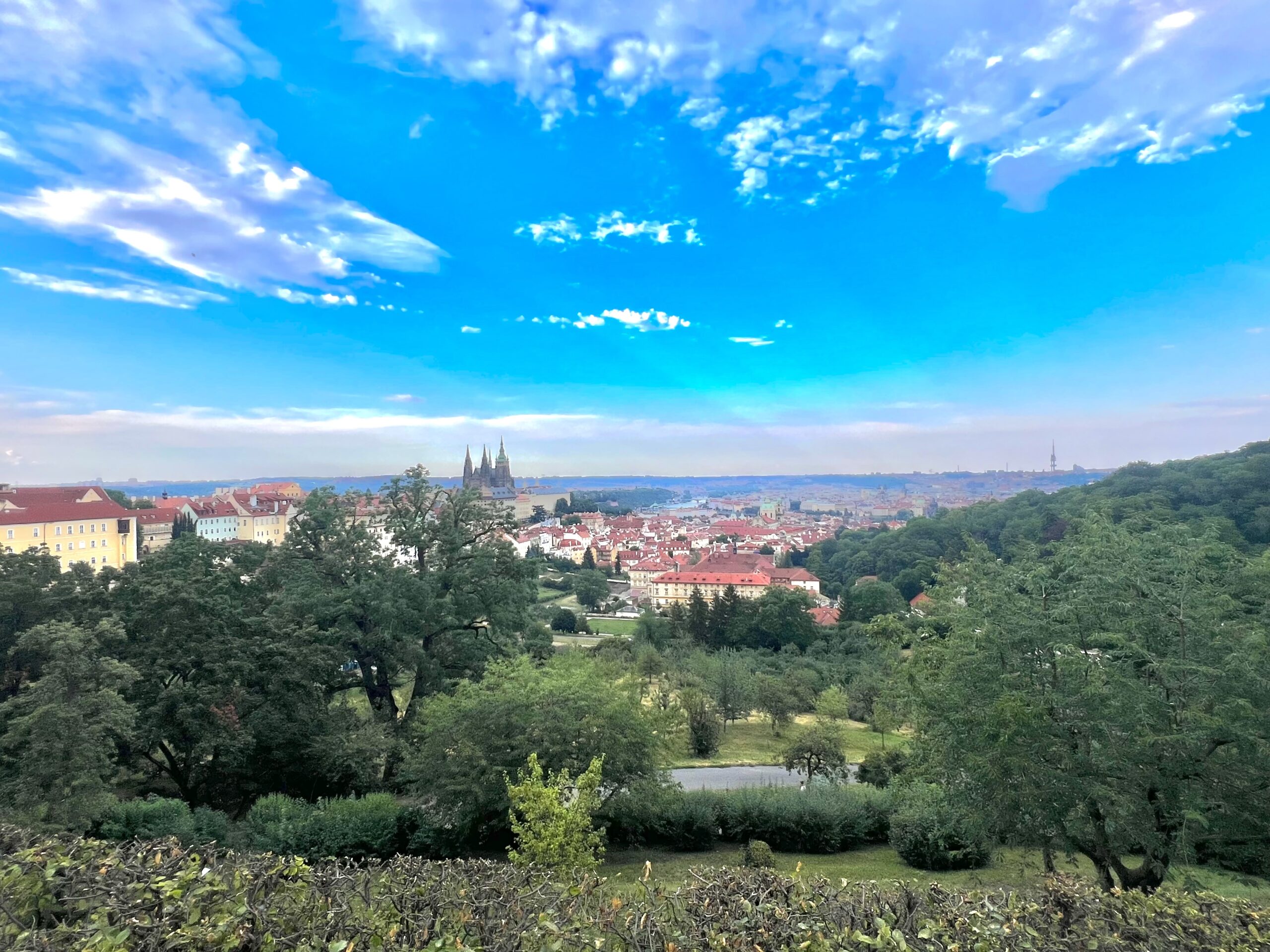
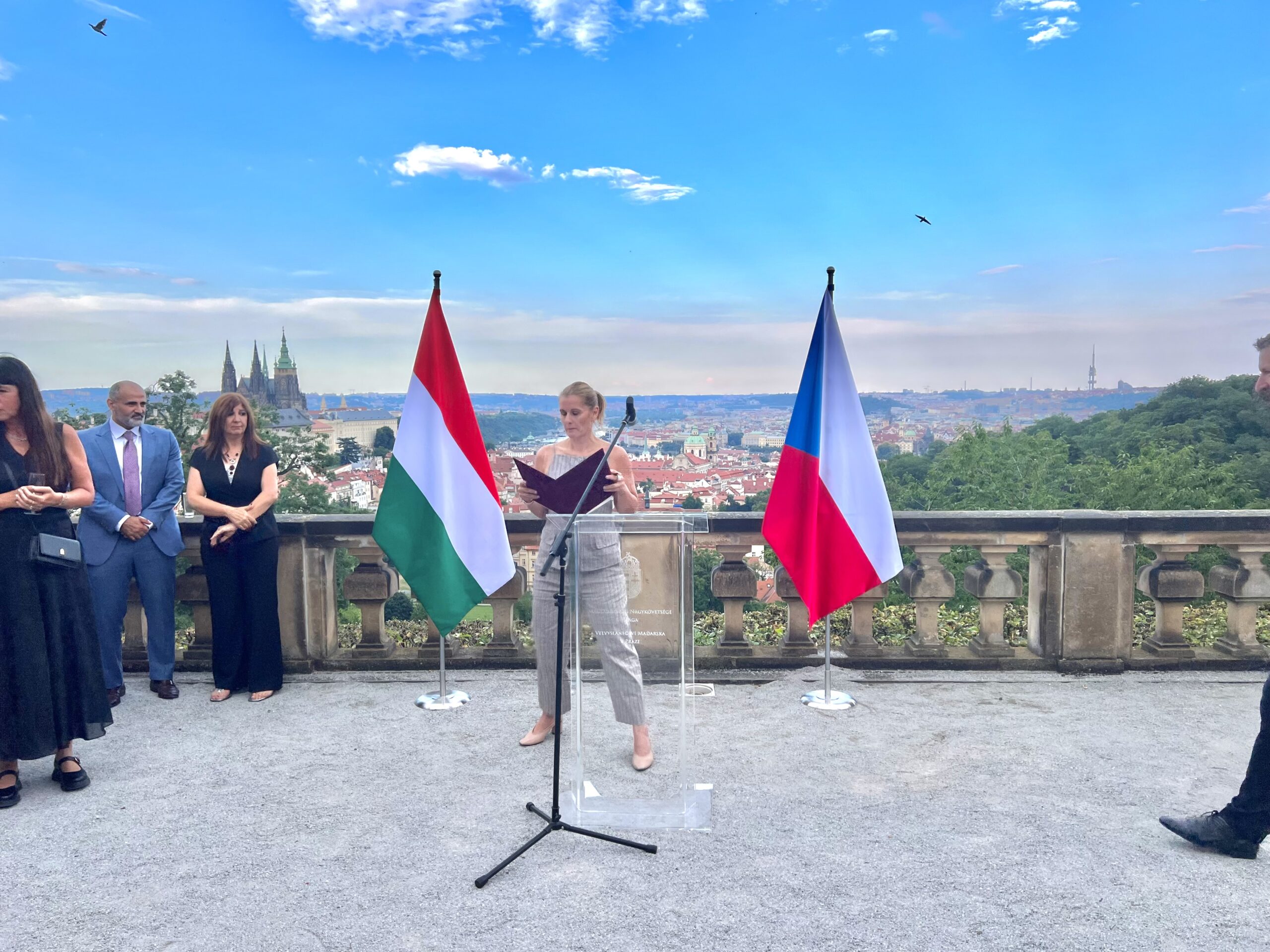
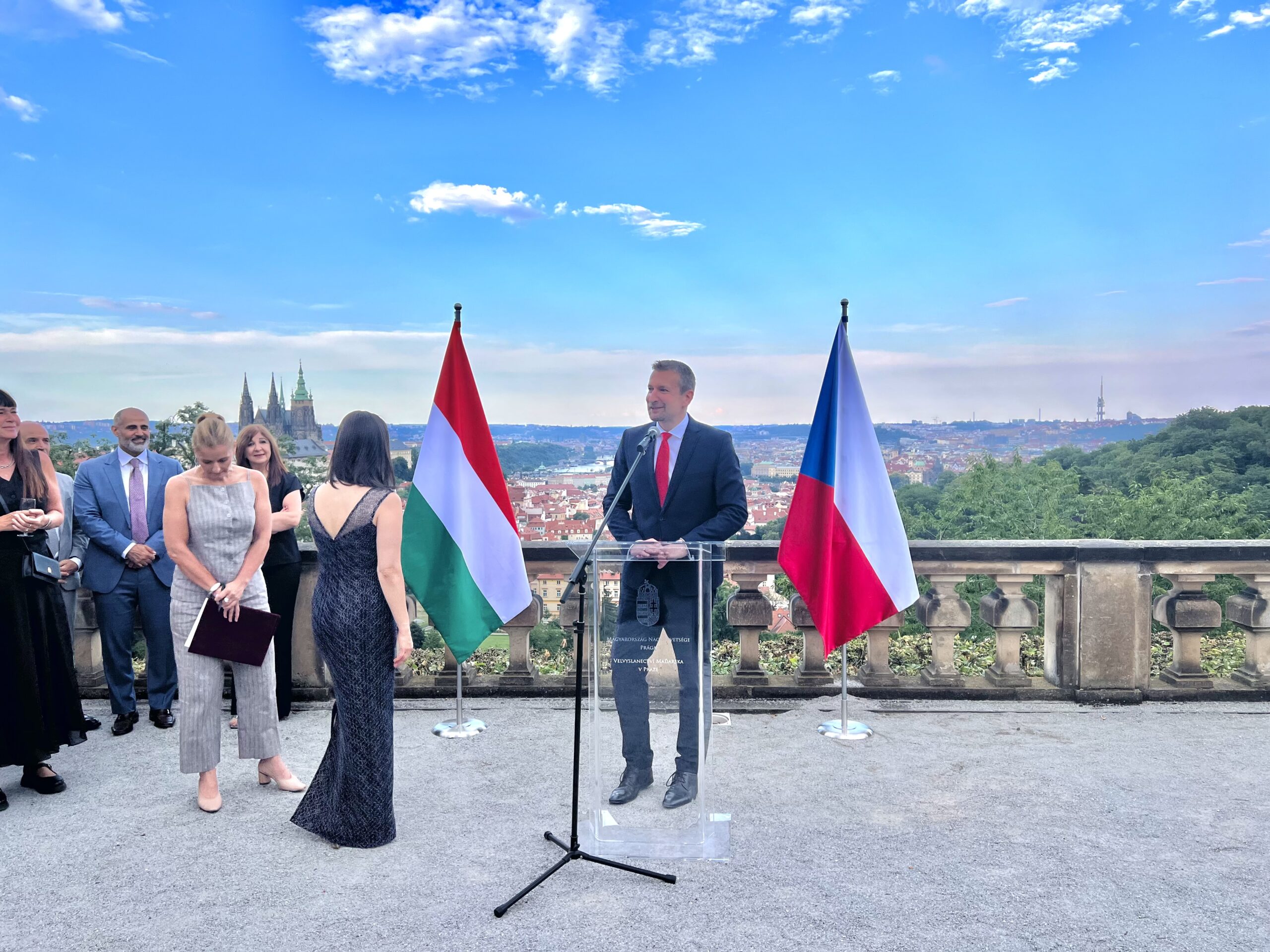
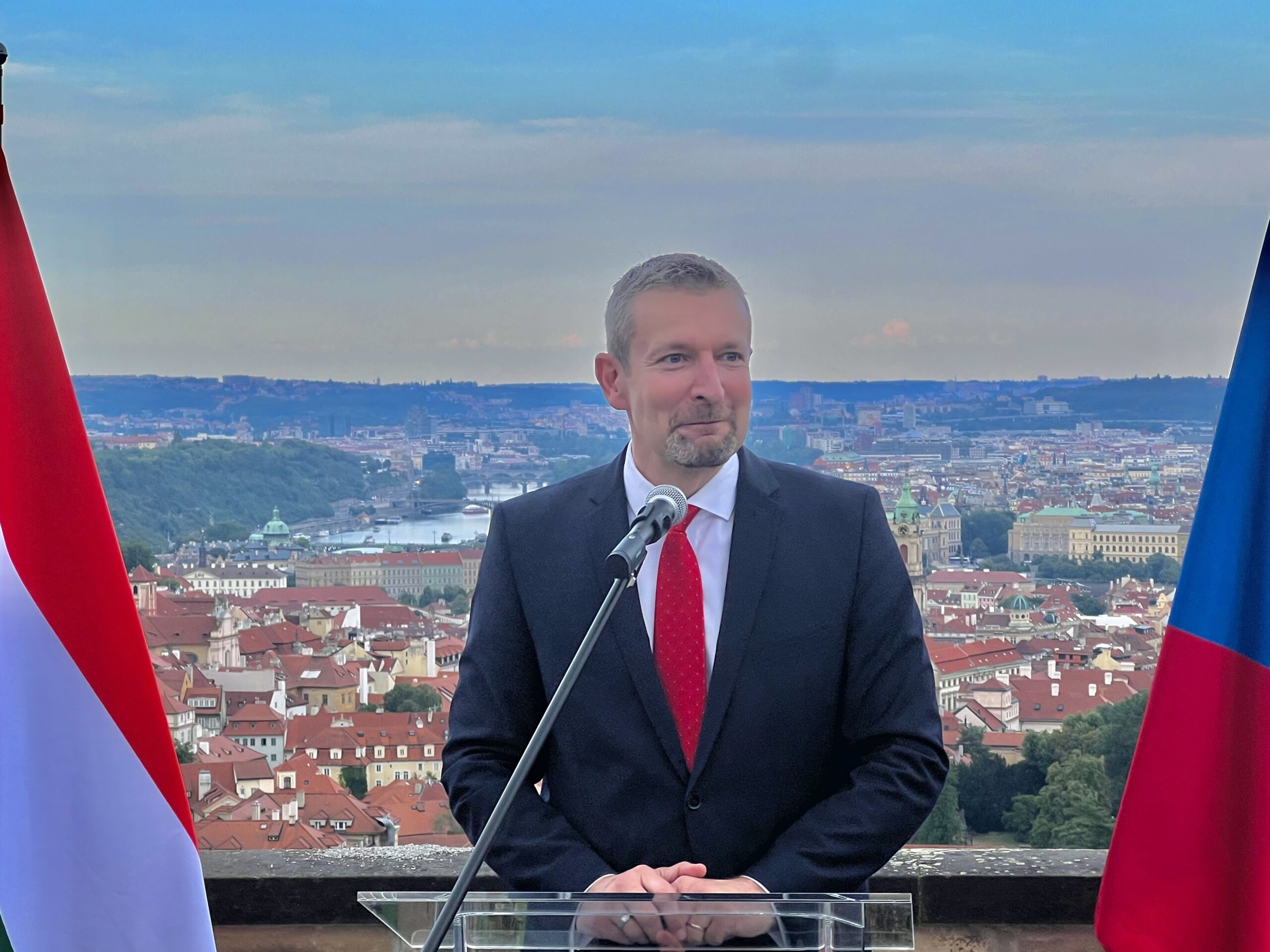
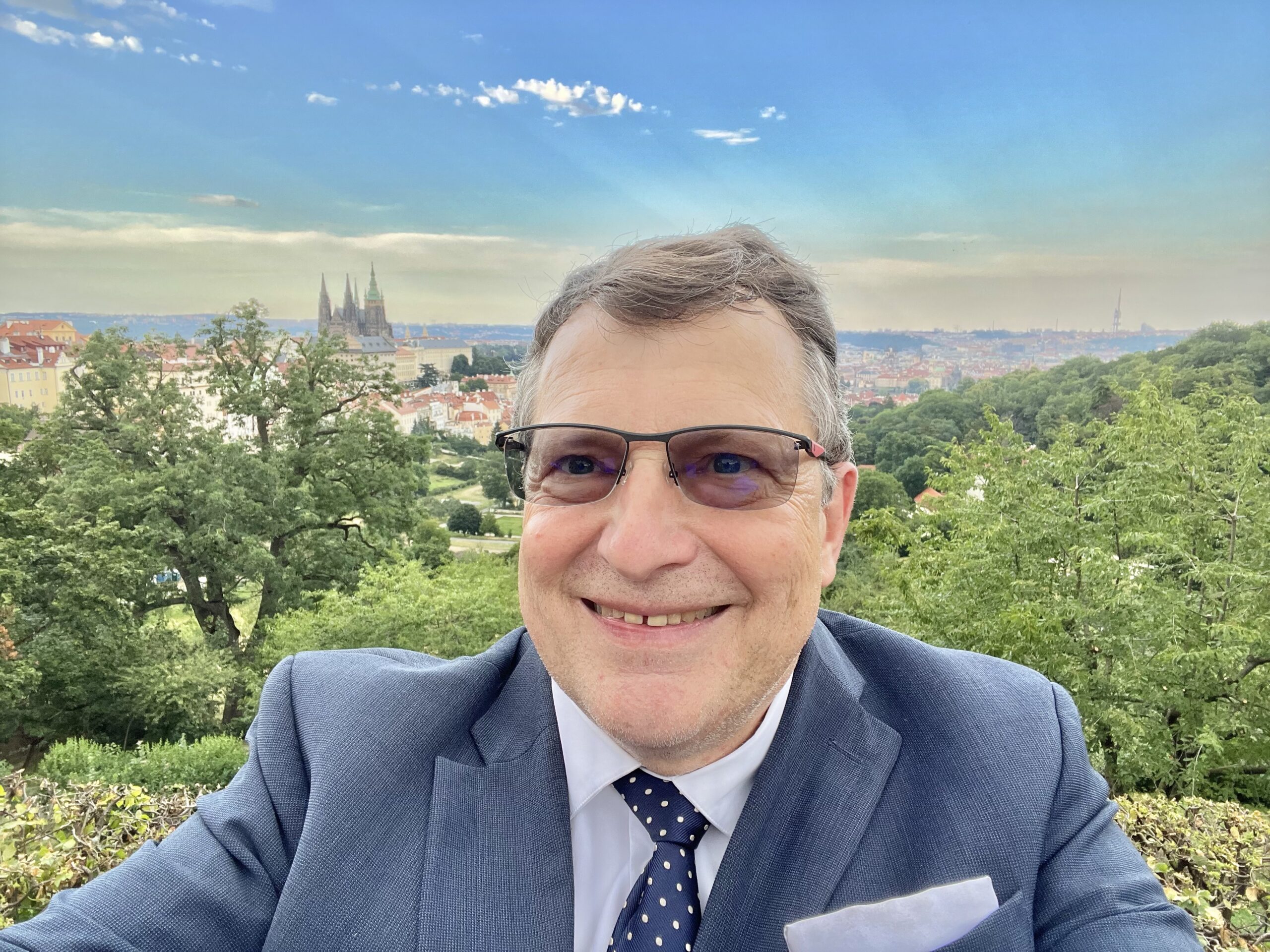
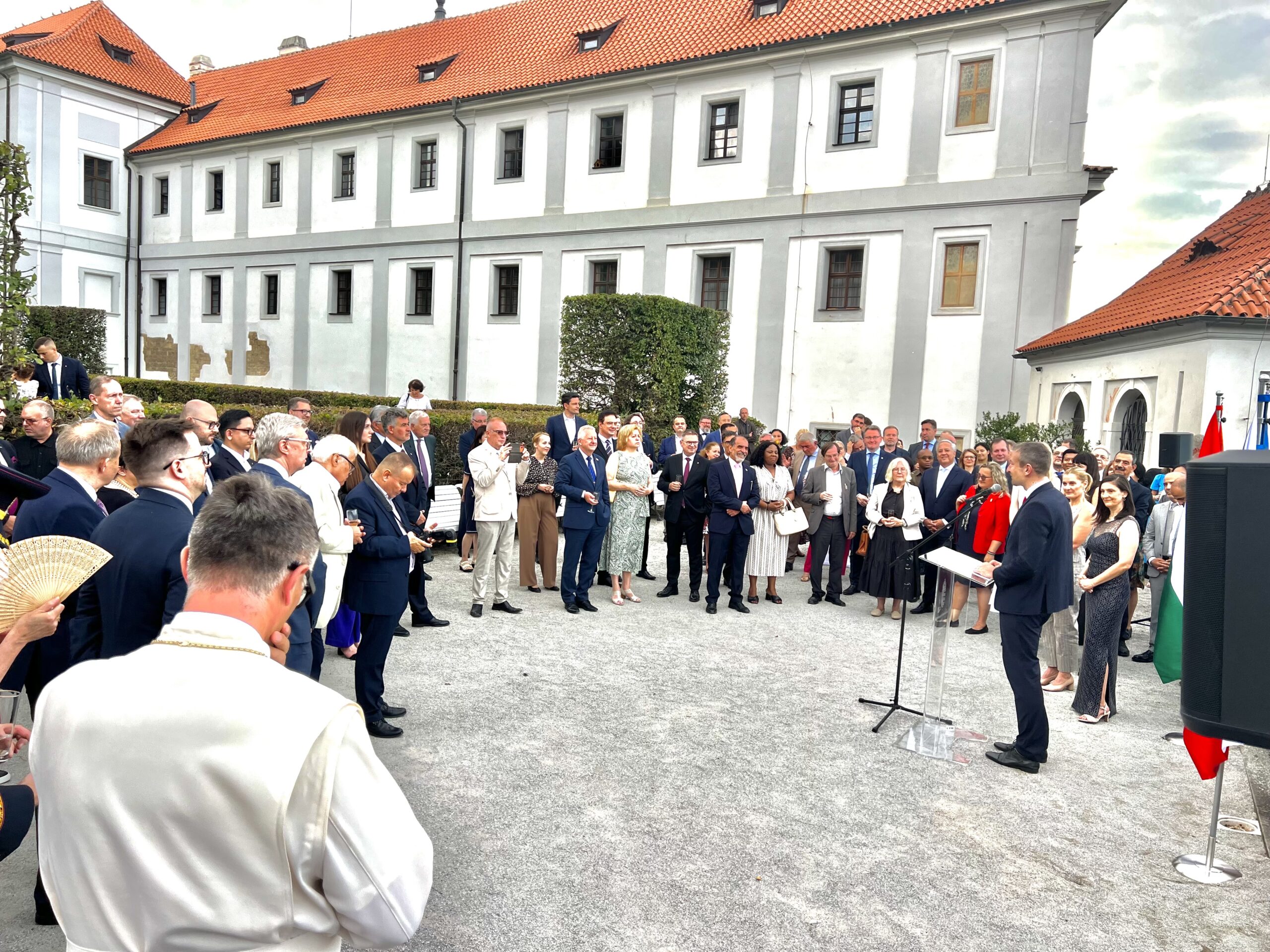
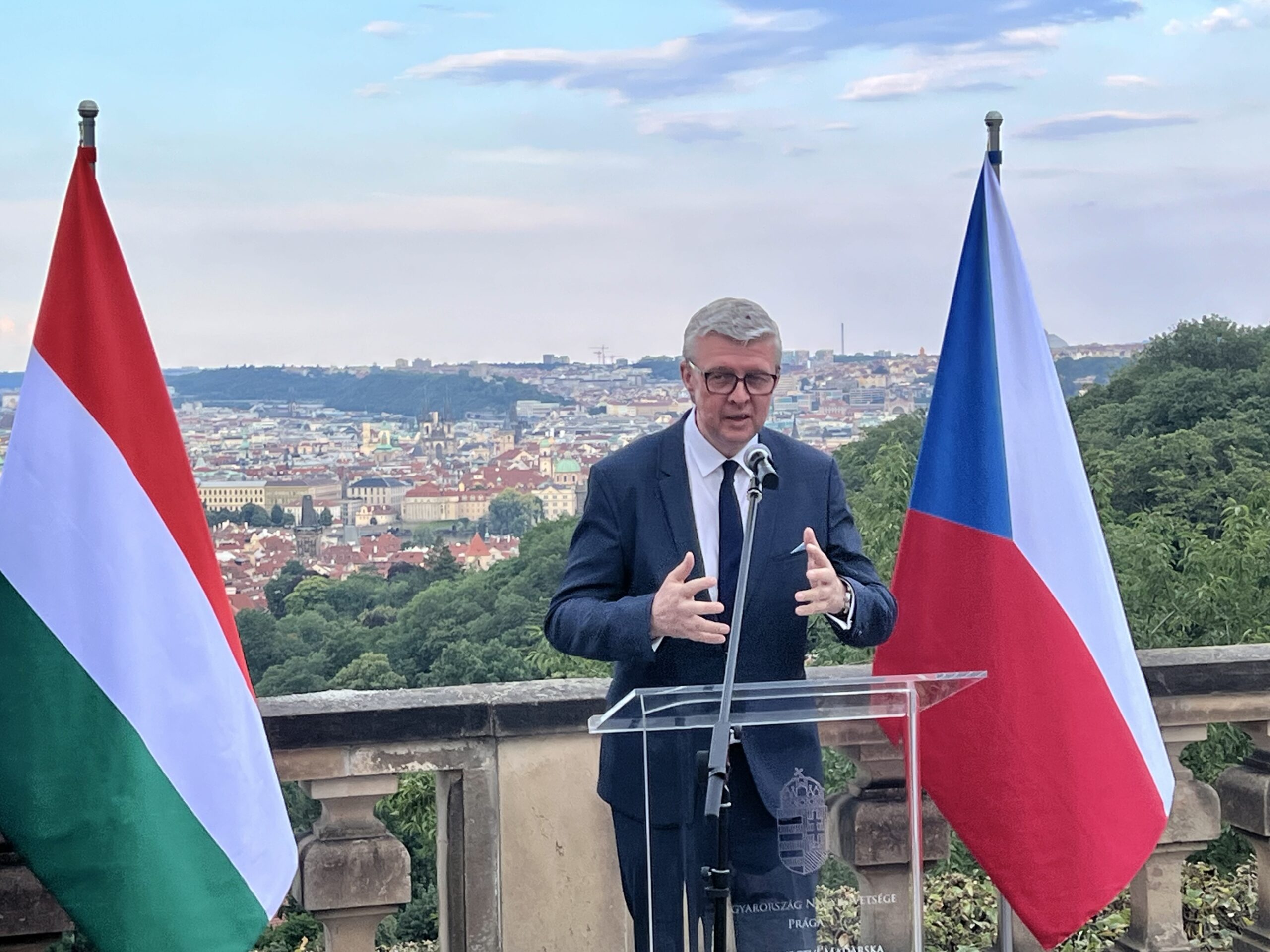
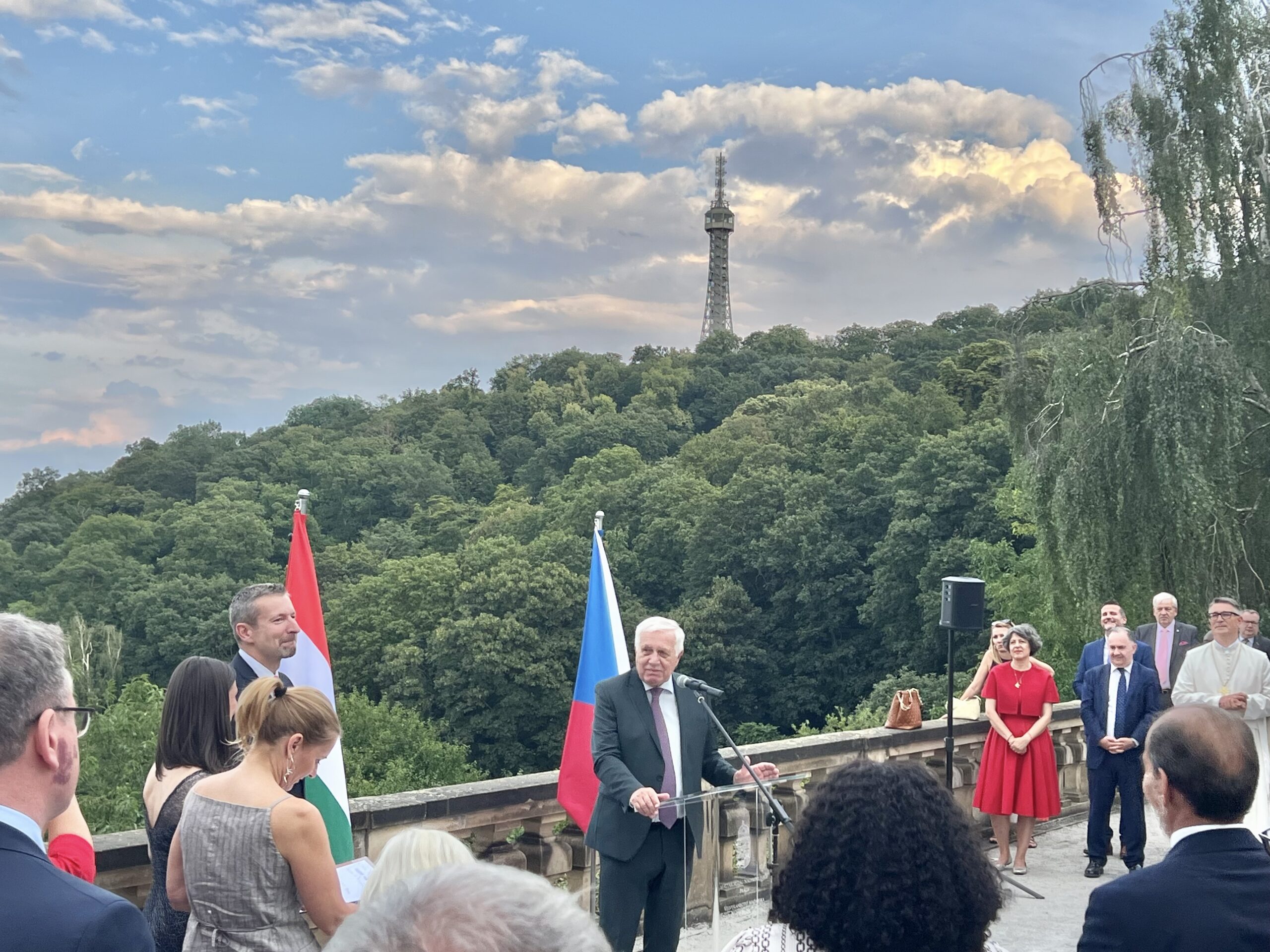
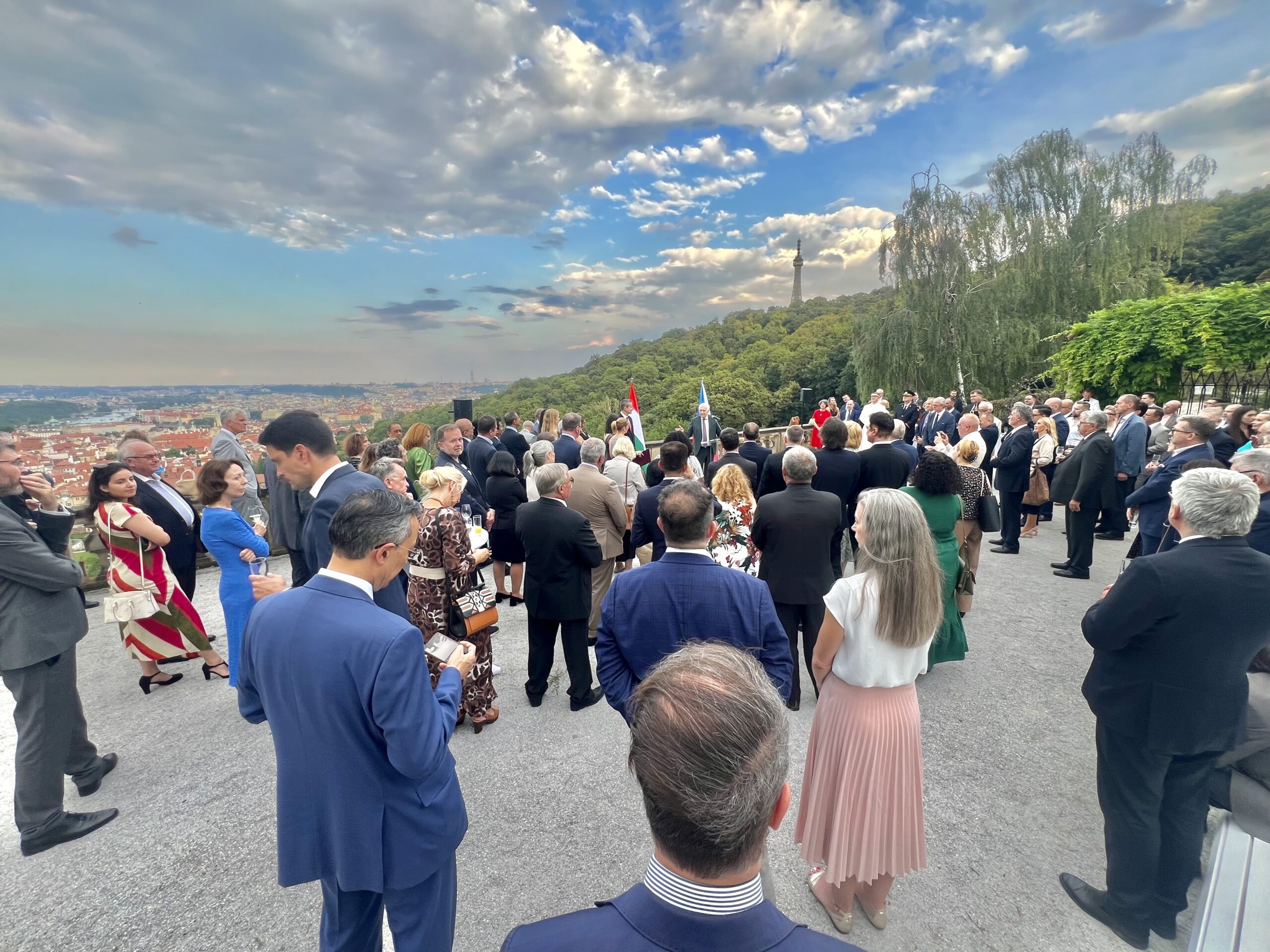
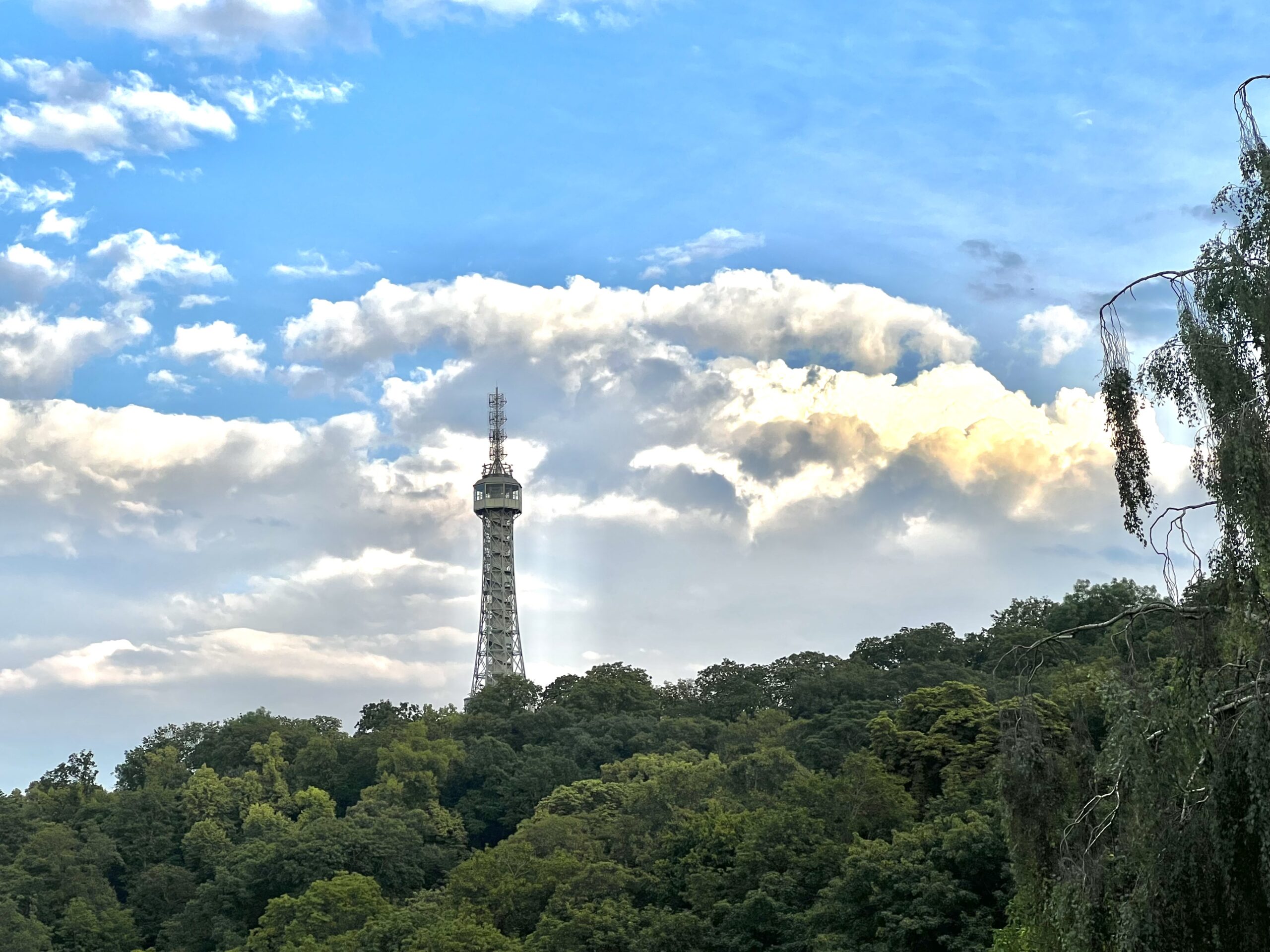
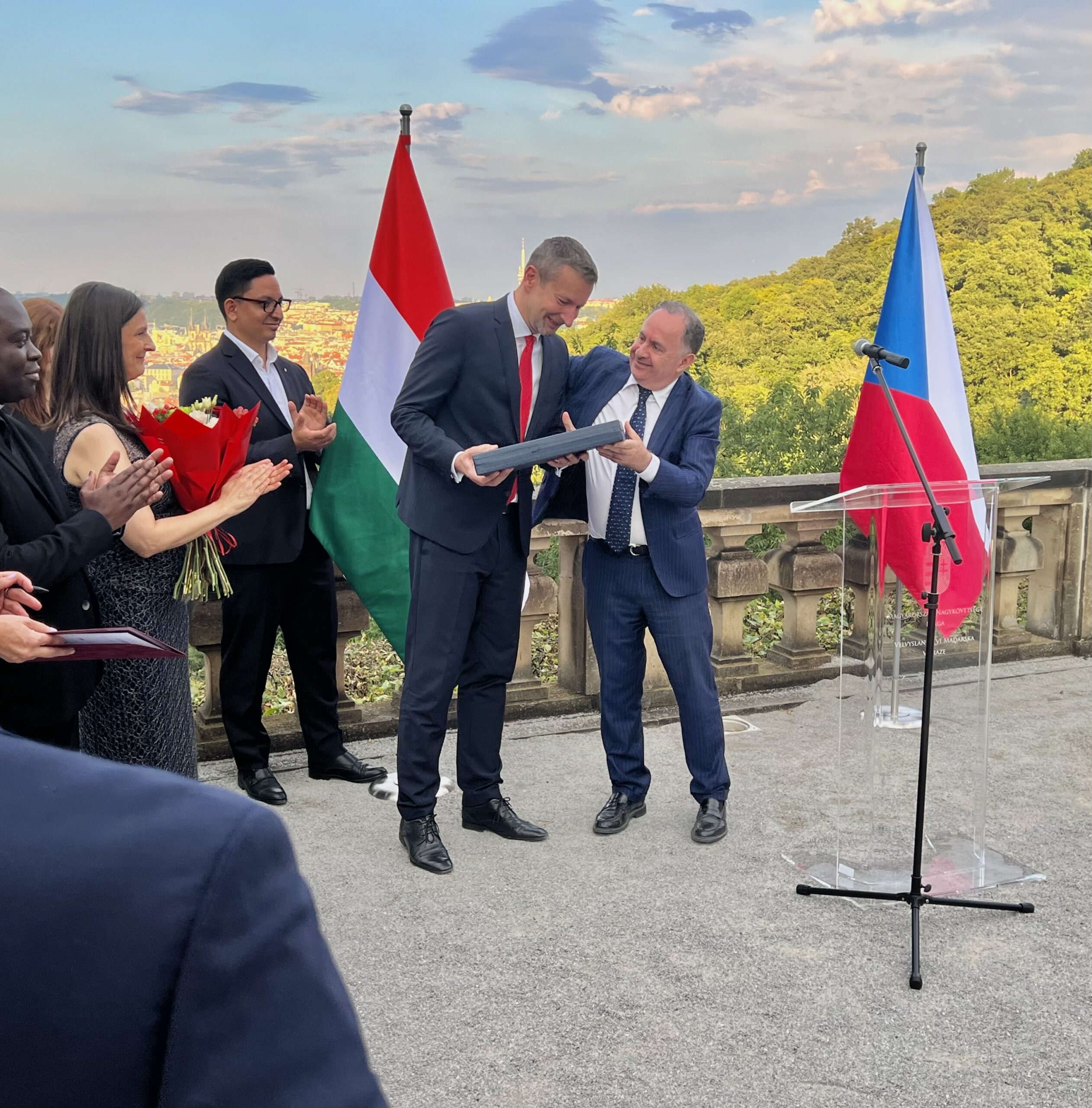
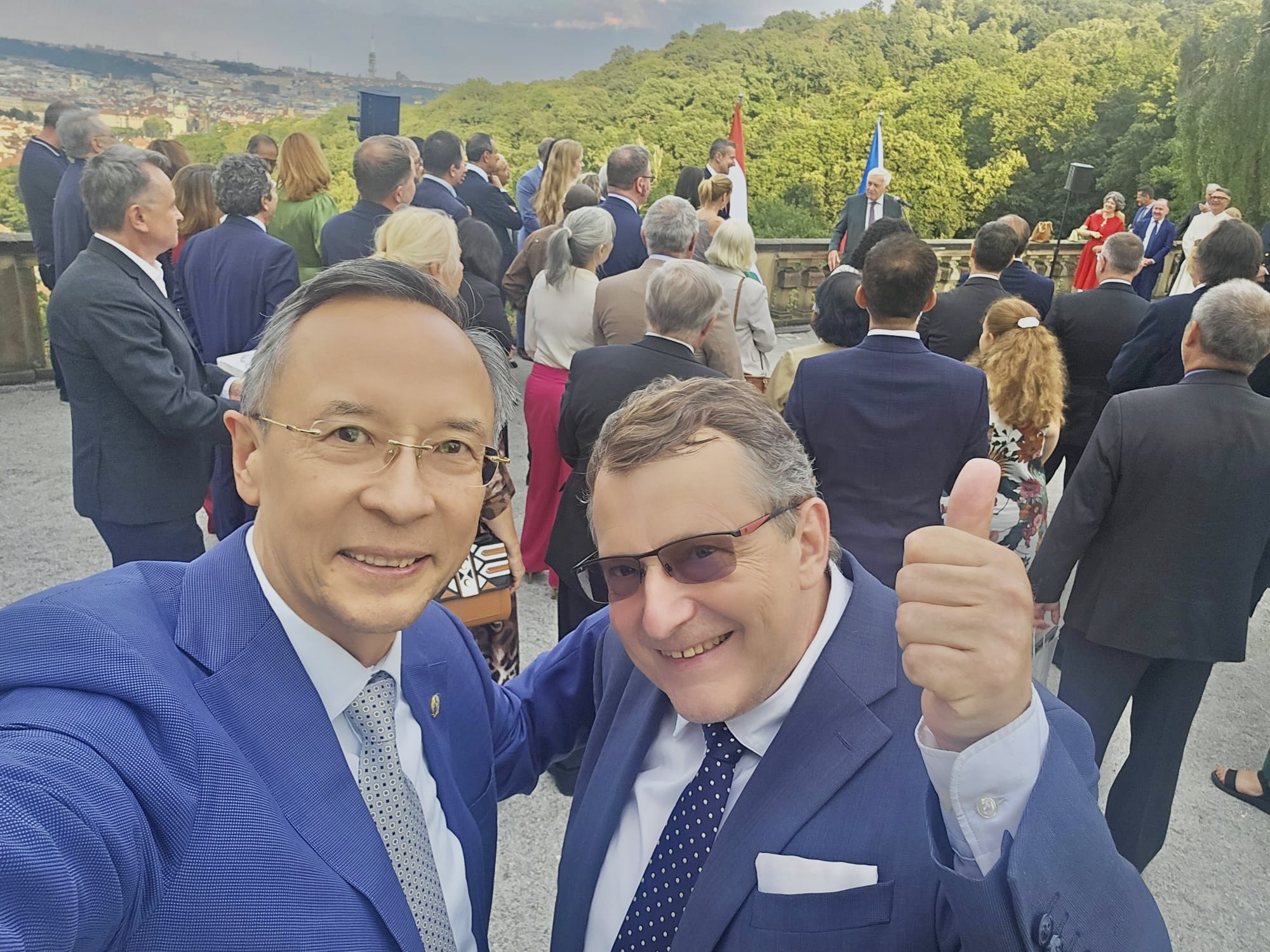
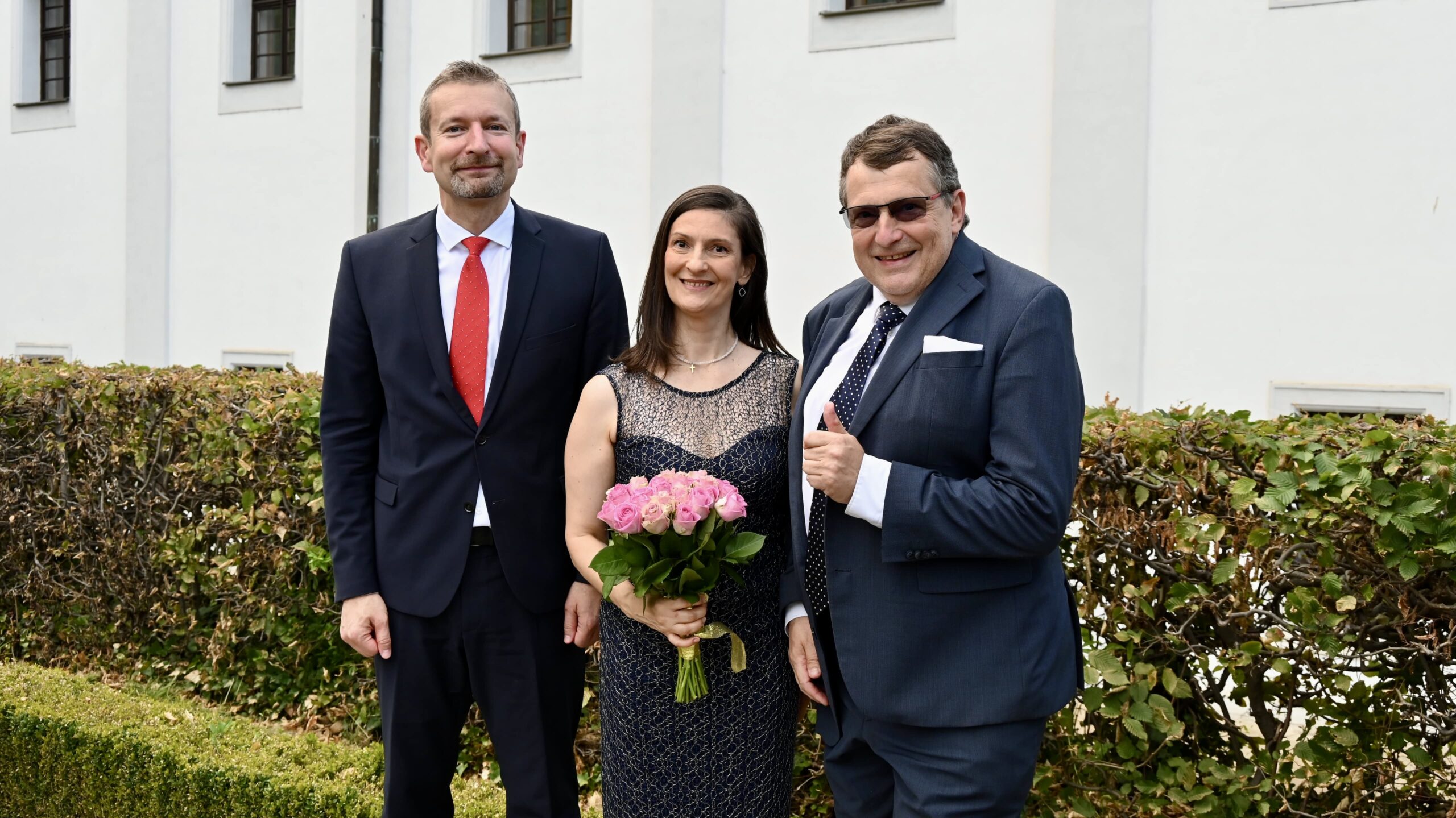
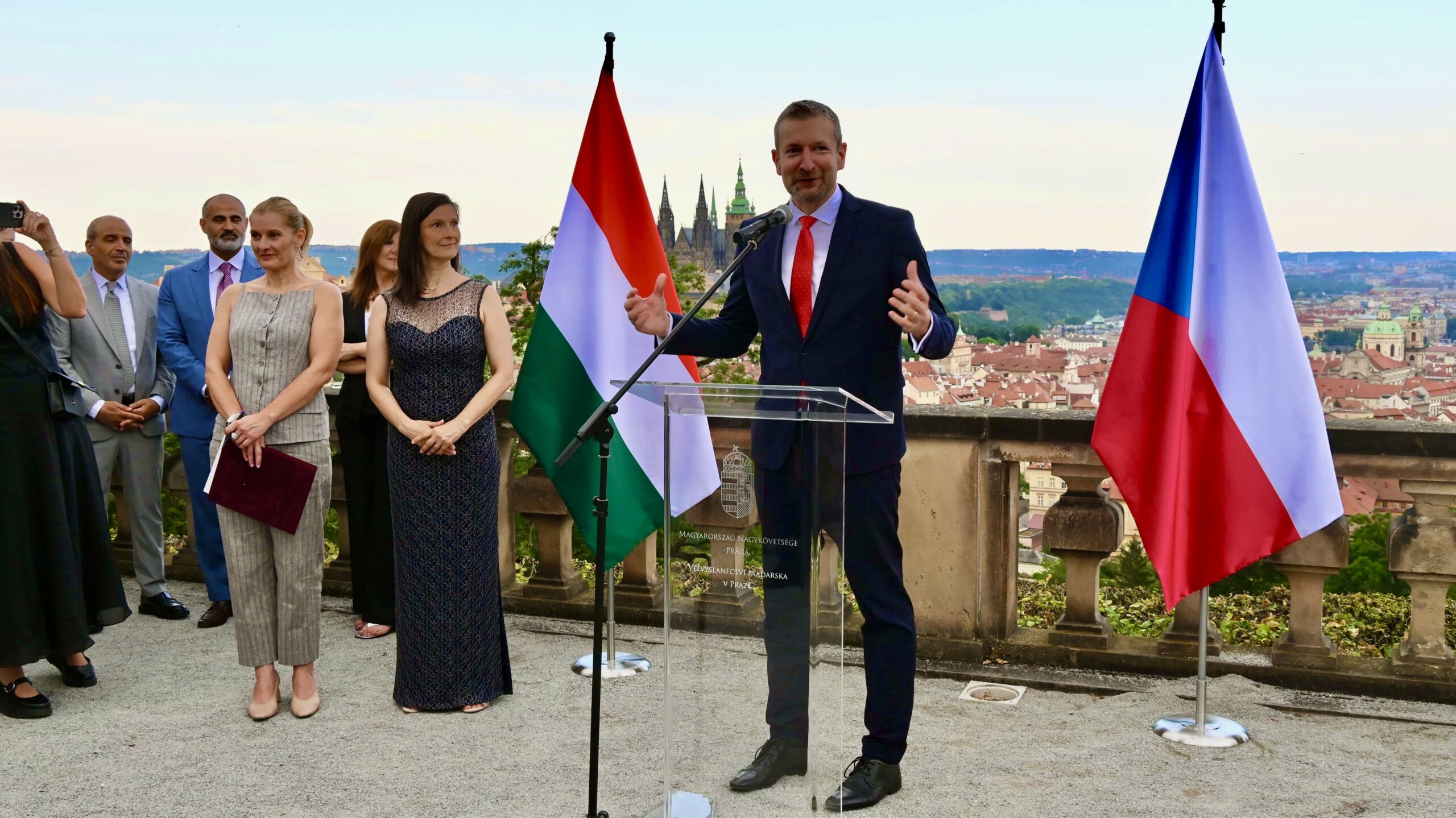
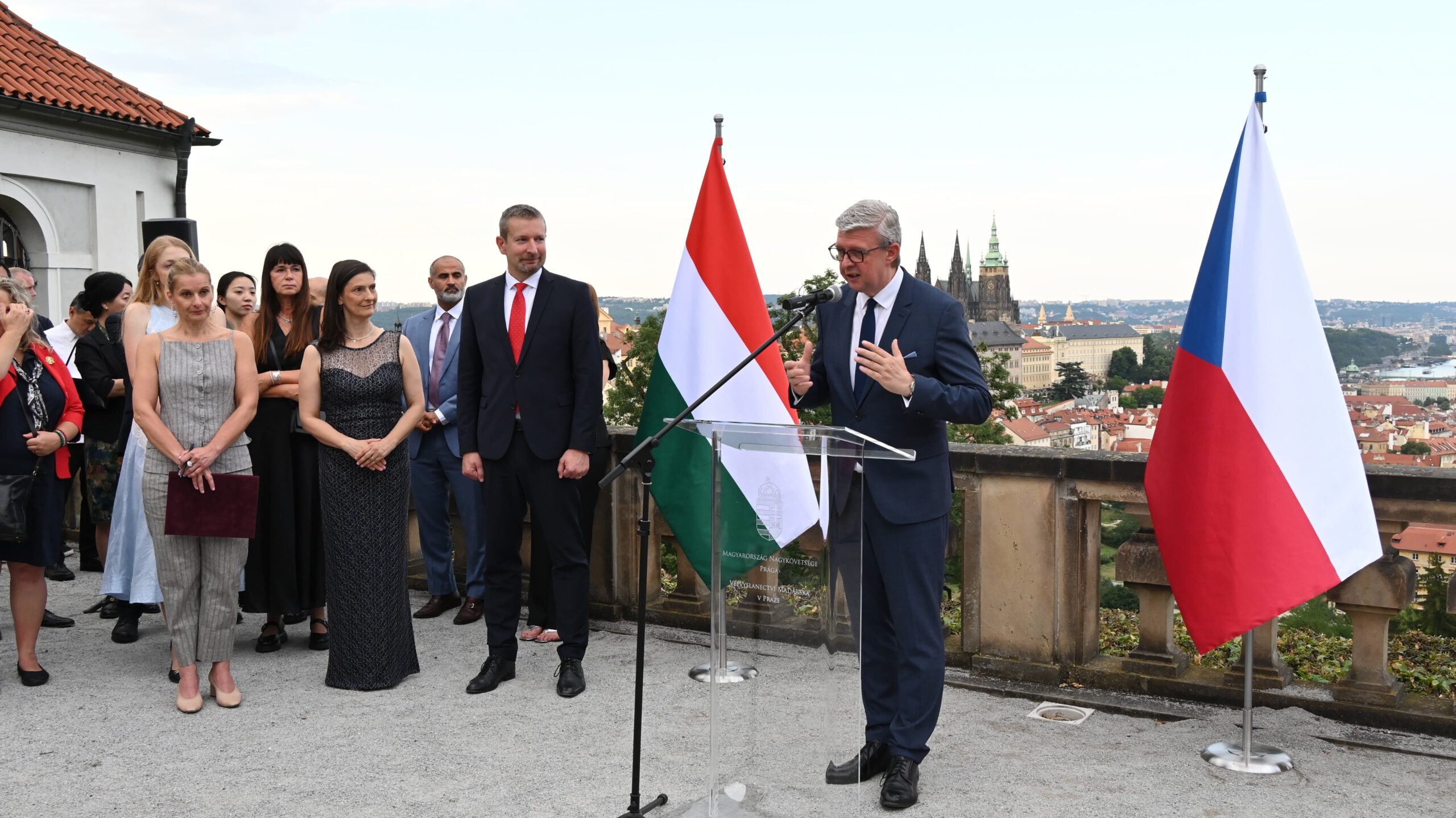
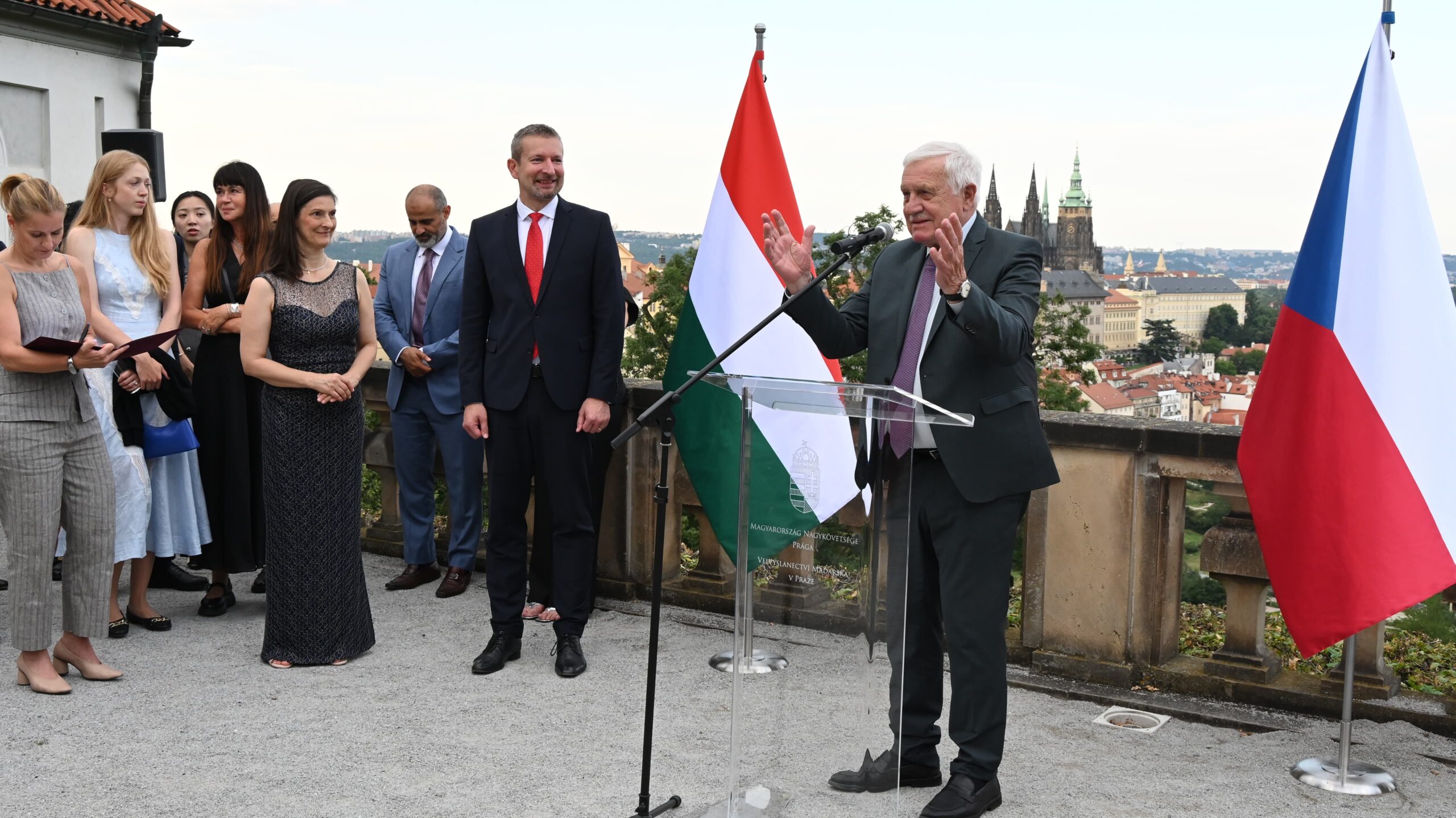
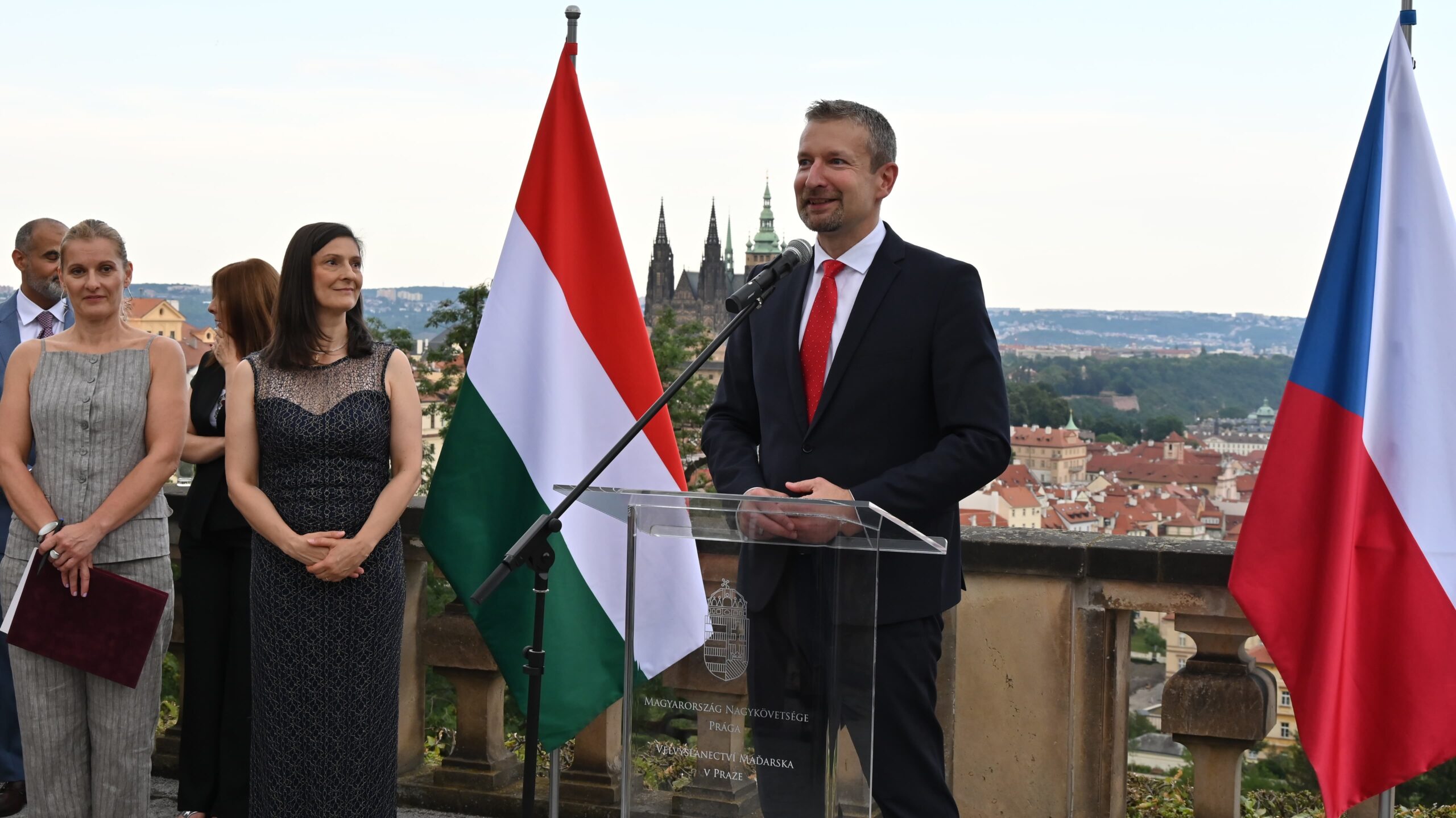
Some places are steeped in history; some evenings become a small part of history themselves. On Thursday, 16 July 2026, guests gathered on the terrace of Strahov Monastery for the farewell reception of H.E. Dr András Baranyi, Ambassador of Hungary to the Czech Republic. The setting could hardly have been more fitting. The setting sun cast a warm light over Prague Castle, the roofs of Malá Strana and the Old Town beyond.
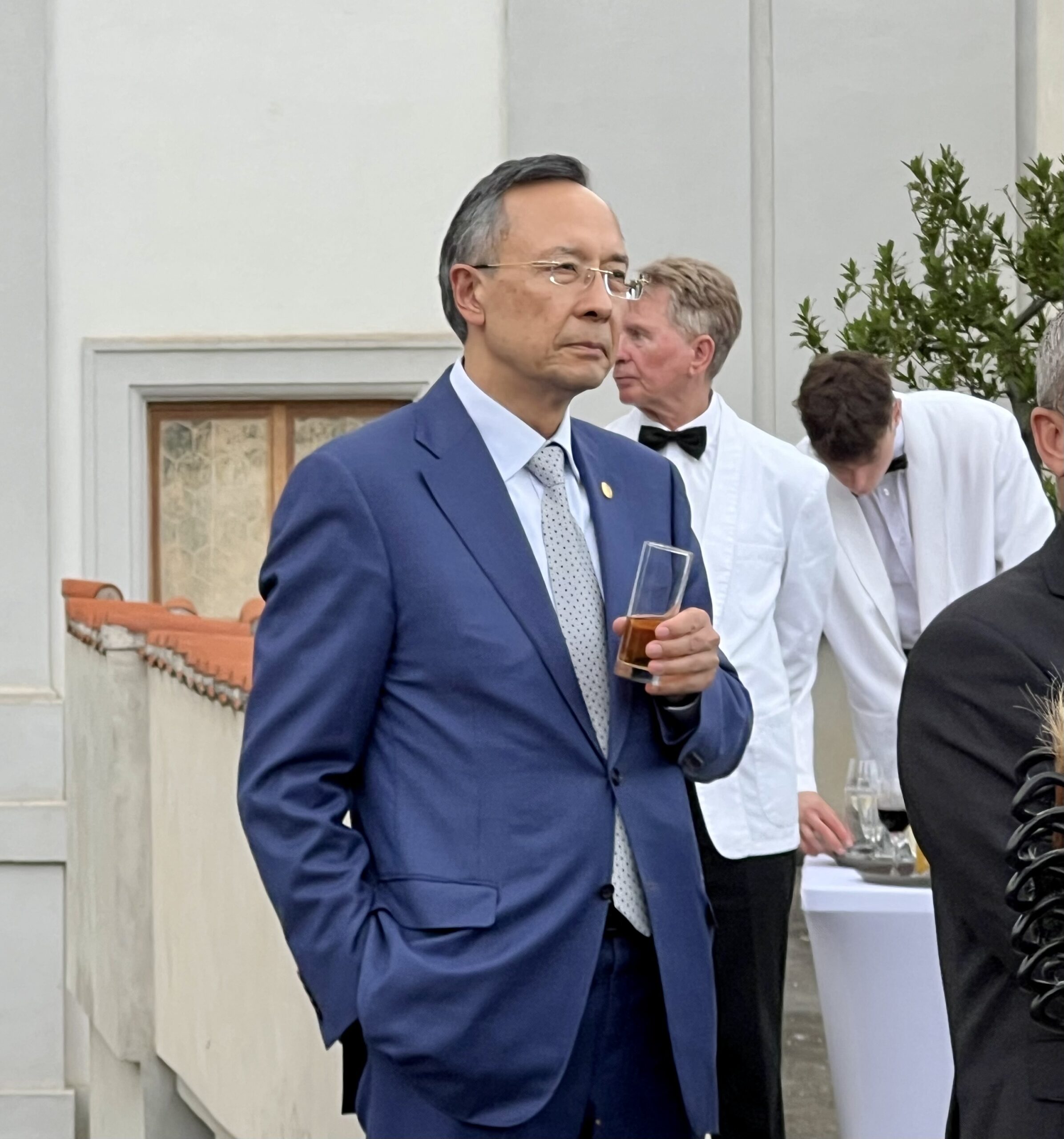
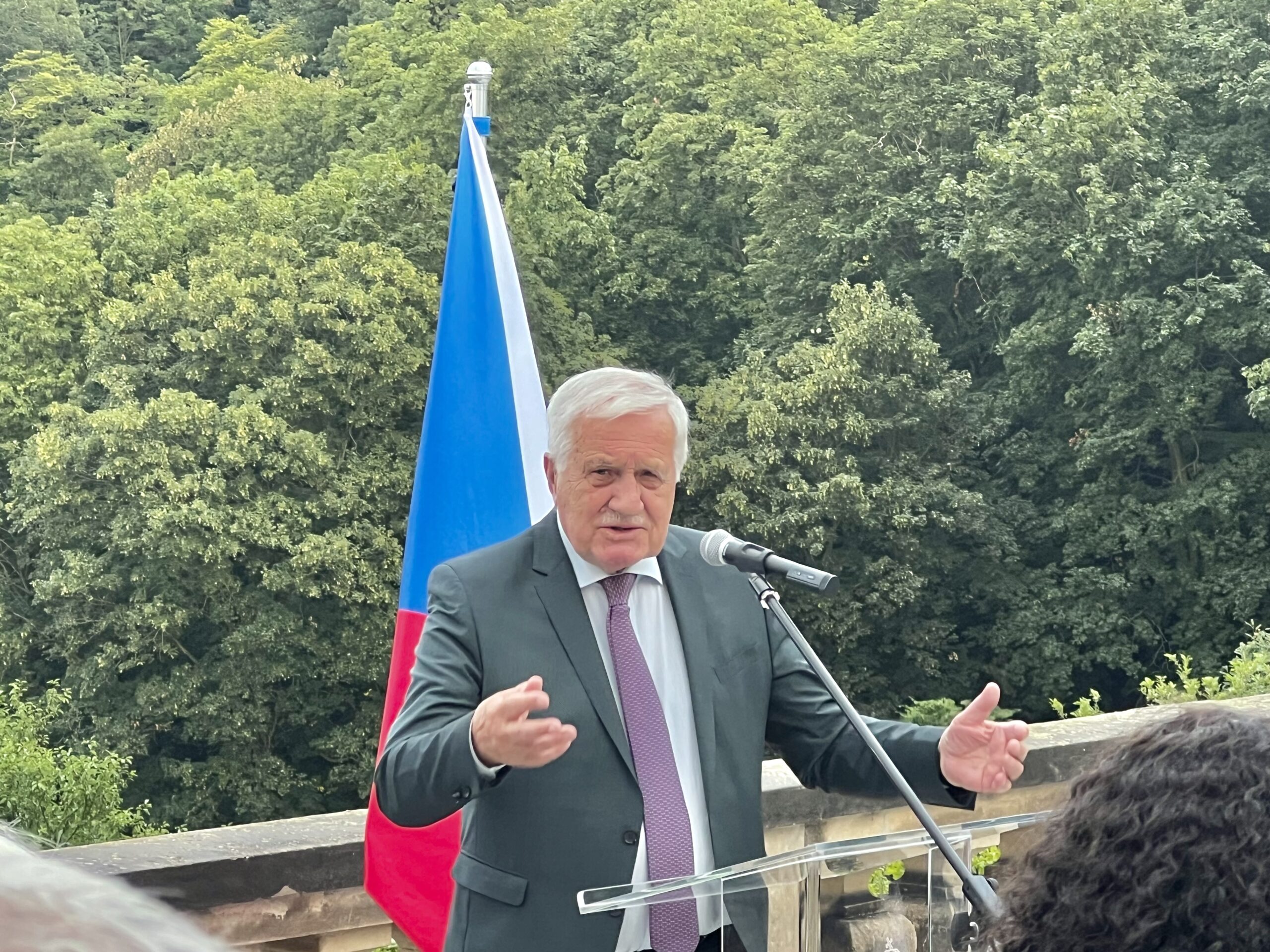
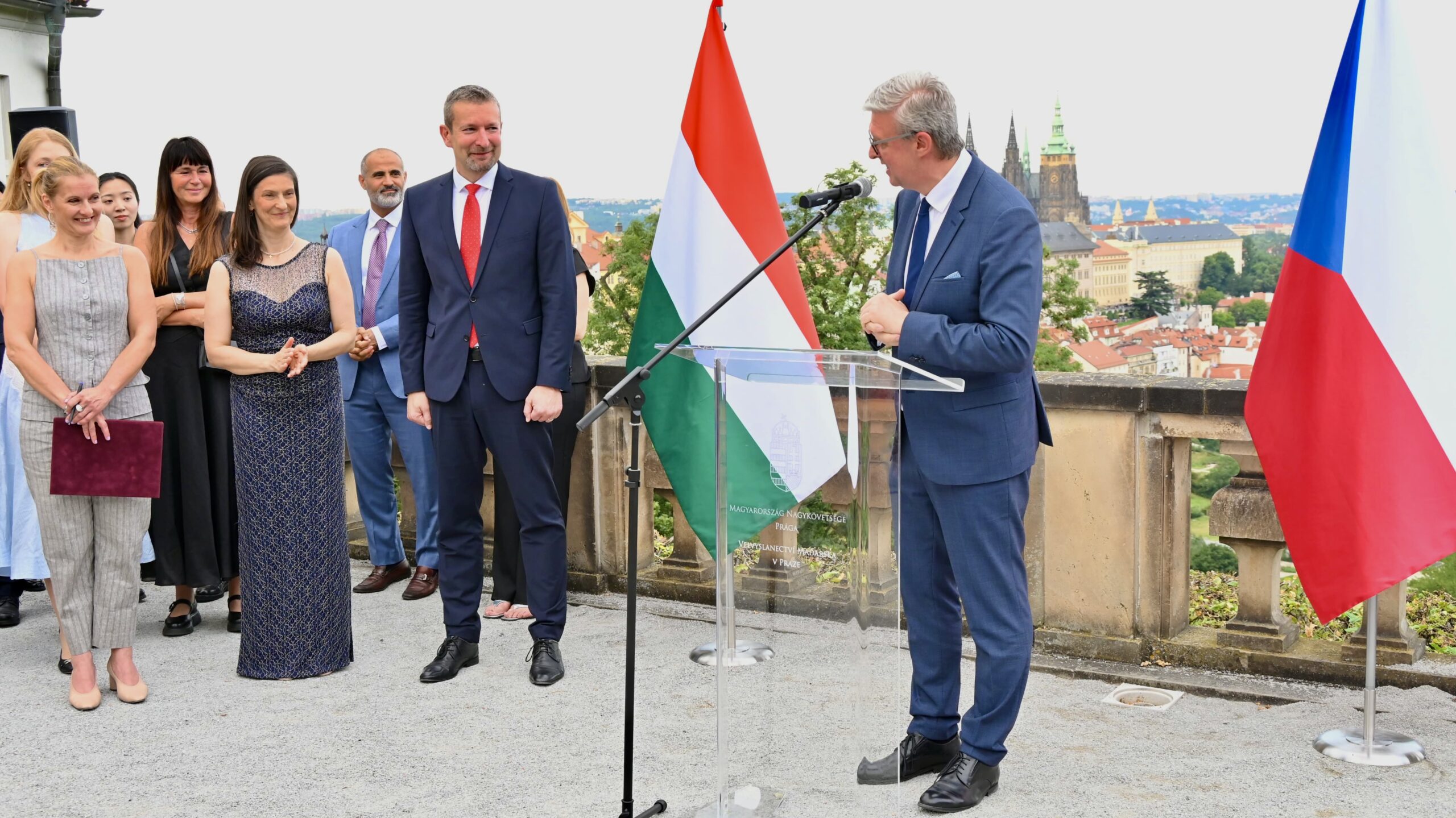
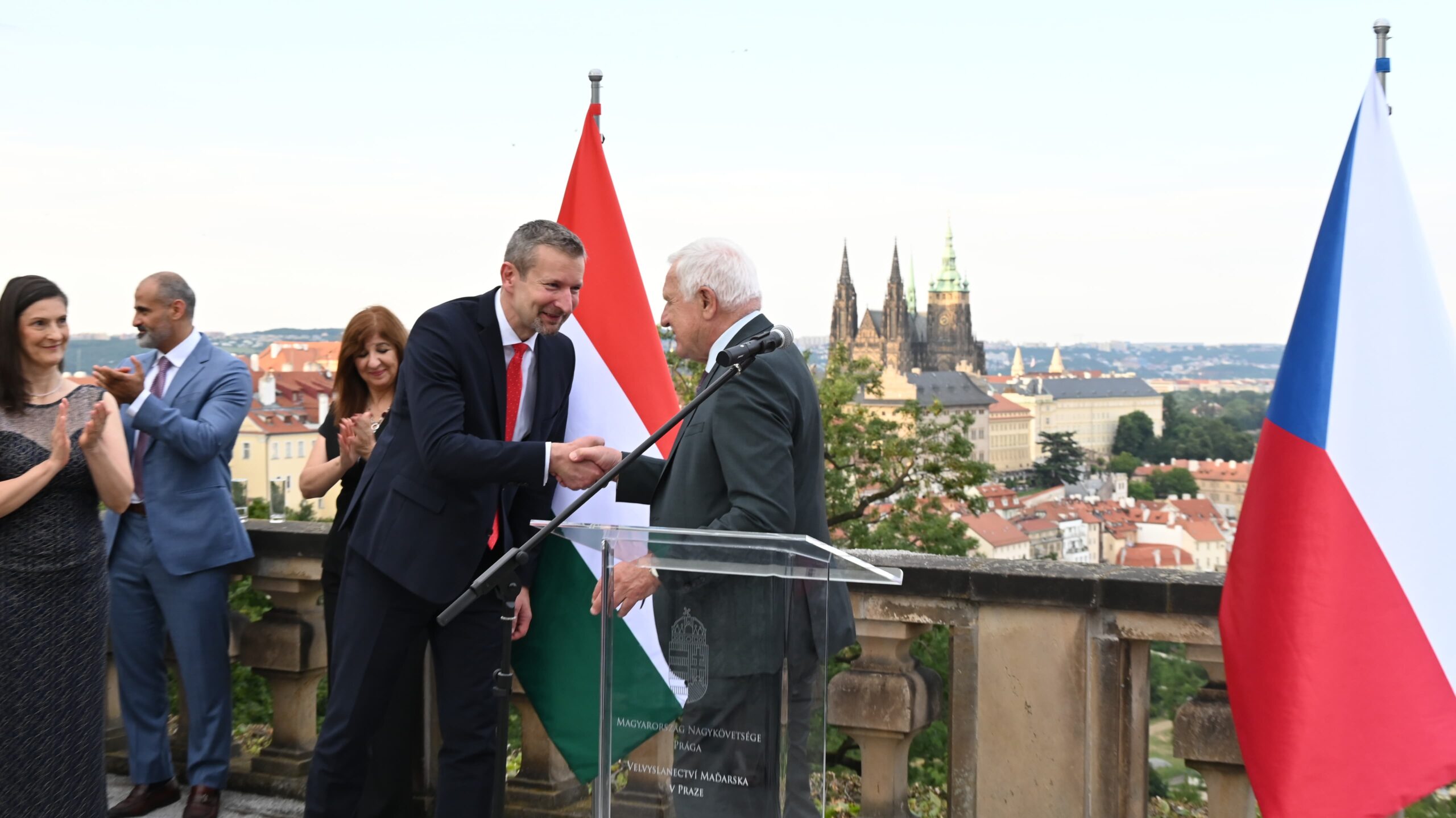
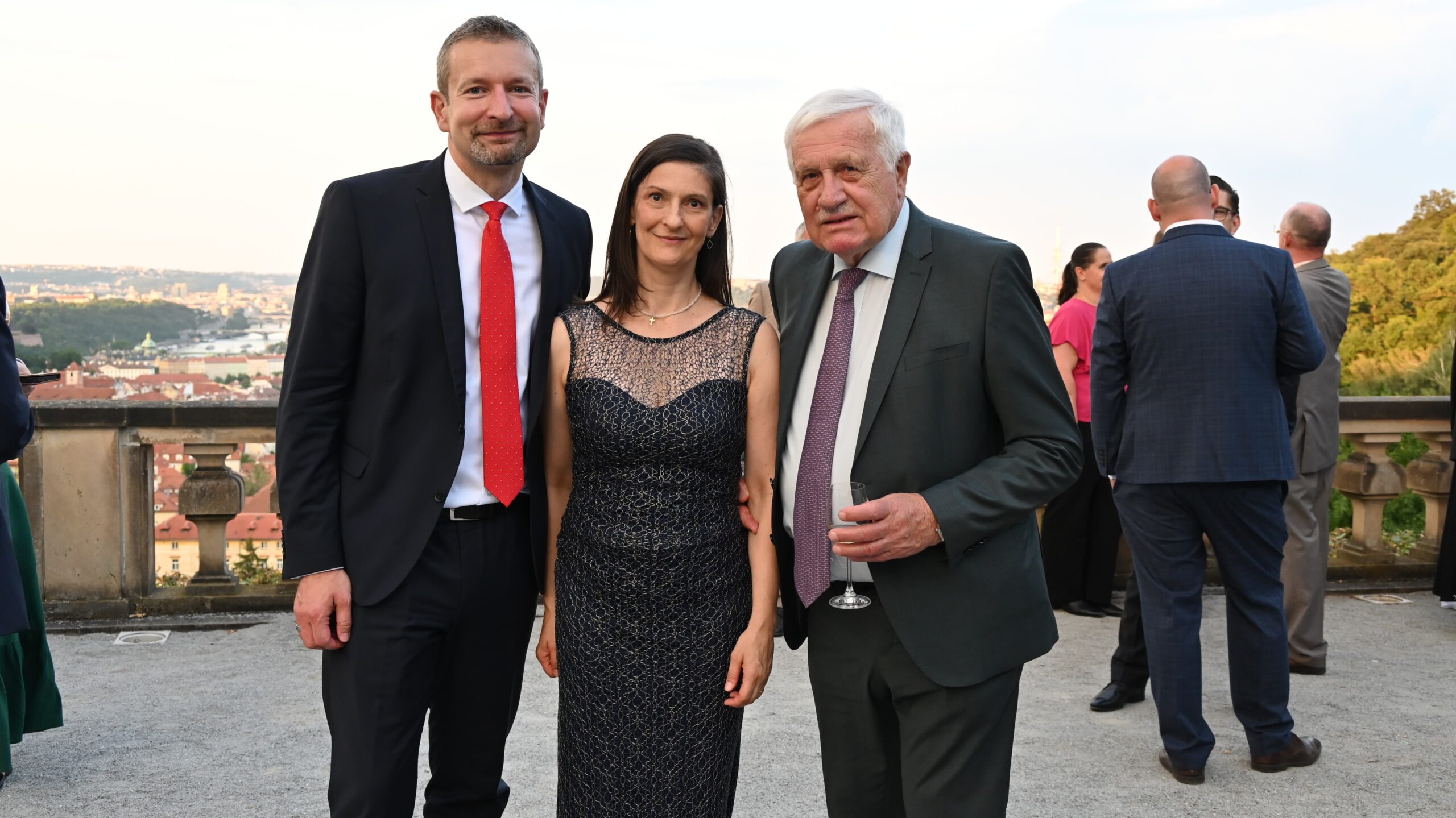
Almost the entire diplomatic corps accredited to Prague attended, joined by leading Czech politicians, former office-holders, businesspeople, academics, clergy and personal friends. Among the prominent guests were Deputy Prime Minister and Minister of Industry and Trade Karel Havlíček, former President Václav Klaus and a mayor from the Moravian-Silesian region who had known the ambassador for years.
Their presence reflected more than diplomatic courtesy. During four years in Prague, Baranyi had become one of the most respected and popular members of the diplomatic community. He was also one of the relatively few ambassadors able to speak Czech, a skill that allowed him to understand not only words but also humor, nuance, and mentality. Many Czechs therefore regarded him not as a distant foreign representative, but as an approachable friend of both Hungary and the Czech Republic.
Strahov: A Place of European Memory
Strahov Monastery has been home to a Premonstratensian community since 1143. It survived fire, war, looting, political upheaval and persecution under both Nazi and Communist rule. Today it remains a living religious house as well as one of Prague’s greatest cultural institutions, renowned for its library, art collections, Basilica of the Assumption and musical heritage.
The host was Abbot Daniel Peter Janáček, the 71st Abbot of the Royal Canonry of Premonstratensians at Strahov. Born in Slovakia and long connected with both Strahov and the Archdiocese of Prague, he combines spiritual leadership with the preservation and renewal of the monastery’s historic legacy.
For Baranyi, Strahov also carried a deeply personal meaning. As a student, he had repeatedly visited Prague and stayed with friends in the nearby Strahov dormitories. Decades later, he was bidding farewell as ambassador only a few hundred meters away. The place united youth, memory, career and departure in one symbolic circle.
Czechs and Hungarians: A Long Central European Relationship
Czech-Hungarian relations are older than their modern states. For centuries, the Bohemian lands and Hungary formed distinct yet interconnected parts of the Habsburg Monarchy. Trade, universities, churches, aristocratic families and later industrial networks linked Prague, Brno, Pressburg and Budapest.
The collapse of Austria-Hungary in 1918 brought a new political order. Czechoslovakia was founded on 28 October, while independent Hungary faced the territorial settlement imposed by the Treaty of Trianon in 1920. The existence of large Hungarian minorities within Czechoslovakia made bilateral relations difficult during the interwar period.
After the Second World War, both countries became part of the Soviet-dominated bloc. The Hungarian Revolution of 1956 and the Prague Spring of 1968 became defining experiences of resistance to external political control. The democratic changes of 1989 opened a new chapter. Hungary, Poland and Czechoslovakia established the Visegrád cooperation in 1991. Following the peaceful division of Czechoslovakia, Hungary and the newly independent Czech Republic established bilateral diplomatic relations in their present form on 1 January 1993.
Both countries later joined NATO and the European Union. Trade, investment, energy, transport, tourism, education and culture became pillars of the partnership. Prague and Budapest do not always take identical positions, but their relationship is close, durable and rooted in a strong Central European identity.
A Career Across Law, Media, Culture and Diplomacy
Baranyi graduated in law and political science from Eötvös Loránd University in Budapest in 2002. His career, however, had begun earlier and was unusually broad. Between 1995 and 2003 he worked for Hungarian Radio as a news editor and announcer. He later gained experience in law, regional development and cross-border European programs.
From 2011 to 2015 he served at the Hungarian Embassy in Moscow and as director and adviser at the Hungarian Cultural Institute there. He subsequently represented Hungary as ambassador to Kazakhstan, Kyrgyzstan and Tajikistan. Between 2019 and 2022 he was Deputy State Secretary for the Development of Eastern Relations at the Ministry of Foreign Affairs and Trade.
He arrived in Prague in 2022 with an uncommon combination of legal training, media experience, cultural diplomacy, regional policy and ambassadorial practice. His humor, curiosity, directness and willingness to build relationships beyond protocol soon became defining features of his mission.
The Most Beautiful Place in the Most Beautiful City
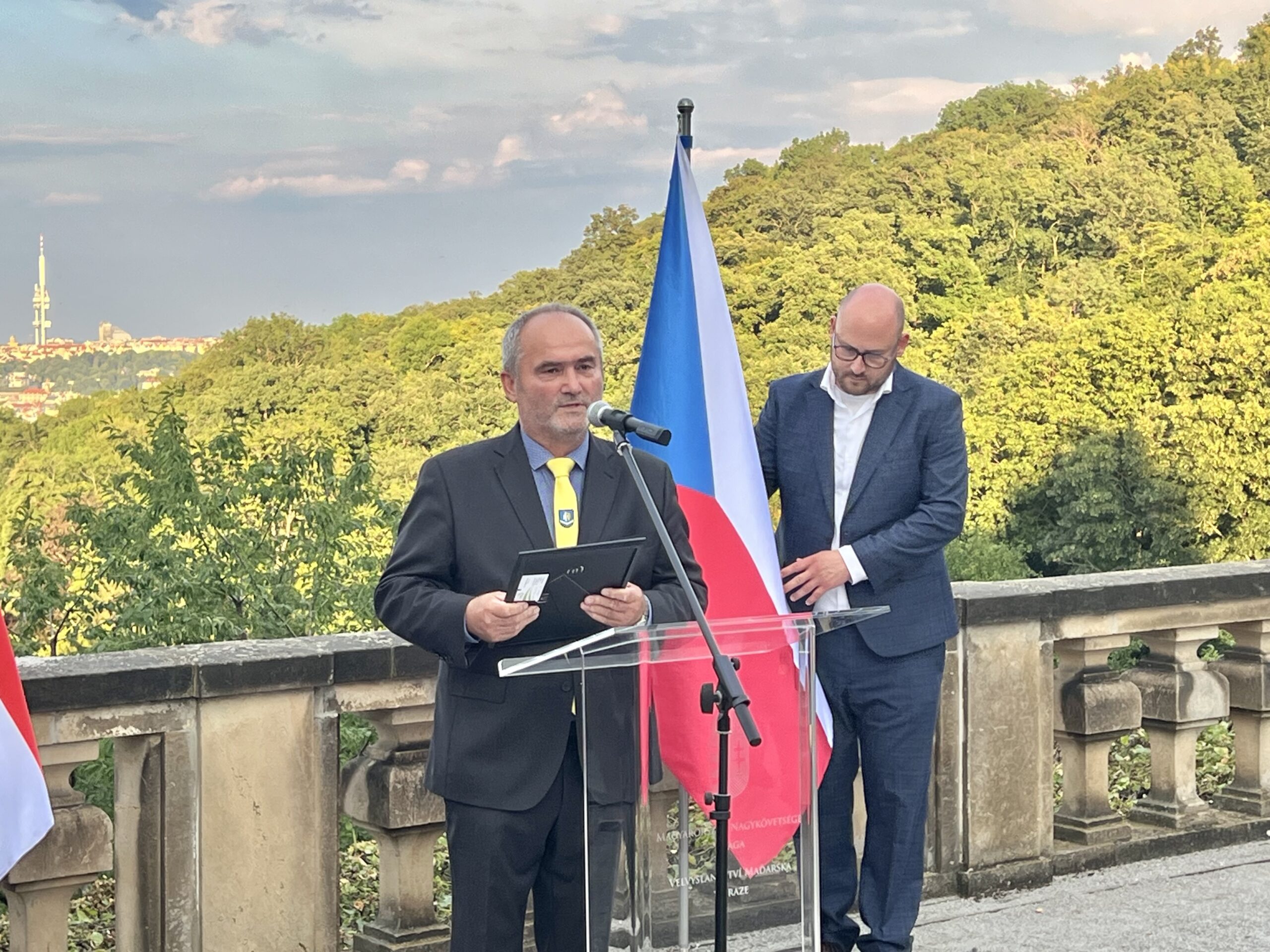
Baranyi opened his farewell speech by calling the monastery terrace “the most beautiful place in the most beautiful city in the world”. Those who knew him understood that this was not a polite formula. His affection for Prague was genuine.
With characteristic self-irony, he said that four years in Prague had made him older. Reading his prepared text would now require glasses, and as he disliked glasses, he would speak without notes. The result was warm, spontaneous and personal.
He showed the audience several tangible memories: a business card from Petr Macinka dating from September 2022, a personal Christmas card from former President Václav Klaus and a letter sent by Karel Havlíček for his birthday. None was an official decoration. Their importance lay precisely in their personal nature. For Baranyi, diplomacy was measured not only in visits and agreements, but also in attention, loyalty and human gestures.
A Lesson in Czech Reliability
One story illustrated the efficiency of his Czech partners. When a Hungarian minister decided to visit Prague, Baranyi proposed a programme of meetings. Once it had been approved, he contacted the relevant Czech ministries. Within approximately fifteen minutes, he said, every institution had replied and the entire programme had been confirmed.
The anecdote was humorous, but its message was serious. It praised the professionalism and accessibility of Czech government partners. It also indirectly revealed how much trust Baranyi himself had built: in diplomacy, such rapid responses usually come only when relationships are strong.
Three Dreams
The emotional centre of the speech came when Baranyi recalled three wishes he had formed at the age of seventeen or eighteen.
The first was to meet a woman with whom he could build a family. That dream, he said warmly, had come true twenty-eight years earlier. Together with his wife Emese, he had raised two sons, now adults.
His second dream was professional. Diplomacy had fascinated him from an early age. He studied law and international relations because he wanted to discover languages, cultures and countries. That ambition was fulfilled through ambassadorial service and his senior position as deputy state secretary.
The third dream was Prague. At fifteen or sixteen, he had already fallen in love with Czechoslovakia. Before the internet and smartphones, Czechoslovak television became his window into the neighbouring country. When Hungarian television offered nothing interesting and the aerial signal was strong enough, his family switched channels.
As a university student, he returned regularly to Prague for friends, concerts, beer and nights in the Strahov dormitories. He dreamed of spending several years in the city not merely as a visitor. Decades later, that dream came true in the most remarkable form possible: he became Hungary’s ambassador.
When One-Sided Affection Became Friendship
The simplest sentence of the evening carried the greatest force. Baranyi said that his love for the Czech people had once been one-sided. After four years in Prague, he felt it had become mutual.
He thanked his Czech friends and partners for their excellent cooperation and for making him feel that his affection was returned. He thanked the diplomatic corps for collegiality, his embassy team for professionalism and his wife for patience, joking that she should now prepare for his return.
The long applause confirmed that his feeling was justified. No grand political declaration was needed. The speech worked through gratitude, humour and honesty.
Tributes and a Lasting Legacy
Karel Havlíček praised the high level of Czech-Hungarian relations and spoke not only of Baranyi’s professional work, but also of his human qualities. A diplomat must navigate different governments, political preferences and sometimes conflicting expectations. Baranyi had done so with reliability and integrity.
The presence of Václav Klaus demonstrated the breadth of the ambassador’s relationships. The personal Christmas card displayed during the speech symbolised a bond that reached beyond office and protocol.
A mayor from the Moravian-Silesian region also honoured Baranyi as a friend and bridge-builder. The supplied transcript does not identify him unambiguously, so this article deliberately avoids inventing a name. His message, however, was clear: Baranyi had not confined his mission to Prague. He travelled to the regions, cultivated local partnerships and created friendships that would endure.
His four-year term came at a difficult time for Europe, marked by war, energy insecurity, inflation and conflicting visions of the European Union. Hungary and the Czech Republic did not agree on every question. Baranyi’s achievement was to keep dialogue open, explain interests clearly and strengthen practical cooperation.
As darkness settled over Prague and the city lights emerged, the reception became both a conclusion and a promise. Baranyi will return to Budapest, but his connection with Prague will remain. His story shows diplomacy at its best: turning interest into understanding, understanding into trust and trust into friendship.
The young Hungarian who once adjusted an aerial to watch Czechoslovak television stood decades later above Prague as ambassador, looking back on three fulfilled dreams. Perhaps a fourth dream had also come true: never having to leave Prague entirely, because a part of him would remain there.
Recent posts
See AllPrague Forum Membership
Join us
Be part of building bridges and channels to engage all the international key voices and decision makers living in the Czech Republic.
Become a member