- Hans Weber
- October 8, 2026
Morocco’s Throne Day in Prague: A Celebration of Tradition, Friendship and a Remarkable Diplomatic Career
By Hans Weber
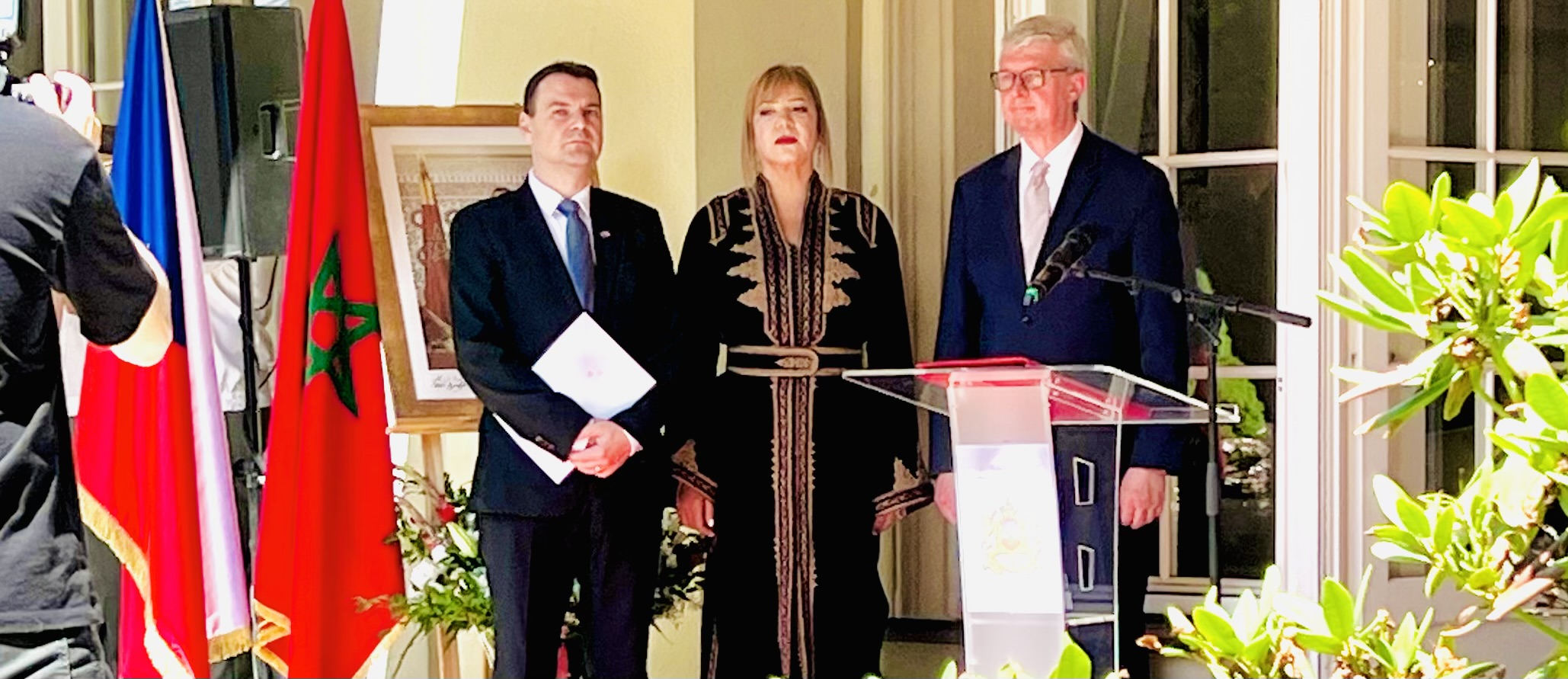
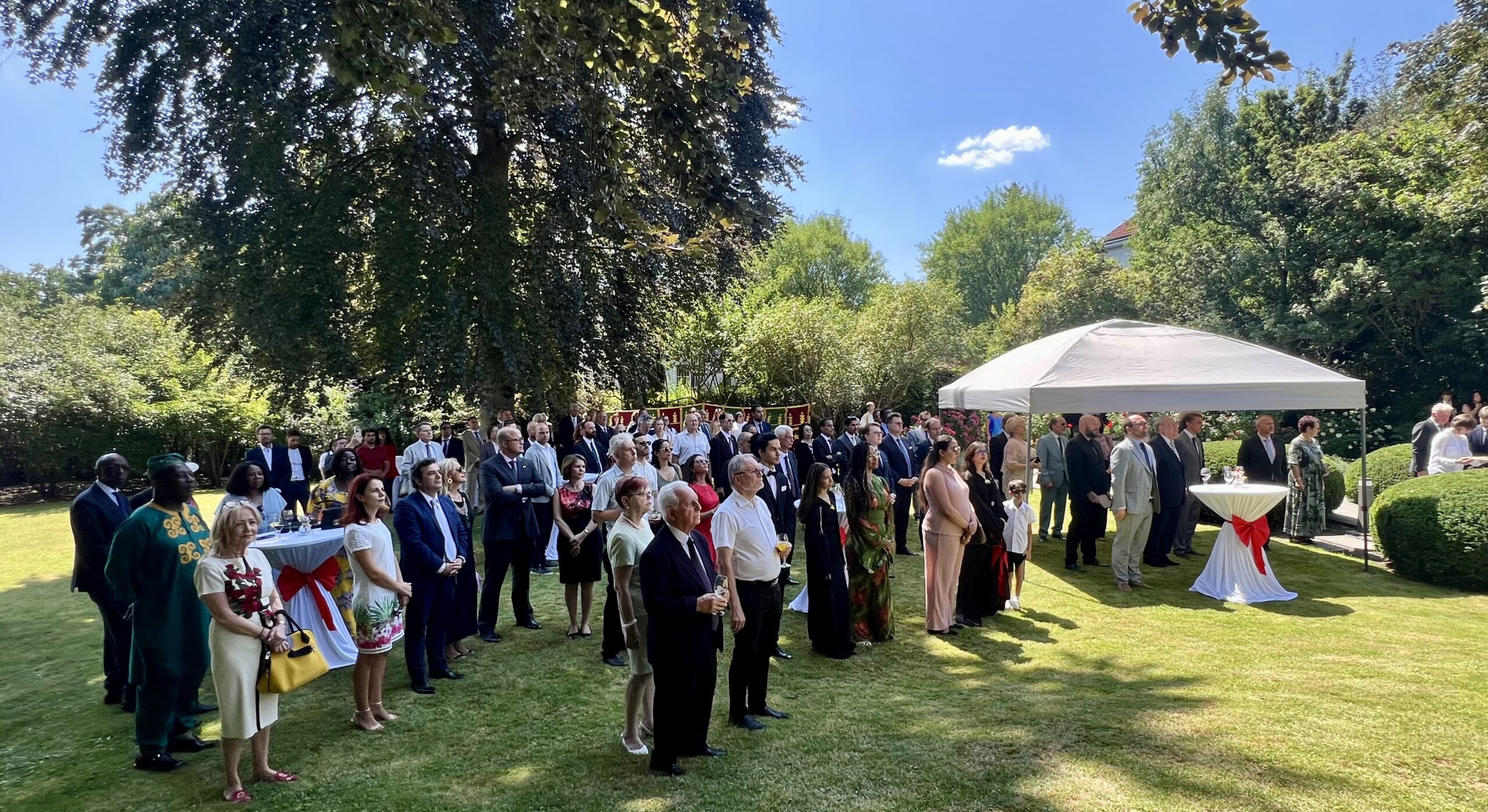
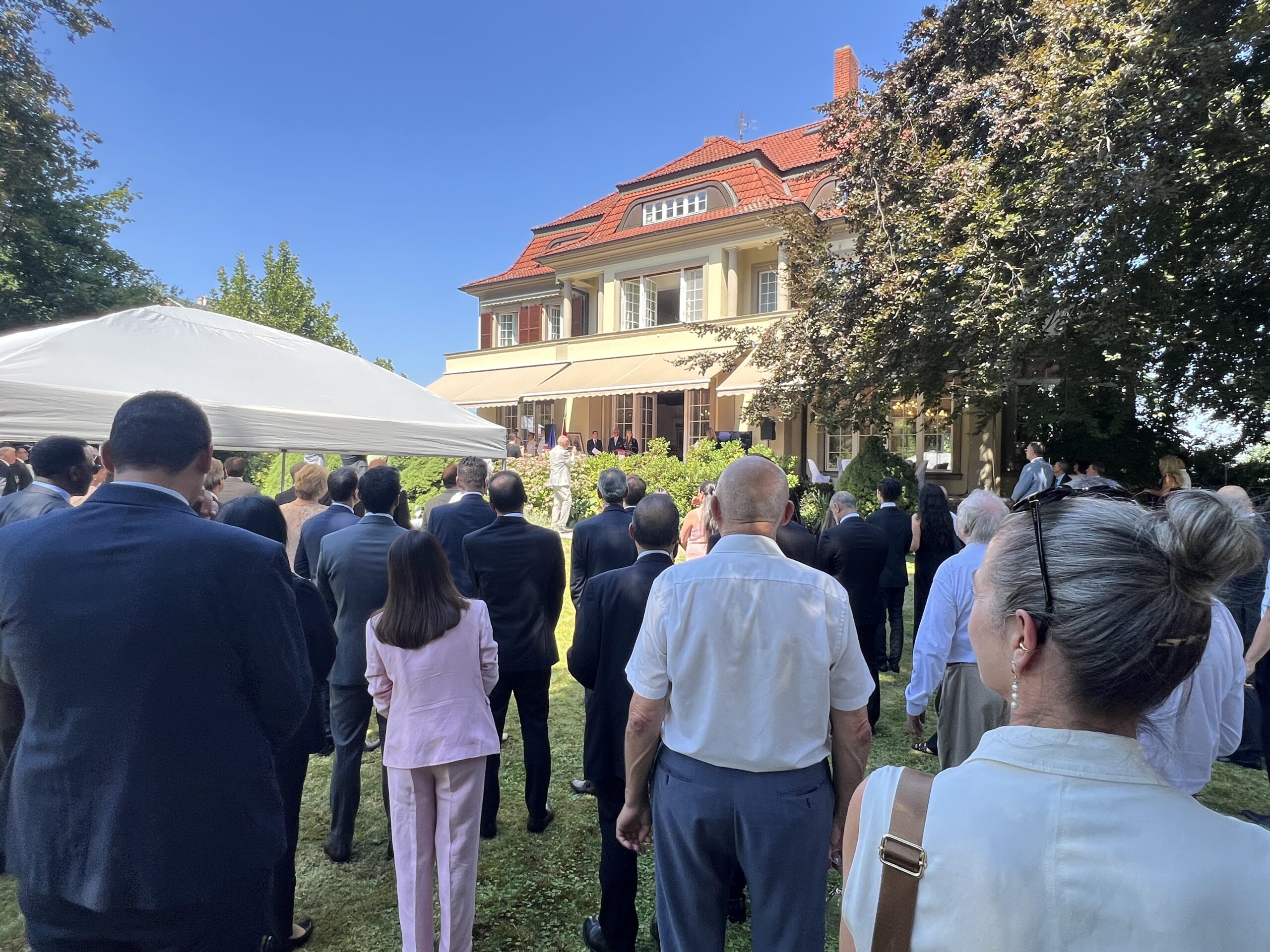
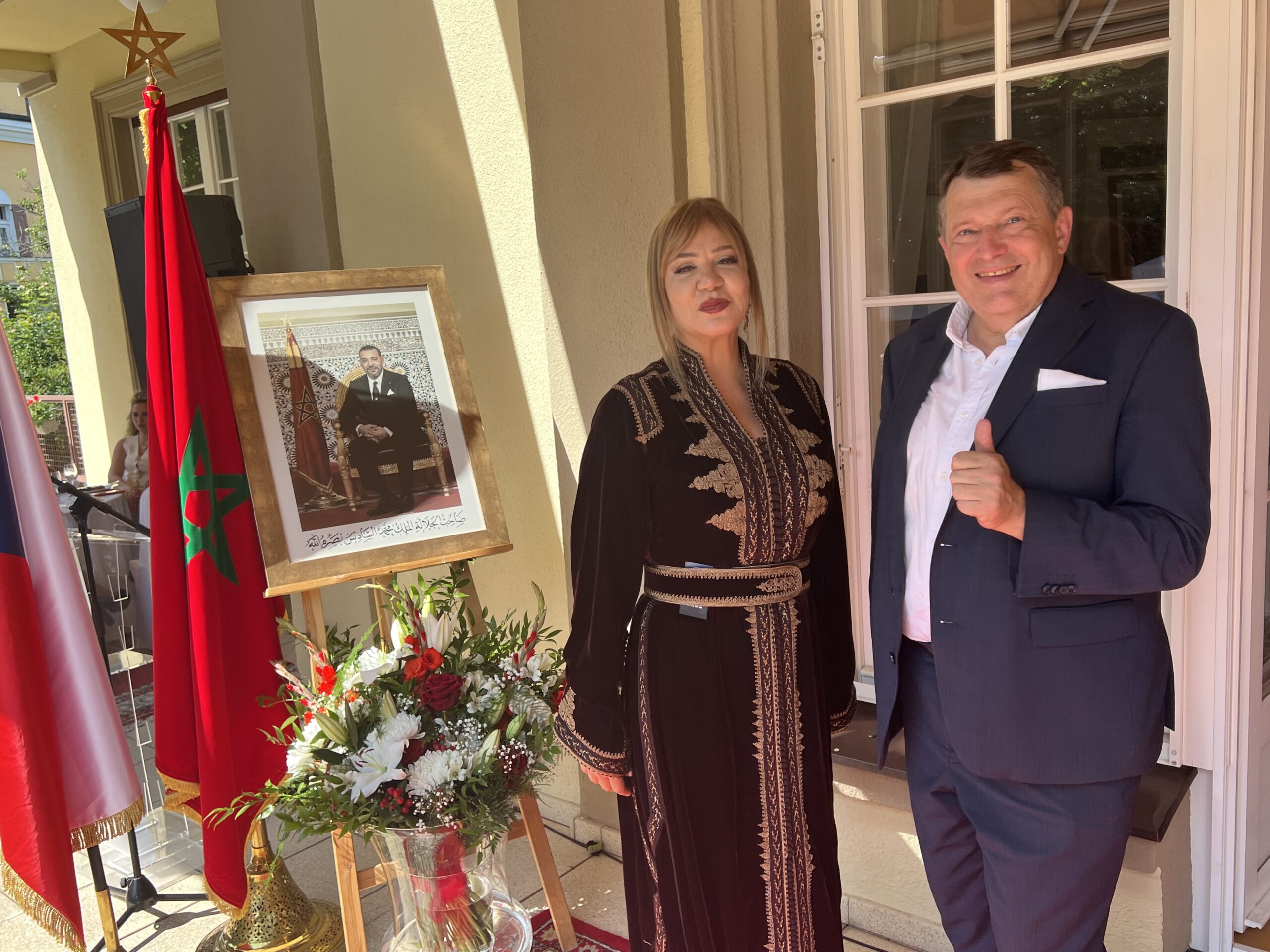
On 30 July 2026, the Ambassador of the Kingdom of Morocco to the Czech Republic, H.E. Hanane Saadi, welcomed distinguished guests to the beautiful garden of the Moroccan Ambassador’s residence in Prague 6–Střešovice for the traditional reception marking Morocco’s Throne Day – Fête du Trône.
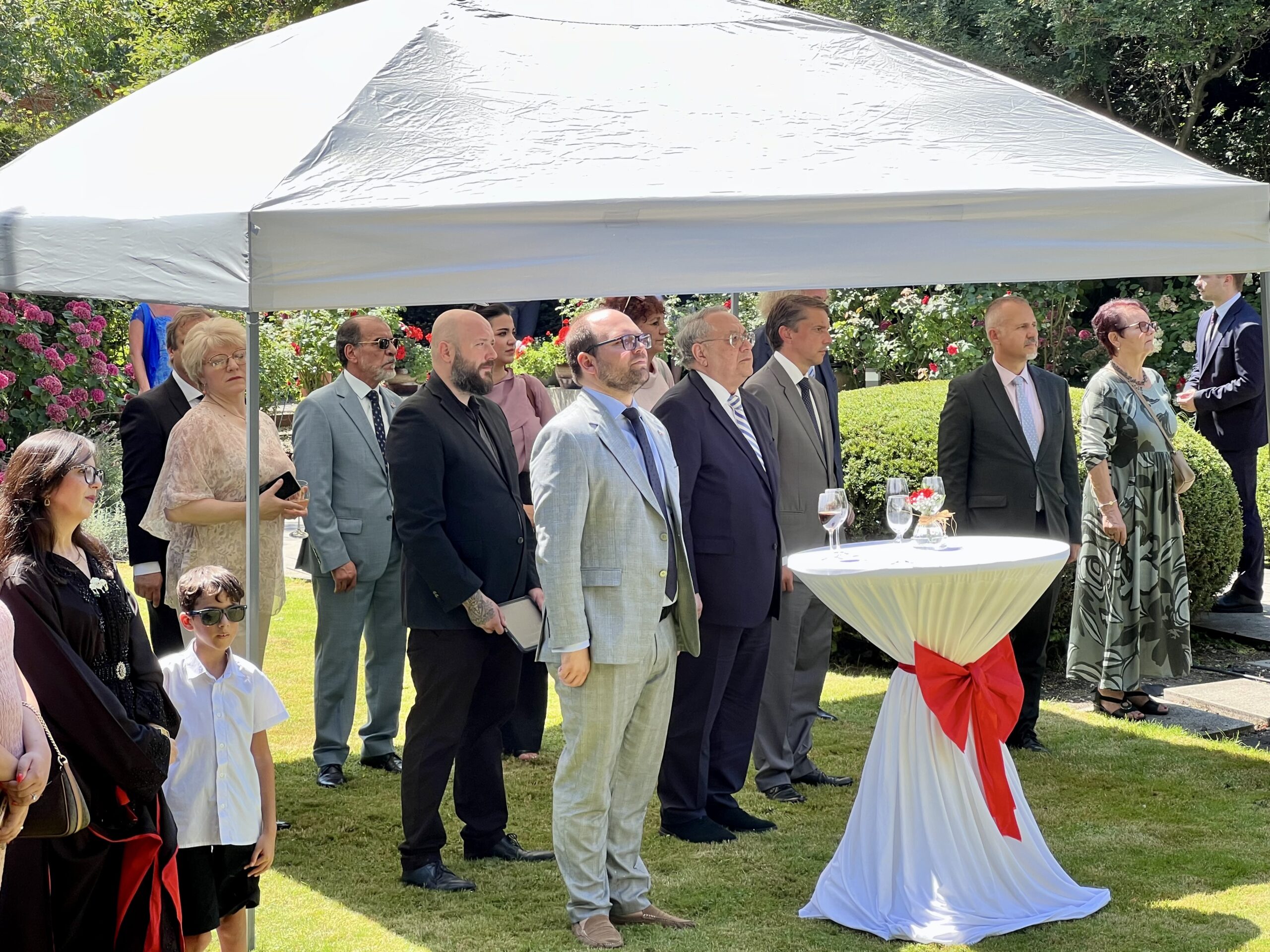
It was one of those diplomatic occasions for which the Moroccan residence has become particularly renowned in Prague: elegant without being overly formal, festive while retaining dignity, and above all marked by the exceptional warmth and hospitality for which Morocco is famous. On a beautiful summer afternoon, representatives of Czech political and public life, members of the diplomatic corps, business leaders and friends of Morocco gathered in the picturesque garden to celebrate one of the Kingdom’s most important national occasions.
Among the distinguished Czech guests were Deputy Prime Minister and Minister of Foreign Affairs Petr Macinka and First Deputy Prime Minister and Minister of Industry and Trade Karel Havlíček, underlining the importance attached to relations between the Czech Republic and the Kingdom of Morocco at the highest political level.
A National Day with a very special meaning
Morocco’s National Day is unusual in one important respect. Unlike the national holidays of many countries, it does not primarily commemorate independence, a revolution or the creation of the state. Throne Day commemorates the accession of the reigning monarch and symbolises the historic bond between the Moroccan people and the monarchy.
For King Mohammed VI, 30 July 2026 marked the 27th anniversary of his accession to the Alaouite throne. Mohammed VI became King following the death of his father, King Hassan II, in July 1999. On 30 July 1999, the new monarch delivered his first Throne Speech and ordered that Throne Day henceforth be celebrated annually on that date.
The tradition itself is considerably older. The first Throne Day celebration took place on 18 November 1933, six years after Sultan Mohammed V had ascended the throne. During the period of the French Protectorate, Moroccan nationalists promoted the celebration as a symbol of national cohesion and the unity between the Sultan and his people. What began more than nine decades ago consequently grew into much more than a royal anniversary. Throne Day became an expression of Moroccan statehood, continuity and national identity.
King Mohammed VI himself has repeatedly emphasised this meaning. In his Throne Day addresses he has described the occasion as an opportunity to renew the bonds of allegiance between the Throne and the people, while at the same time taking stock of Morocco’s development and looking towards the future.
The Alaouite dynasty – almost four centuries of continuity
Behind this celebration stands one of the remarkable examples of dynastic continuity in the world.
The Alaouite dynasty, to which King Mohammed VI belongs, has ruled Morocco since the 17th century. Its origins lie in Tafilalt in south-eastern Morocco. The dynasty traces its Sharifian lineage through Imam Ali, the son-in-law of the Prophet Muhammad, and established its authority over Morocco during the 1660s.
Moulay Ali Cherif is regarded as the spiritual founder of the dynasty, while Moulay Rachid succeeded in reunifying large parts of Morocco and restoring strong central authority during the second half of the 17th century. His successor Moulay Ismail, who ruled from 1672, transformed Meknes into an imperial capital, consolidated the Moroccan state and established diplomatic relations with the great European courts of his age, including those of Louis XIV of France and James II of England.
The modern era of the monarchy is closely associated with three sovereigns: King Mohammed V, one of the central figures in Morocco’s struggle for independence; his son King Hassan II, who reigned from 1961 until 1999; and the present monarch, King Mohammed VI.
Under Mohammed VI, Morocco has undergone profound economic, social and infrastructural development. The monarch has made modernisation, social development and Morocco’s international position central pillars of his reign. At the same time, Morocco has increasingly established itself as an important political and economic bridge between Europe, Africa, the Arab world and the Atlantic region – a position that gives the Kingdom considerably greater strategic importance than its geographical size alone might suggest.
Hanane Saadi – diplomacy as a vocation
The Prague celebration was also inseparably connected with its host, H.E. Ambassador Hanane Saadi, one of the most experienced members of Morocco’s diplomatic service and a personality who has played a remarkable role in strengthening Morocco’s presence in Central Europe.
Her career is impressive both in its geographical breadth and its professional depth.
Hanane Saadi was born on 28 January 1965 and possesses an unusually international academic background. She obtained advanced qualifications in international law from the Autonomous University of Madrid, a Master’s degree in International Relations from the International University of Andalusia, as well as a Master’s degree in Translation and Linguistics from Moscow’s Institute of Foreign Languages.
Immediately after completing her studies she entered the Moroccan Ministry of Foreign Affairs. Diplomacy was not entirely unfamiliar territory to her: one of her brothers as well as a cousin had served as diplomats. Indeed, long before becoming ambassador to Prague, she had visited the Czech capital as a student while her cousin was posted at the Moroccan Embassy there – a remarkable personal connection with the city to which she would return many years later as her country’s highest representative.
Her diplomatic career subsequently took her through several important postings. In 2001 she served as Chargé d’Affaires at the Moroccan Embassy in Bucharest. In 2007 she became Political Counsellor at the Moroccan Embassy in Madrid, one of Morocco’s most important European diplomatic missions. In 2015 she was appointed Consul General of Morocco in the Balearic Islands, based in Palma de Mallorca.
Then came one of the great milestones of her career. In 2018, King Mohammed VI appointed Hanane Saadi Ambassador of the Kingdom of Morocco to the Czech Republic. She presented her credentials in Prague on 18 July 2018 and has since become one of the best-known and longest-serving members of the diplomatic community in the Czech capital.
One particularly striking aspect of Ambassador Hanane Saadi’s tenure in Prague is its exceptional duration. She has represented the Kingdom of Morocco in the Czech Republic for more than eight years – considerably longer than the usual diplomatic posting, which typically lasts between three and five years and very often around four.
Such continuity is in itself noteworthy. It reflects the considerable trust placed in her and speaks strongly for the success with which she has represented Morocco’s interests in the Czech Republic. Over the years, Ambassador Saadi has built an extensive network of political, economic, cultural and personal relations and has become an exceptionally well-established and respected figure within Prague’s diplomatic community.
While ambassadorial appointments and extensions remain the prerogative of His Majesty King Mohammed VI, the fact that Hanane Saadi has been entrusted with representing the Kingdom in Prague for such an unusually long period can reasonably be seen as a strong indication of the confidence placed in her work and of the value attached to the continuity she has brought to Moroccan-Czech relations.
Her more than eight years in Prague have therefore not simply constituted a long diplomatic posting; they have allowed her to develop a depth of relationships and an understanding of the Czech Republic that few ambassadors are able to achieve during a standard term. This continuity has undoubtedly been one of the great strengths of her mission.
More than classical diplomacy
What distinguishes Ambassador Saadi’s work in Prague is that she has never confined diplomacy to official meetings behind closed doors.
Over the years, she has systematically used culture, music, religion, business, history and personal encounters to bring Morocco and the Czech Republic closer together. Her approach reflects an important characteristic of modern Morocco itself: pride in the country’s traditions combined with openness towards other cultures and religions.
She has spoken publicly about having grown up in an environment shaped by a tolerant interpretation of Islam. Her father was a religious scholar and imam who, according to Ambassador Saadi, taught her respect for other religions and acceptance of differences.
This philosophy has repeatedly been visible in her work in Prague. During the 2020 Throne Day celebration, for example, representatives of the three Abrahamic religions – Islam, Judaism and Christianity – were brought together in the Moroccan residence to pray for peace and health at the height of the COVID-19 crisis.
She has also made Moroccan culture an important element of bilateral relations. In 2024, on the occasion of 65 years of diplomatic relations between Morocco and Czechoslovakia/the Czech Republic, the embassy organised a major musical event presenting Moroccan and Arab musical traditions to a Czech audience.
More recently, in June 2026, the historic gardens of Prague’s Černín Palace, the seat of the Czech Foreign Ministry, provided the setting for “Moroccan Sufism – An Ode to Dialogue and Mutual Understanding”, organised jointly by the Moroccan Embassy and the Czech Ministry of Foreign Affairs. The event brought together diplomats, politicians, academics and artists and presented Morocco’s spiritual traditions as a message of tolerance, dialogue and coexistence.
Such initiatives illustrate why Hanane Saadi’s tenure in Prague can already be regarded as far more than a conventional ambassadorial posting. Over eight years, she has created an extraordinarily broad network of political, cultural, economic and personal relations and has given Morocco a highly visible presence in Czech public and diplomatic life.
Morocco and the Czech Republic – friendship with considerable potential
The presence of senior members of the Czech government at this year’s reception also reflected the growing importance of the relationship between the two countries.
Morocco has become one of Europe’s most important partners in North Africa. Its political stability, rapidly developing infrastructure, strong automotive and aerospace industries, growing renewable-energy sector and strategic position make the Kingdom an increasingly attractive partner for Czech companies.
Ambassador Saadi has consistently promoted precisely these connections, highlighting opportunities for Czech businesses in areas including engineering, information technology, healthcare and pharmaceuticals, agriculture and food production.
The attendance of both Foreign Minister Petr Macinka and Industry and Trade Minister Karel Havlíček therefore carried considerable symbolism. Political relations and economic relations increasingly complement each other.
A perfect Moroccan afternoon in Prague
Yet diplomacy is ultimately also about personal relationships. And this was perhaps what could be felt most clearly on 30 July.
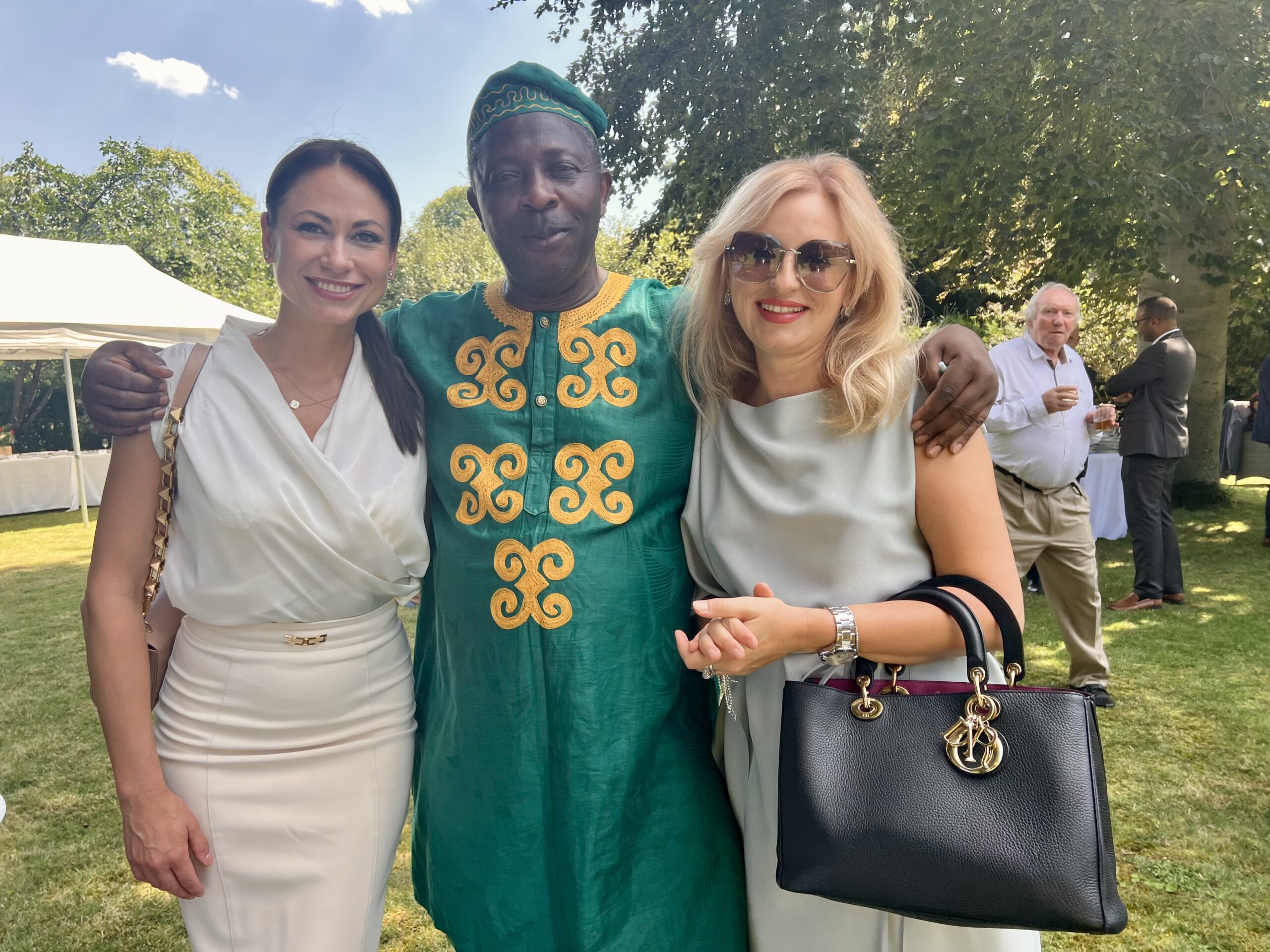
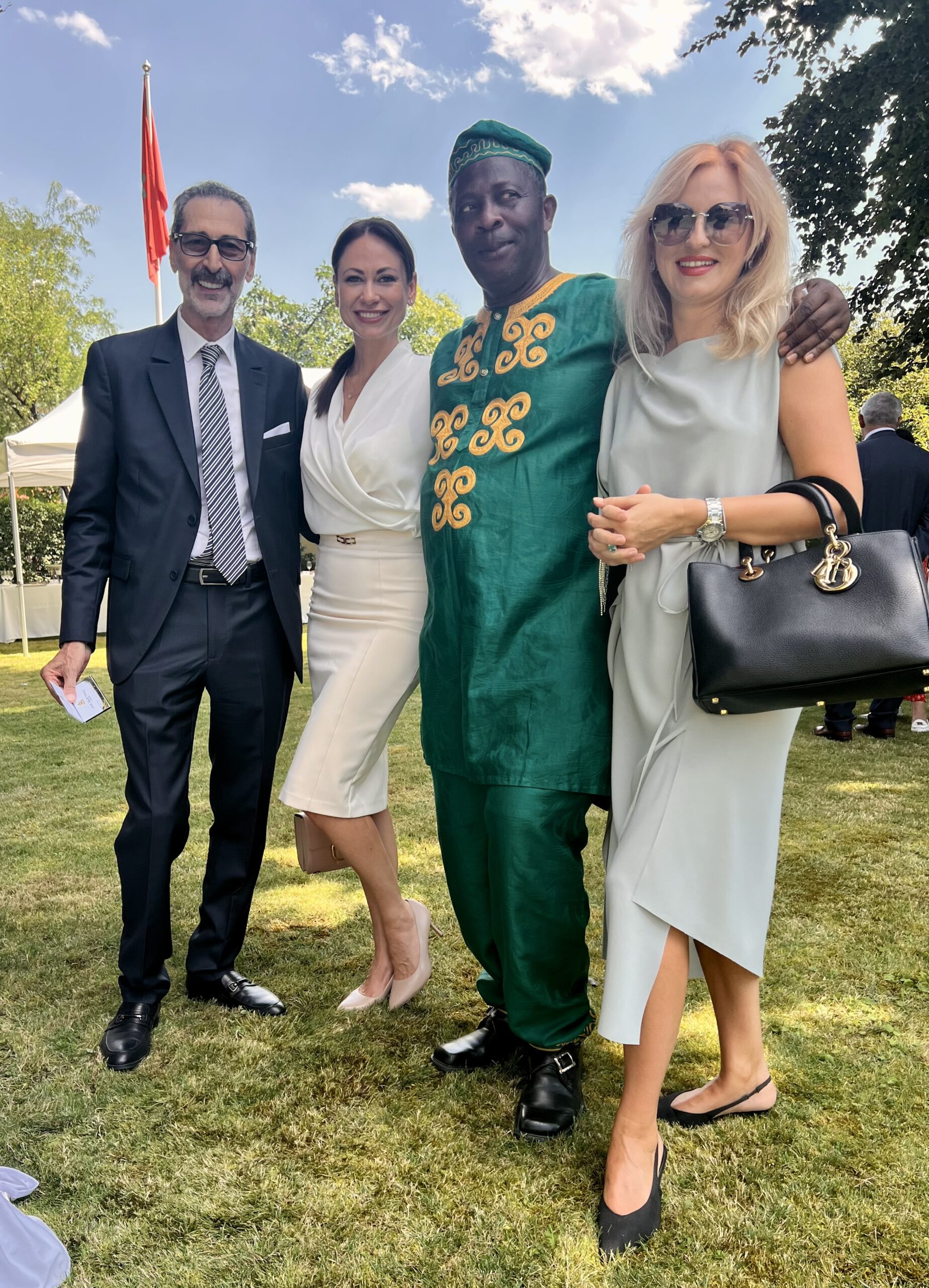
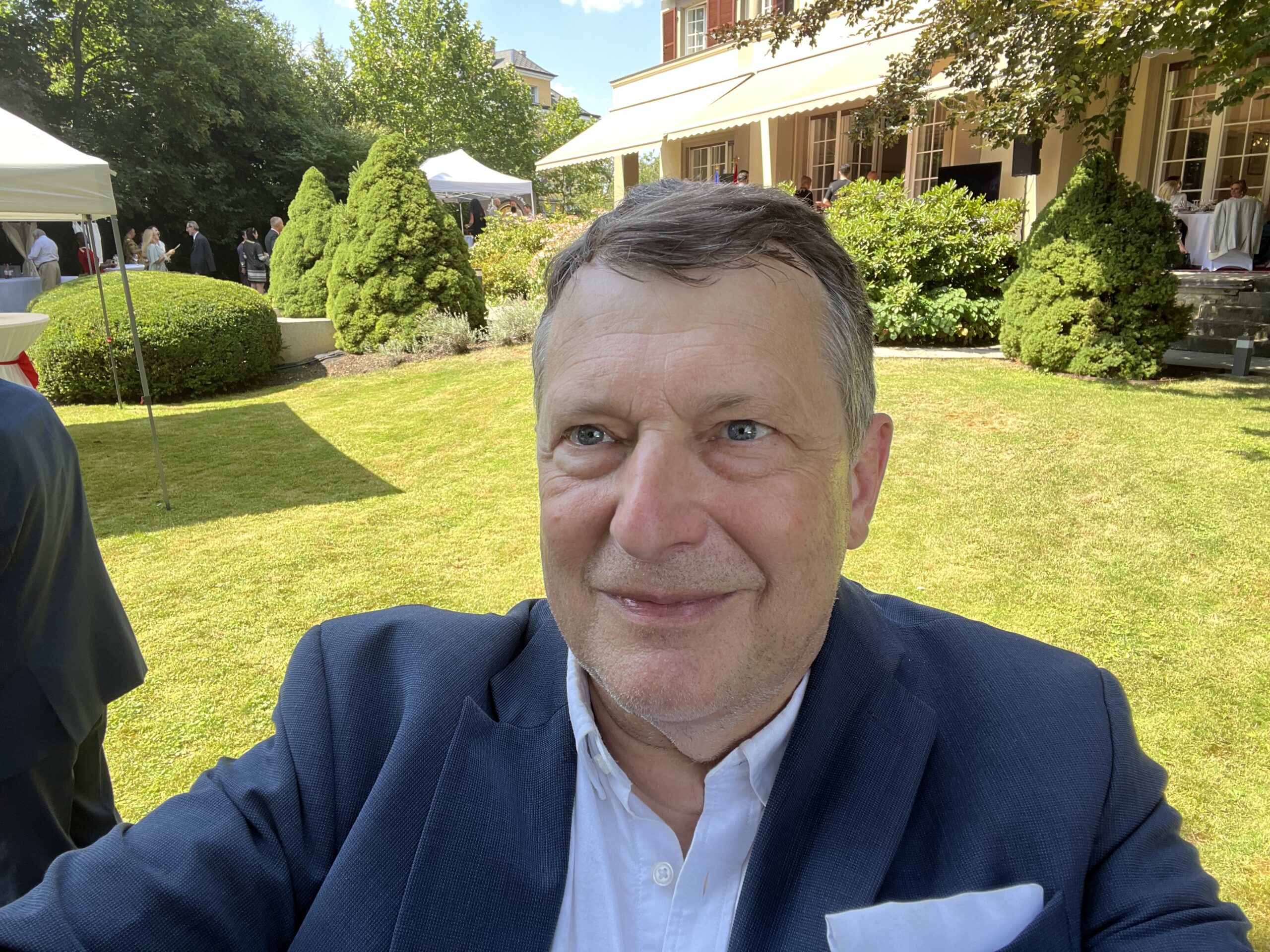
The garden of the Moroccan residence, with its elegant surroundings and relaxed summer atmosphere, once again provided a magnificent setting. Moroccan hospitality, excellent cuisine and the opportunity for informal conversations transformed an official national-day reception into something much more personal.
Ambassador Hanane Saadi has mastered precisely this aspect of diplomacy: bringing together people who might otherwise meet only across conference tables and allowing political, diplomatic, cultural and business relationships to develop in a natural environment.
The result was a fantastic afternoon – elegant, warm and unmistakably Moroccan.
The 2026 Throne Day reception celebrated the 27-year reign of His Majesty King Mohammed VI, but at the same time it celebrated almost four centuries of Alaouite continuity, more than six decades of Moroccan-Czech diplomatic relations and a friendship between two countries that continues to deepen.
And in Prague, much of the credit for making that friendship visible belongs to H.E. Hanane Saadi.
After more than three decades in Morocco’s diplomatic service and more than eight years representing her country in the Czech Republic, she has become much more than Morocco’s ambassador in Prague. She has become an exceptionally active and respected bridge between the two countries – a diplomat who combines professionalism with warmth, tradition with openness, and representation with a genuine ability to bring people together.
On Morocco’s Throne Day, that achievement was perhaps the most fitting tribute of all to a Kingdom whose national celebration is itself built around the ideals of continuity, loyalty, unity and confidence in the future.
Recent posts
See AllPrague Forum Membership
Join us
Be part of building bridges and channels to engage all the international key voices and decision makers living in the Czech Republic.
Become a member