- Hans Weber
- October 8, 2026
Marimbea All Stars – Rhythms and Dances of the Colombian Pacific
Article by Hans Weber
Marimbea All Stars – Rhythms and Dances of the Colombian Pacific
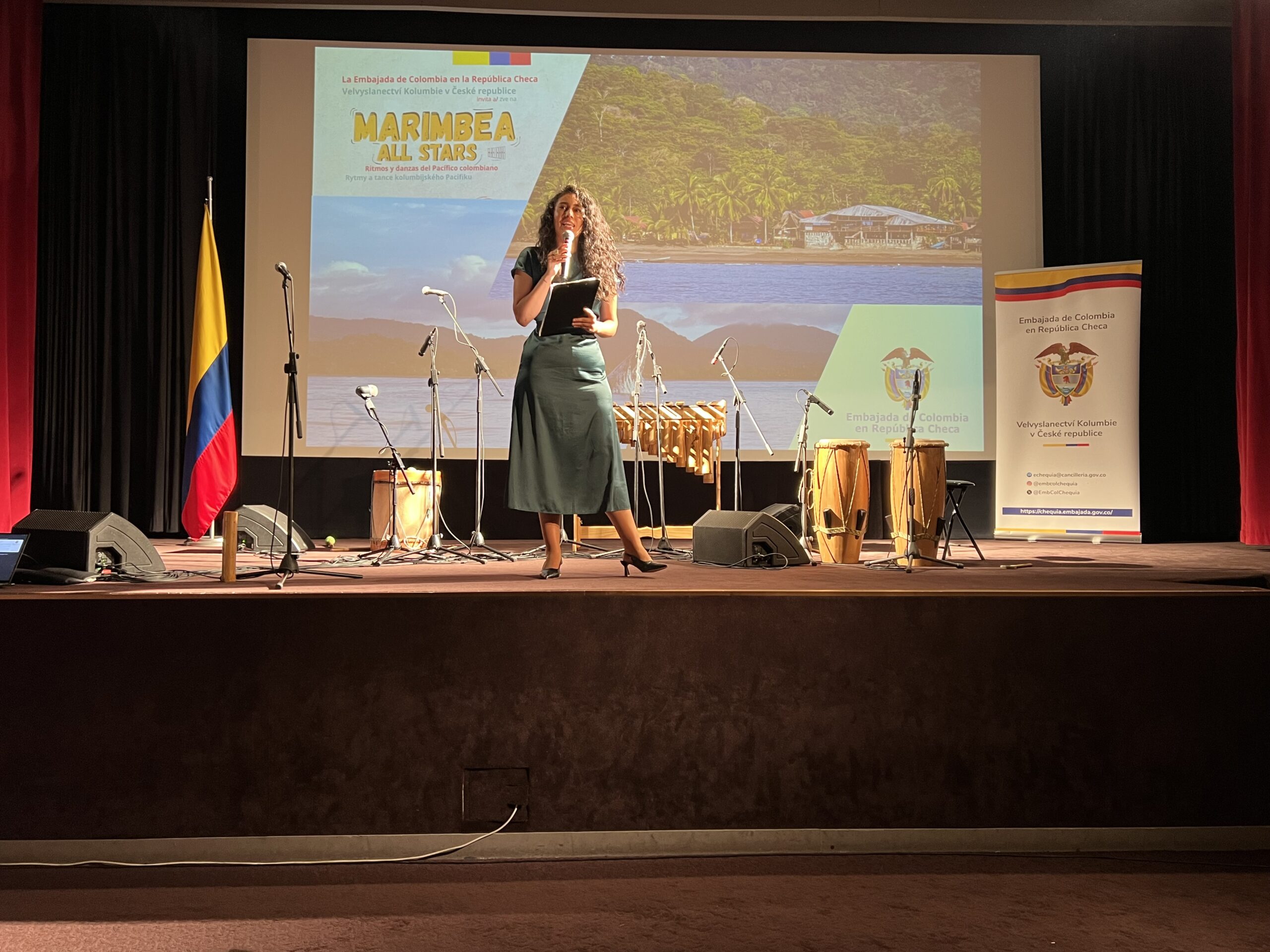
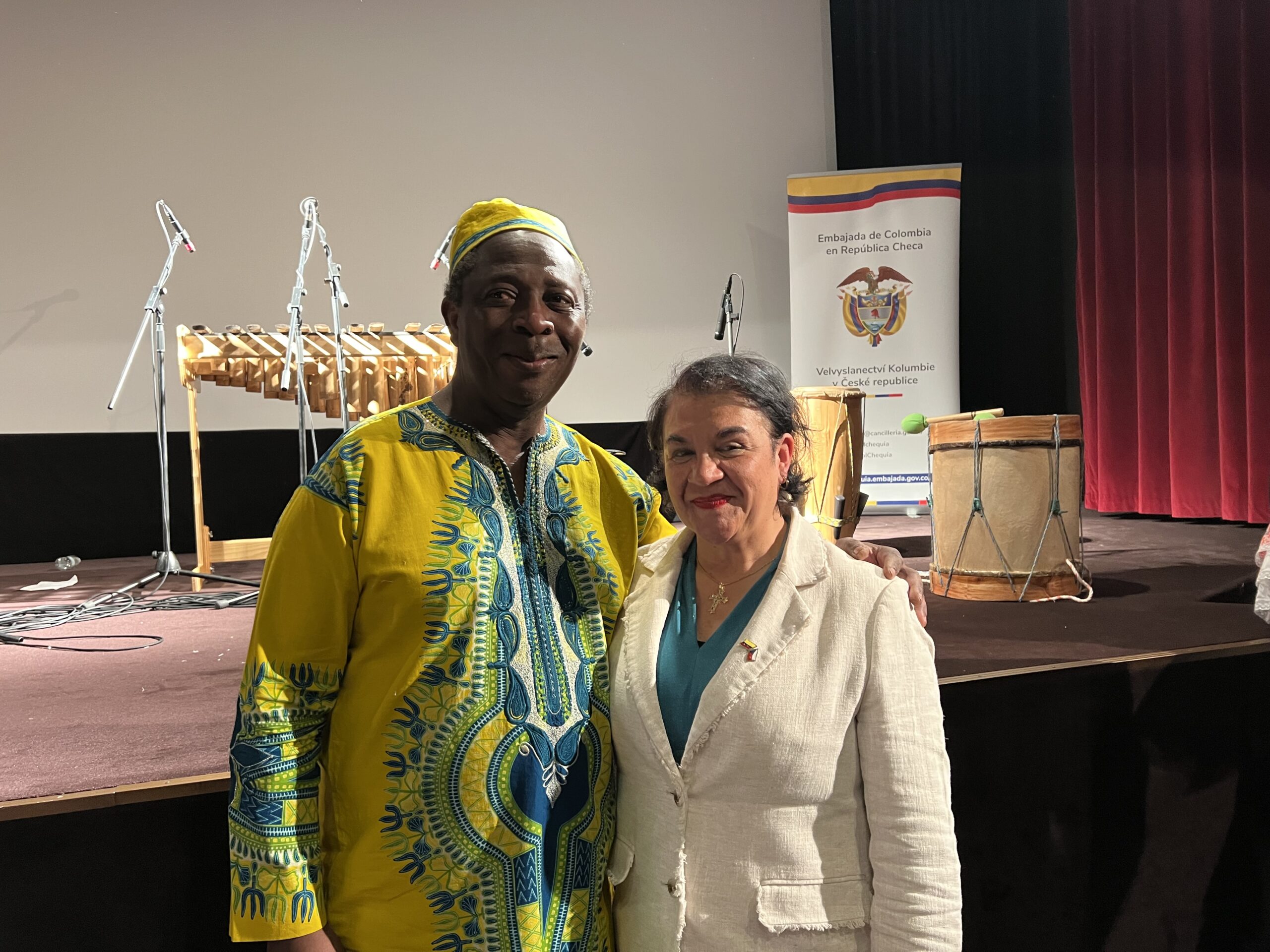
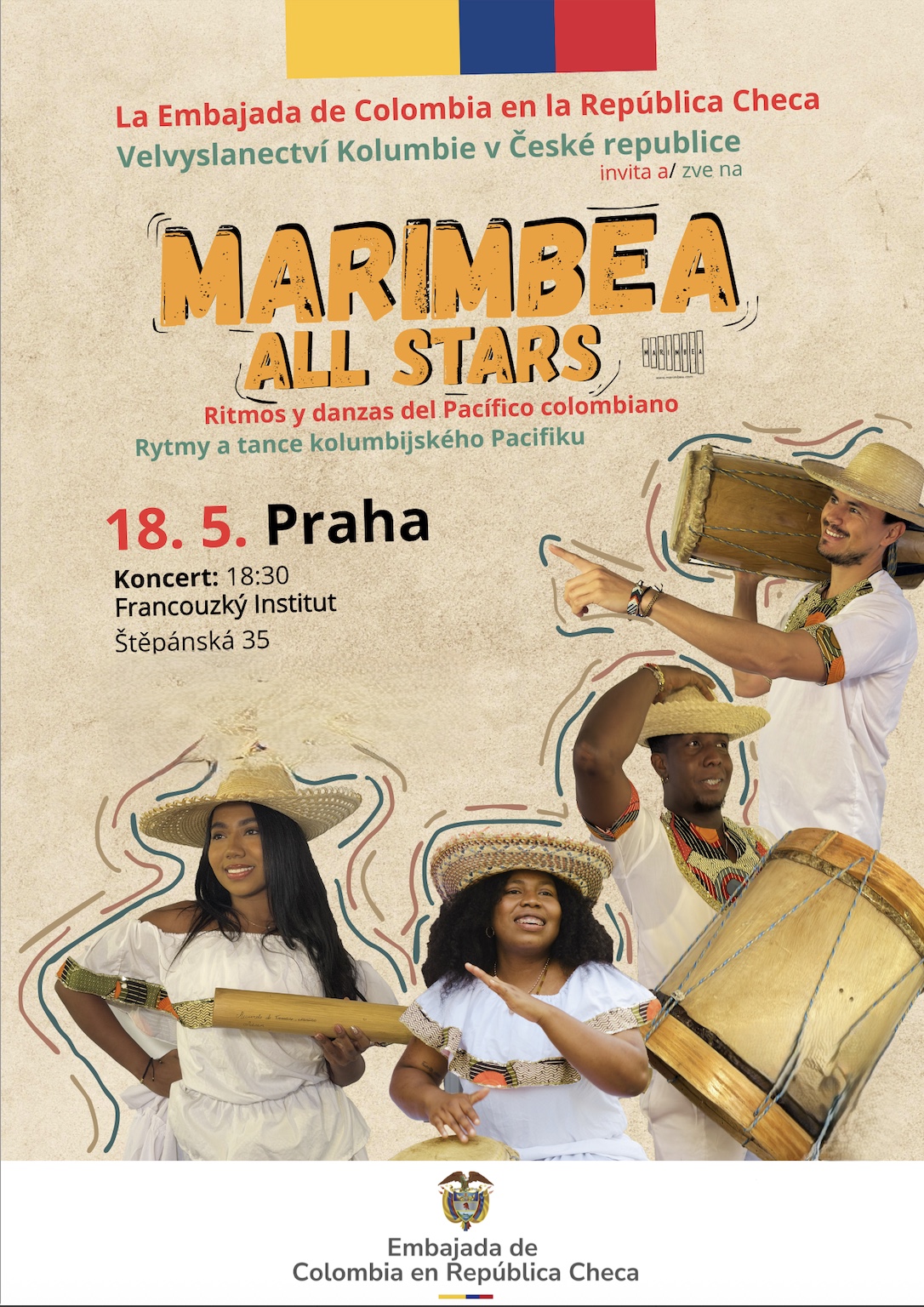
On May 18, the Ambassador of Colombia to the Czech Republic, H.E. Solangel Ortiz Mejía, invited guests to a vibrant and colorful cultural evening entitled “Marimbea All Stars – Rhythms and Dances of the Colombian Pacific.” The event took place from 6:30 p.m. at the French Institute in Prague, located at Štěpánská 35, transforming the venue for one evening into a lively piece of Colombia’s Pacific coast.
Before the concert began, guests were welcomed with typical Colombian specialties that offered a first impression of the country’s rich culture and warm hospitality. Following a brief introduction by Ambassador Solangel Ortiz Mejía, the musical part of the evening started — and within minutes it became clear that this would be far more than an ordinary concert.
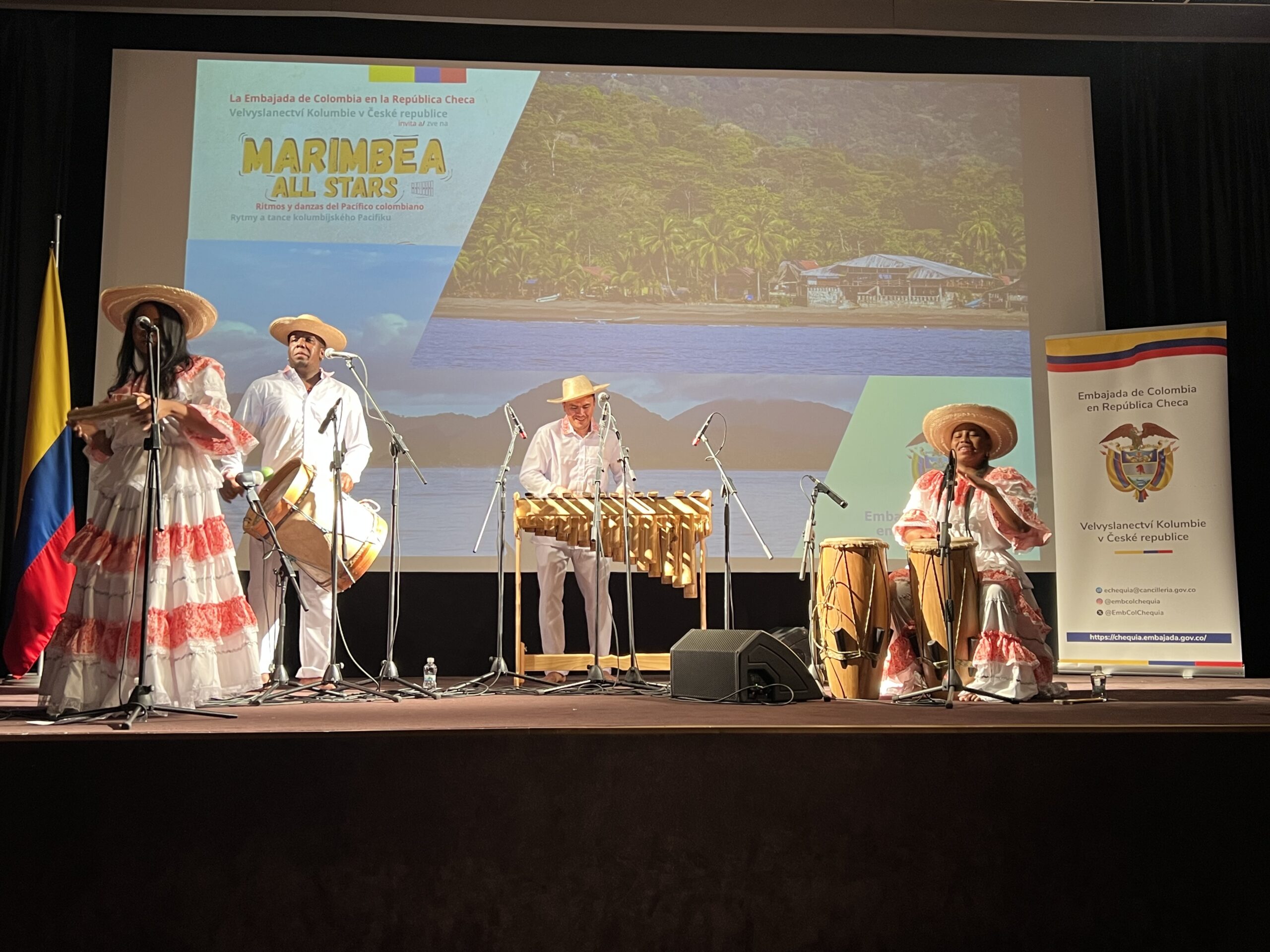
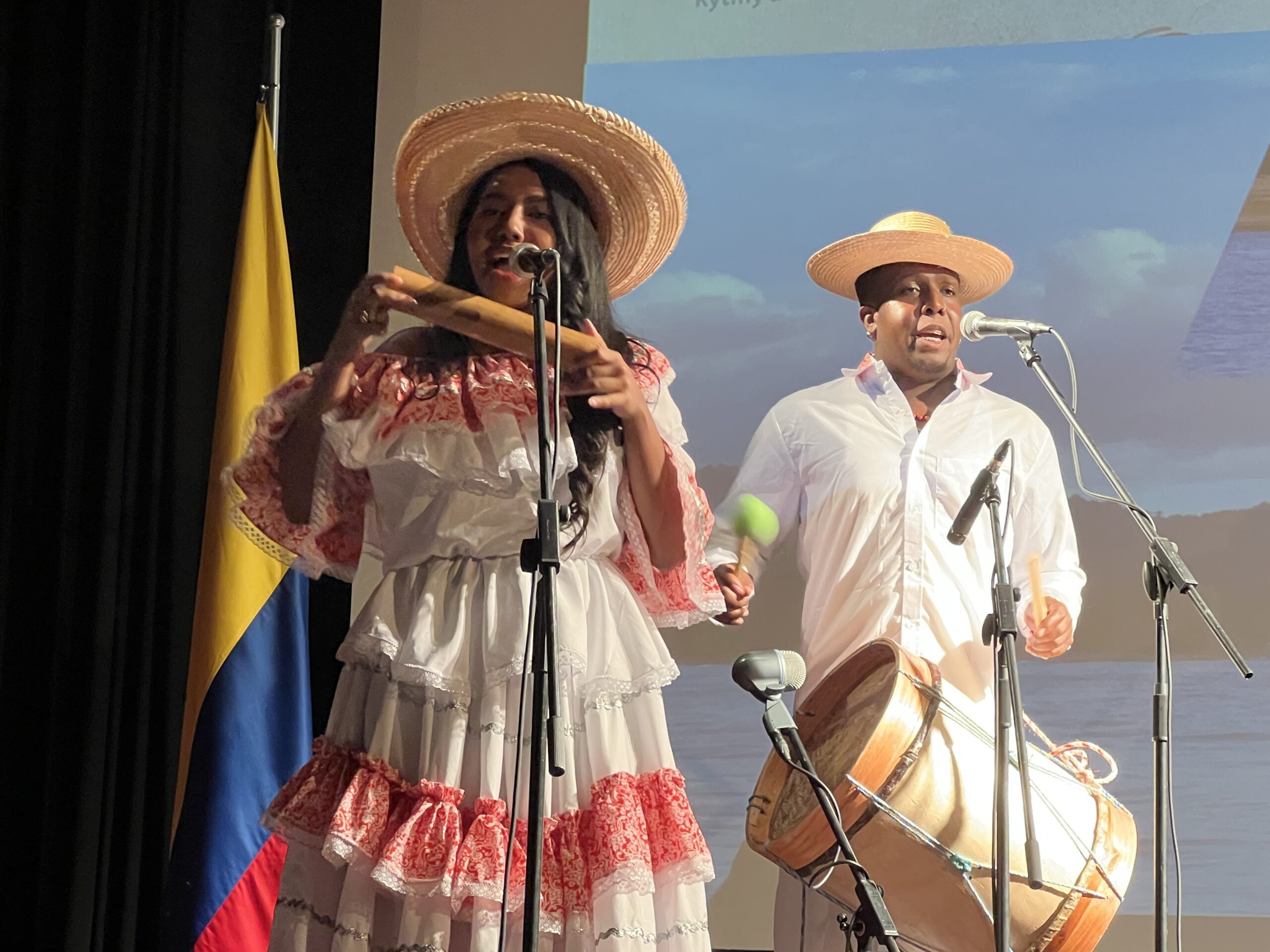
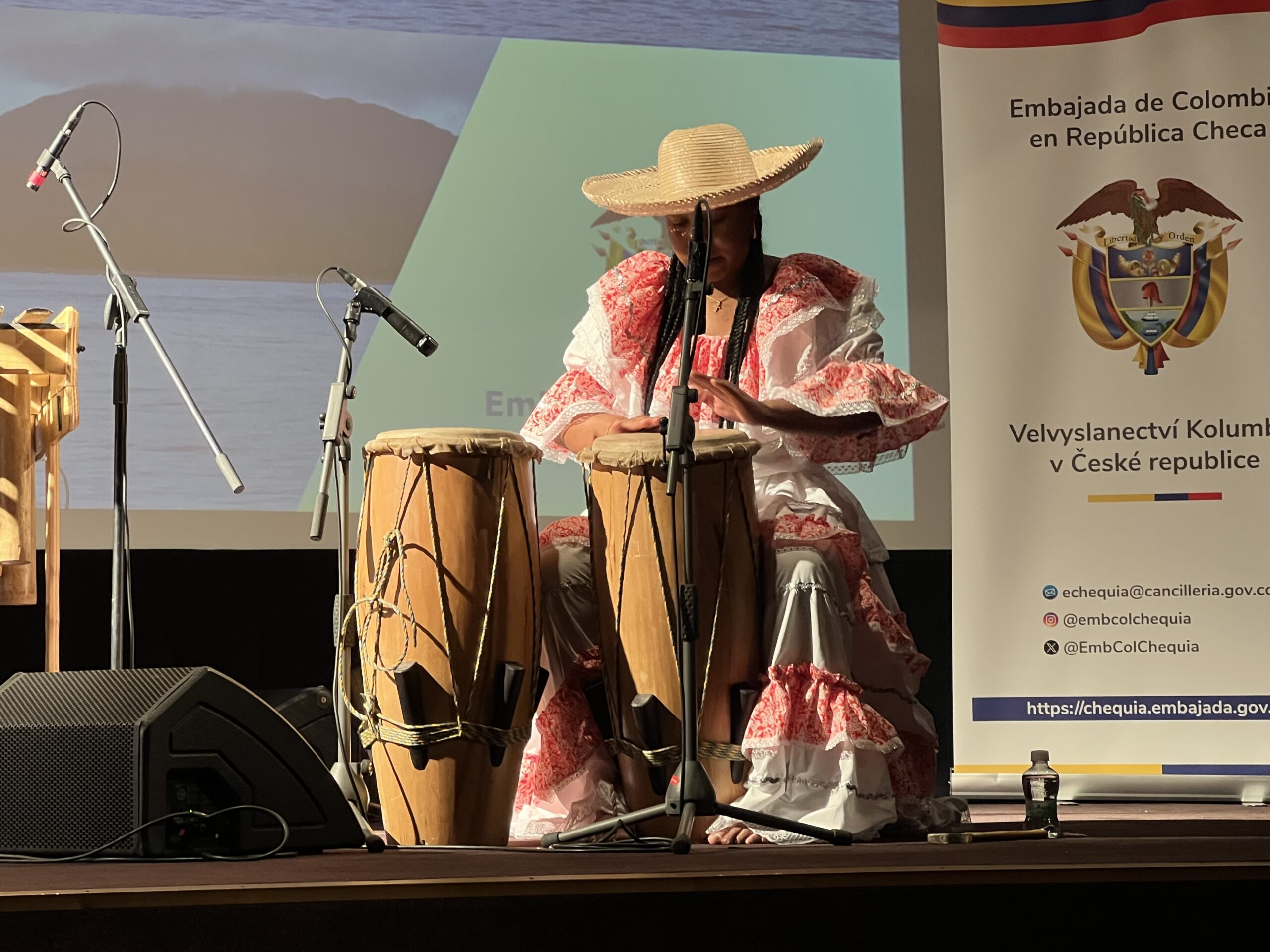
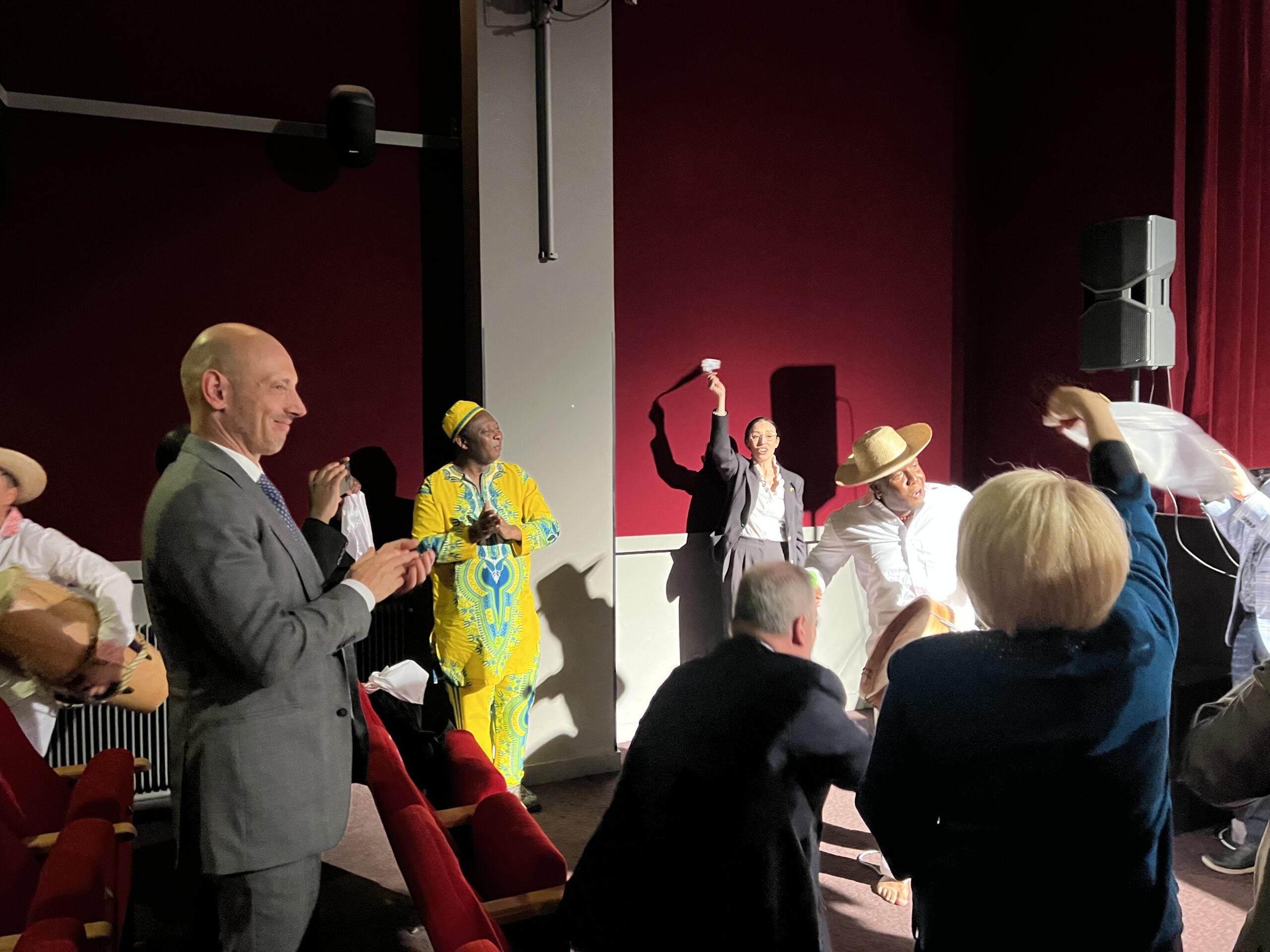
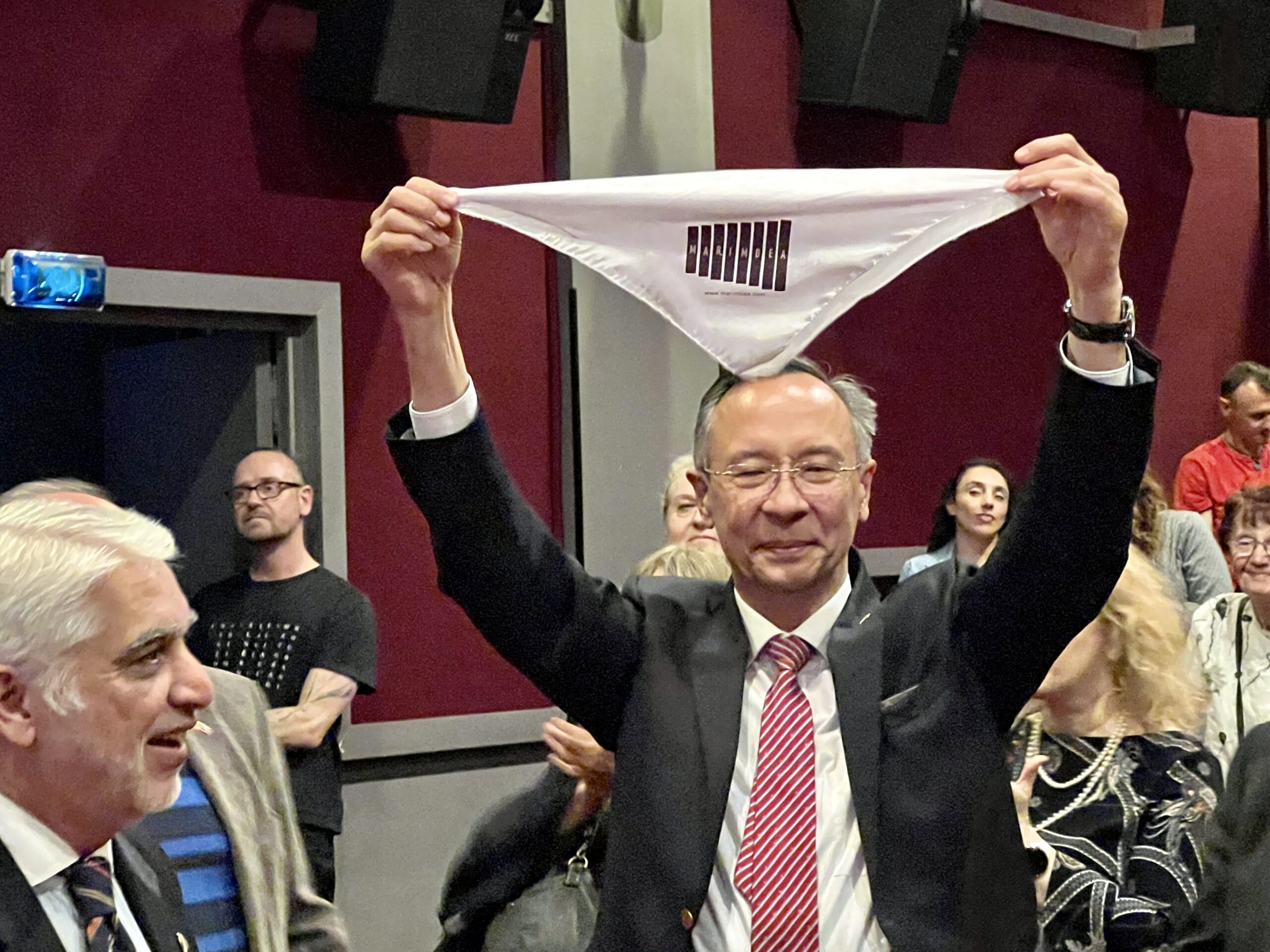
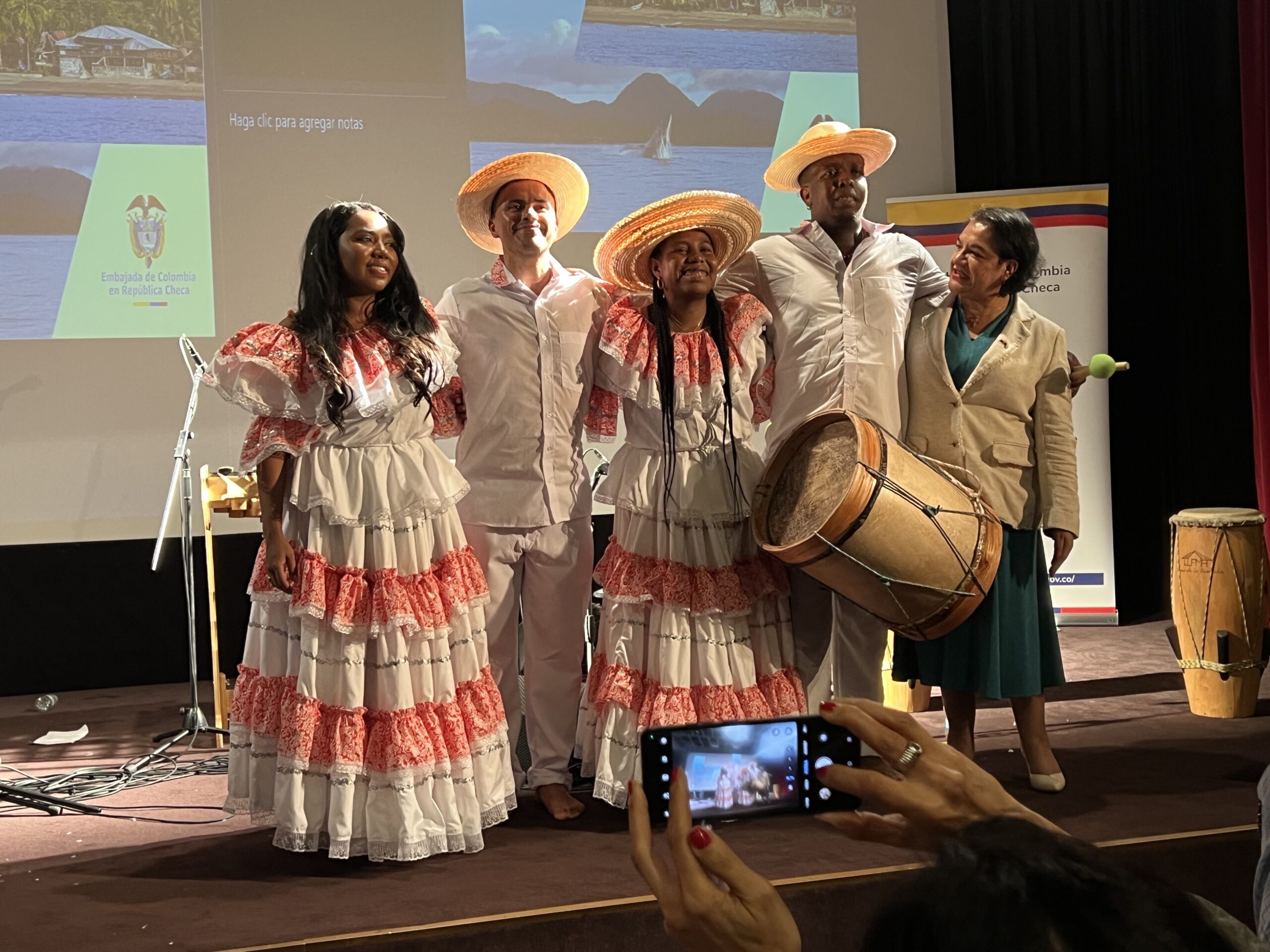
The group “Marimbea All Stars” performed traditional rhythms and dances from the Colombian Pacific region with such energy and passion that the enthusiasm quickly spread throughout the audience. More and more guests could no longer remain seated. Soon people were dancing, clapping, and celebrating together, creating an atmosphere reminiscent of a carnival in Cali or Buenaventura rather than an evening in central Prague.
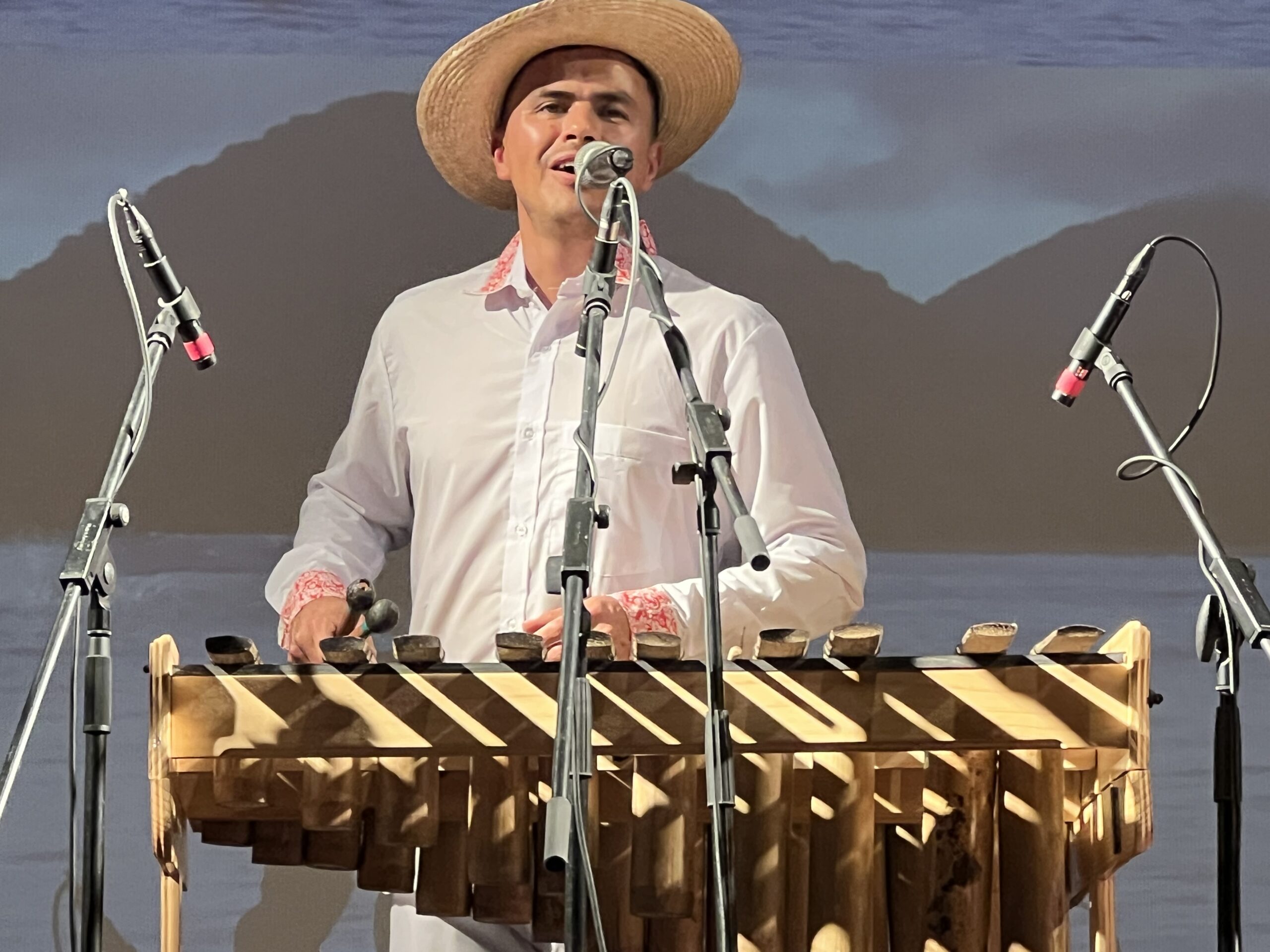
At the heart of the music was the marimba — more precisely the “Marimba de Chonta,” one of the most important traditional instruments of Afro-Colombian culture along the Pacific coast. The marimba resembles a xylophone and is crafted from the wood of the chonta palm. Its warm, deep, and highly rhythmic sound is considered the musical soul of Colombia’s Pacific region. Traditionally, it is accompanied by different types of drums such as the “cununo” and the “bombo,” as well as rhythmic shakers known as “guasás.”
The marimba musical tradition originates primarily from the regions of Chocó, Cauca, Valle del Cauca, and Nariño and was heavily influenced by African traditions brought to the Pacific coast by descendants of enslaved Africans. In 2015, UNESCO declared the marimba music and traditional songs of Colombia’s Pacific South Region part of the Intangible Cultural Heritage of Humanity.
Several regional styles and variations of this music exist. Particularly well known is the rhythmically complex “currulao,” regarded as the most characteristic musical style of the Colombian Pacific, along with related forms such as “bunde,” “juga,” and “abozao.” Typical representatives and preservers of this musical tradition include groups such as Grupo Bahía and Herencia de Timbiquí, as well as the legendary singer Totó la Momposina, who helped introduce Colombian folk music to international audiences.
The event poster itself reflected the joy, movement, and vitality of this culture. The musicians and dancers depicted in traditional white clothing and straw hats symbolized the blend of African, Indigenous, and Spanish influences that shape the culture of Colombia’s Pacific coast. The large drums, traditional instruments, and dynamic dance poses on the poster already hinted at the explosive mixture of rhythm, dance, and emotion that the audience later experienced live.
The evening at the French Institute became far more than just a concert. It turned into a vivid cultural encounter that brought guests closer to the warmth, openness, and musical richness of Colombia, demonstrating impressively why the rhythms of the Colombian Pacific are considered among the most captivating expressions of Latin American culture worldwide.
___________________________________________________________________________________________
Spanish Version:
Marimbea All Stars – Ritmos y Danzas del Pacífico Colombiano
El 18 de mayo, la Embajadora de Colombia en la República Checa, S.E. Solangel Ortiz Mejía, invitó a los asistentes a una vibrante y colorida velada cultural titulada “Marimbea All Stars – Ritmos y danzas del Pacífico colombiano”. El evento tuvo lugar a partir de las 6:30 de la tarde en las instalaciones del Instituto Francés de Praga, ubicado en Štěpánská 35, transformando el lugar por una noche en un auténtico rincón del Pacífico colombiano.
Antes del inicio del concierto, los invitados pudieron disfrutar de especialidades típicas colombianas que ofrecieron una primera muestra de la riqueza cultural y de la calidez del país. Tras unas breves palabras de bienvenida por parte de la embajadora Solangel Ortiz Mejía, comenzó la parte musical de la noche, y en pocos minutos quedó claro que aquello sería mucho más que un concierto convencional.
El grupo “Marimbea All Stars” interpretó ritmos y danzas tradicionales del Pacífico colombiano con tanta energía y pasión que el entusiasmo se contagió rápidamente al público. Cada vez más asistentes dejaron sus asientos para bailar, aplaudir y celebrar junto a los músicos, creando un ambiente que recordaba más a un carnaval en Cali o Buenaventura que a una noche en pleno centro de Praga.
En el corazón de la música estaba la marimba — más exactamente la “Marimba de Chonta”, uno de los instrumentos tradicionales más importantes de la cultura afrocolombiana del litoral Pacífico. La marimba se parece a un xilófono y está elaborada con madera de palma de chonta. Sus sonidos cálidos, profundos y llenos de ritmo son considerados el alma musical del Pacífico colombiano. Tradicionalmente, la acompañan distintos tambores como el “cununo” y el “bombo”, además de las sonajas rítmicas conocidas como “guasás”.
La tradición musical de la marimba proviene principalmente de las regiones de Chocó, Cauca, Valle del Cauca y Nariño, y está profundamente marcada por las influencias africanas llevadas a la costa pacífica por los descendientes de africanos esclavizados. En 2015, la UNESCO declaró la música de marimba y los cantos tradicionales del Pacífico Sur de Colombia Patrimonio Cultural Inmaterial de la Humanidad.
Existen diferentes estilos regionales y variaciones de esta música. El más conocido es el “currulao”, considerado el ritmo más representativo del Pacífico colombiano, junto con otros géneros relacionados como el “bunde”, la “juga” o el “abozao”. Entre los grandes representantes y guardianes de esta tradición musical destacan agrupaciones como Grupo Bahía y Herencia de Timbiquí, así como la legendaria cantante Totó la Momposina, quien llevó la música folclórica colombiana a escenarios internacionales.
El cartel del evento también reflejaba la alegría, el movimiento y la vitalidad de esta cultura. Los músicos y bailarines retratados con vestimenta blanca tradicional y sombreros de paja simbolizaban la mezcla de influencias africanas, indígenas y españolas que caracteriza la cultura del Pacífico colombiano. Los grandes tambores, los instrumentos tradicionales y las poses llenas de movimiento ya anticipaban la explosiva combinación de ritmo, danza y emoción que el público viviría más tarde en directo.
La velada en el Instituto Francés terminó siendo mucho más que un simple concierto. Se convirtió en un auténtico encuentro cultural que acercó a los invitados a la calidez, la alegría y la riqueza musical de Colombia, demostrando de manera impresionante por qué los ritmos del Pacífico colombiano son considerados una de las expresiones culturales más fascinantes de América Latina.

Recent posts
See AllPrague Forum Membership
Join us
Be part of building bridges and channels to engage all the international key voices and decision makers living in the Czech Republic.
Become a member