- Hans Weber
- October 8, 2026
Celebrating America’s 250th Birthday – The Reception at the Ambassador’s Residence
Article by Hans Weber
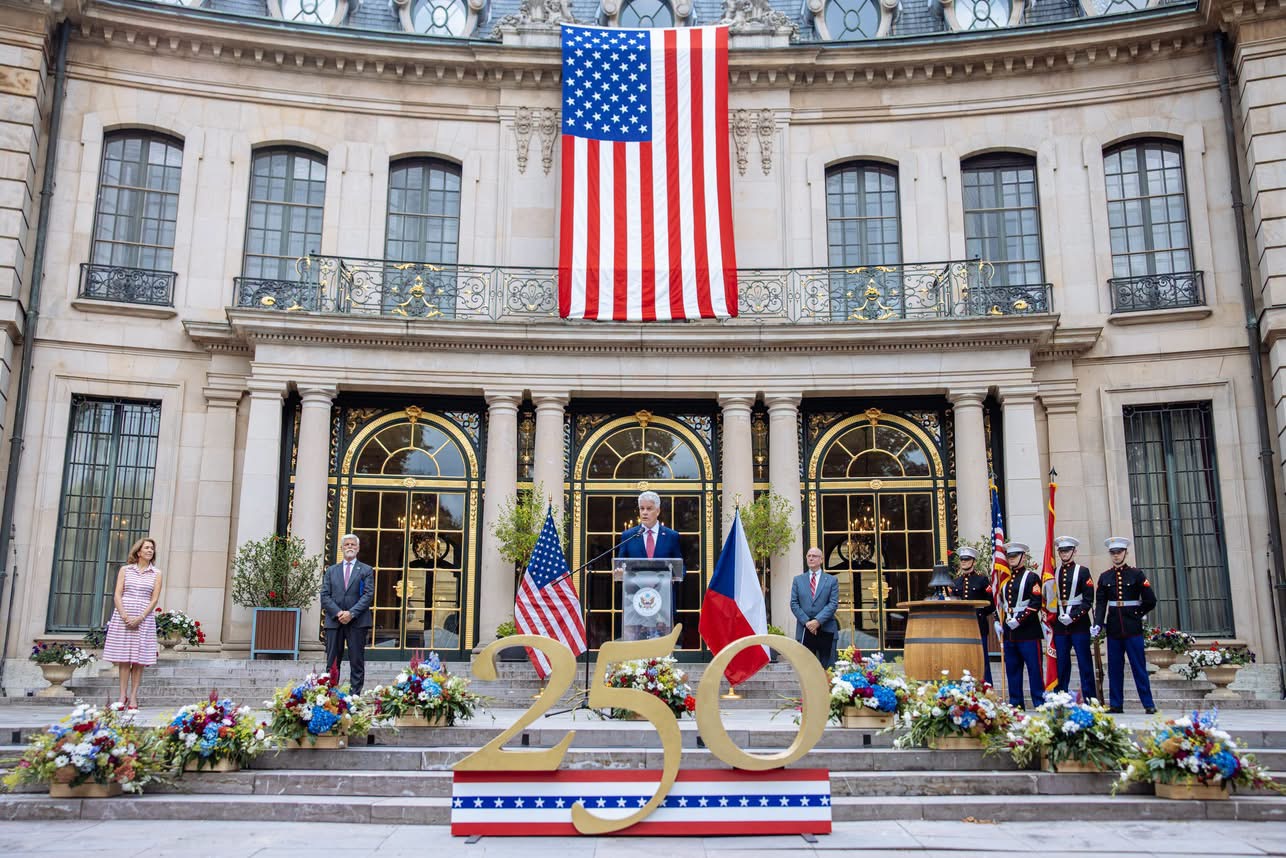
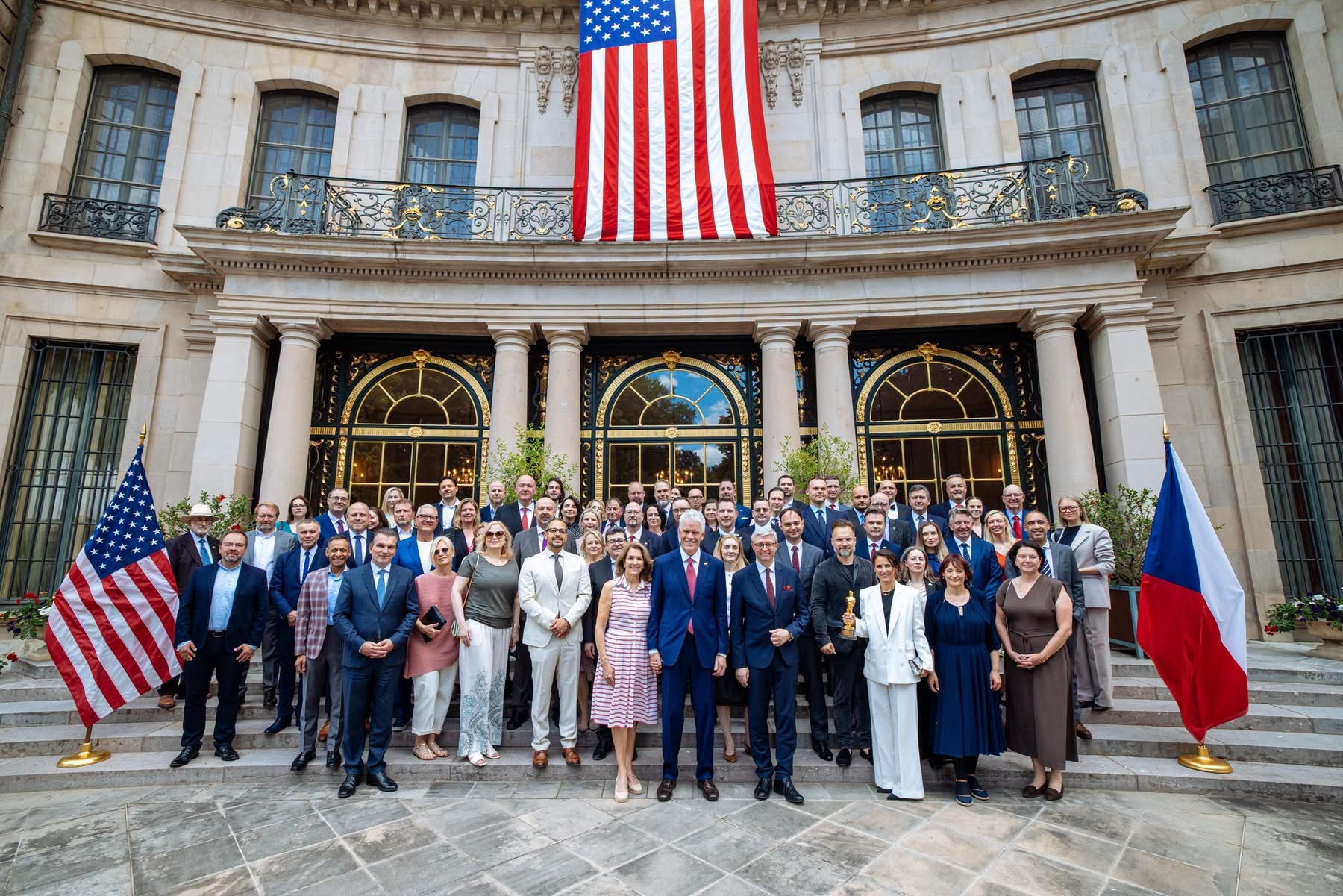
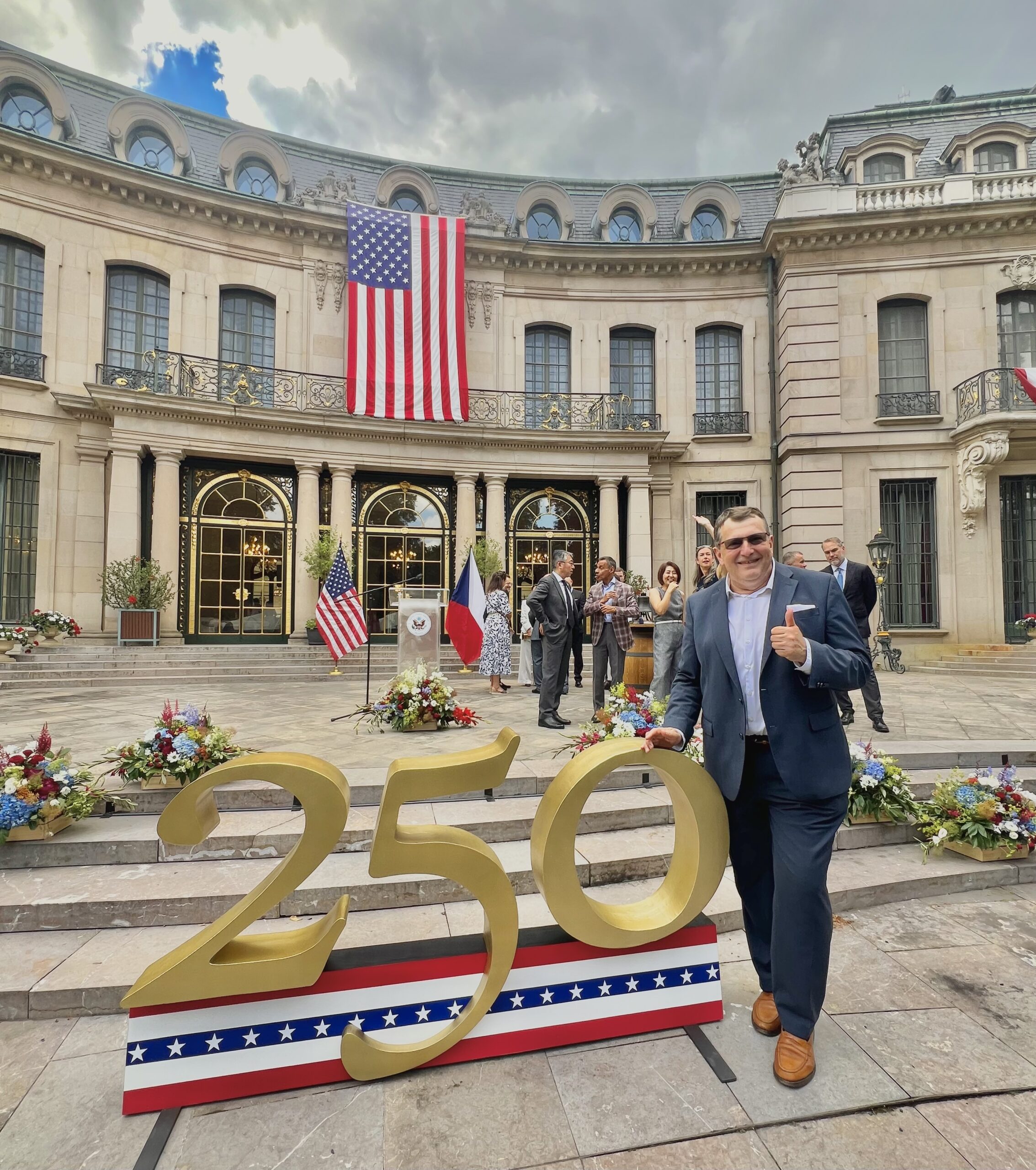
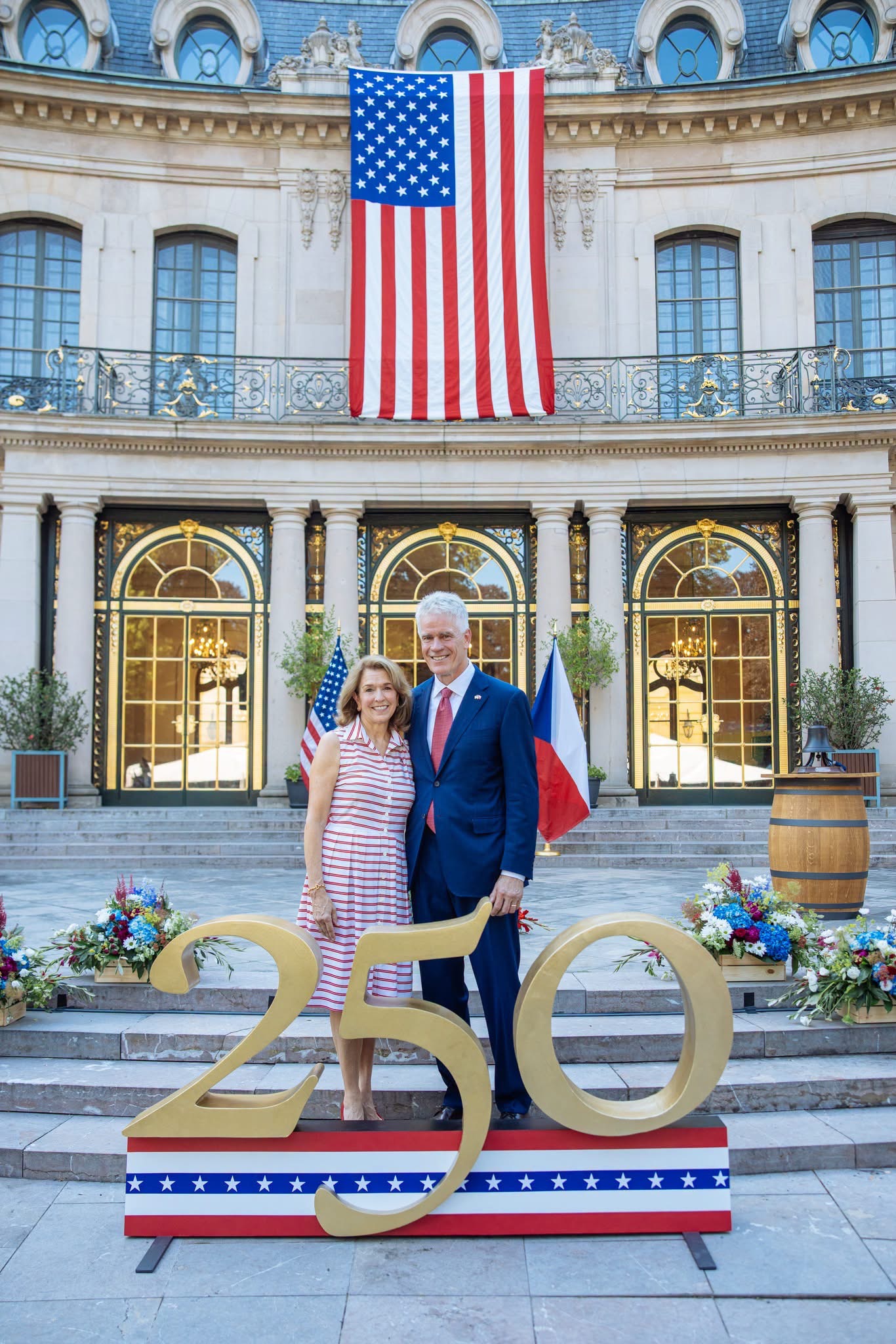
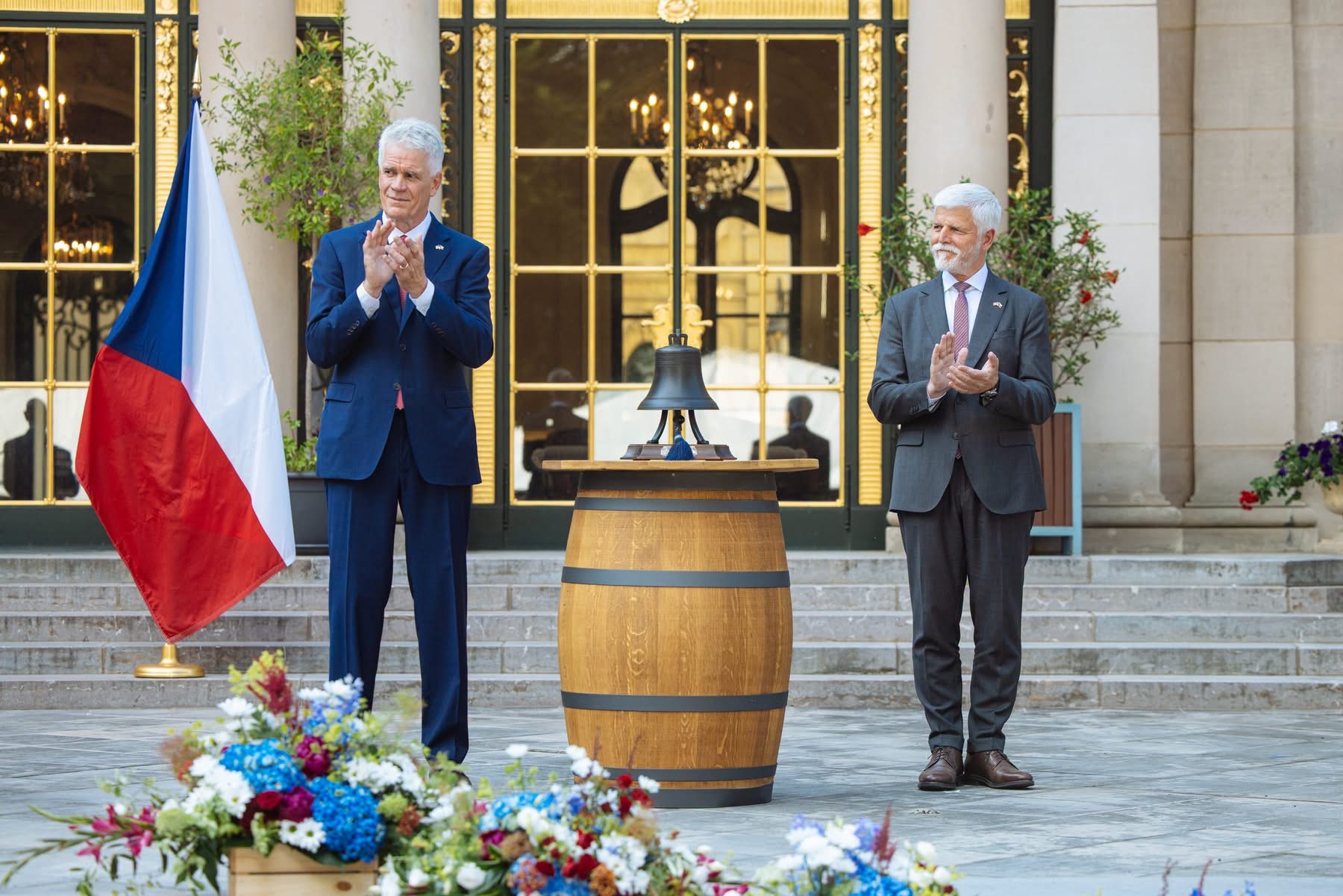
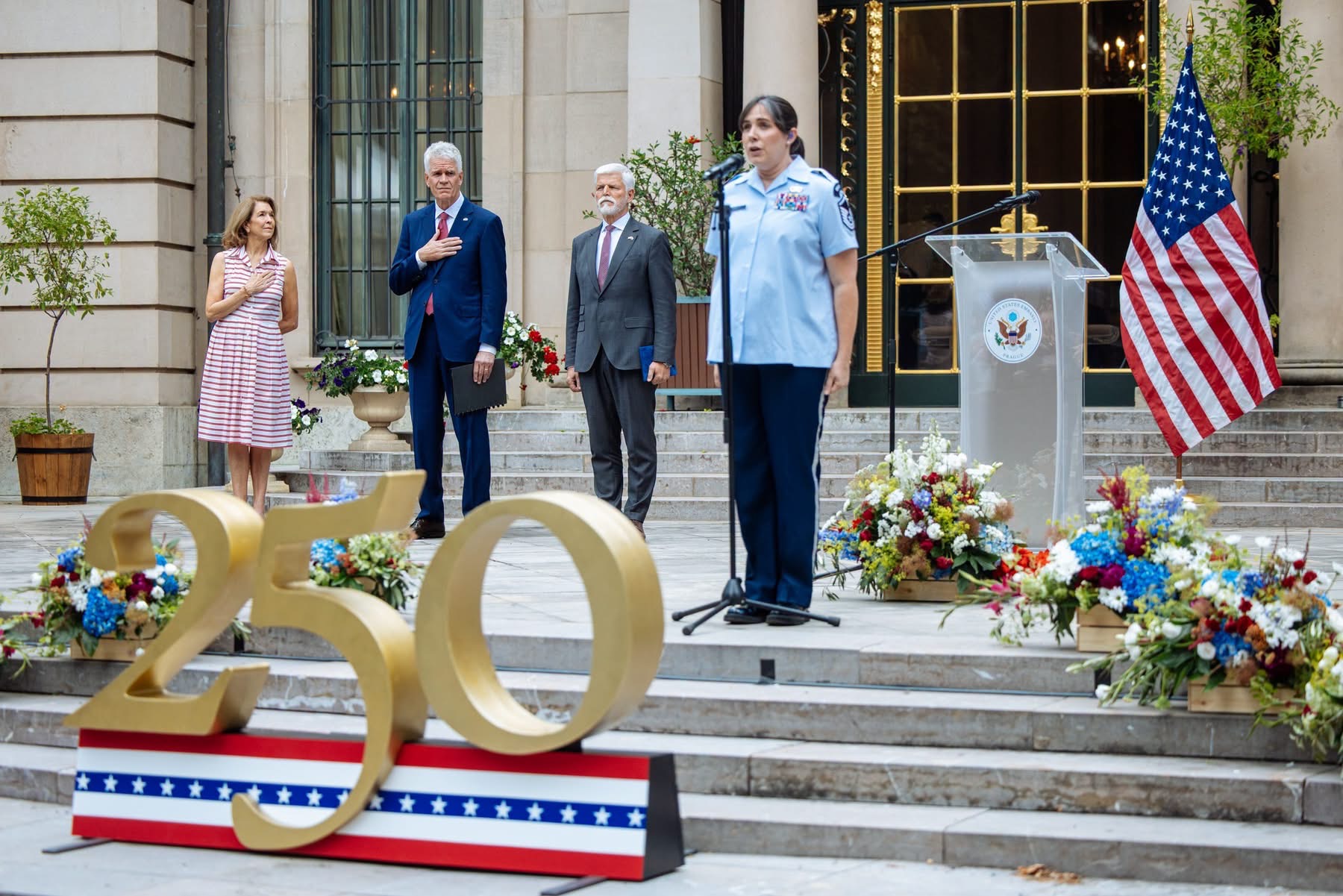
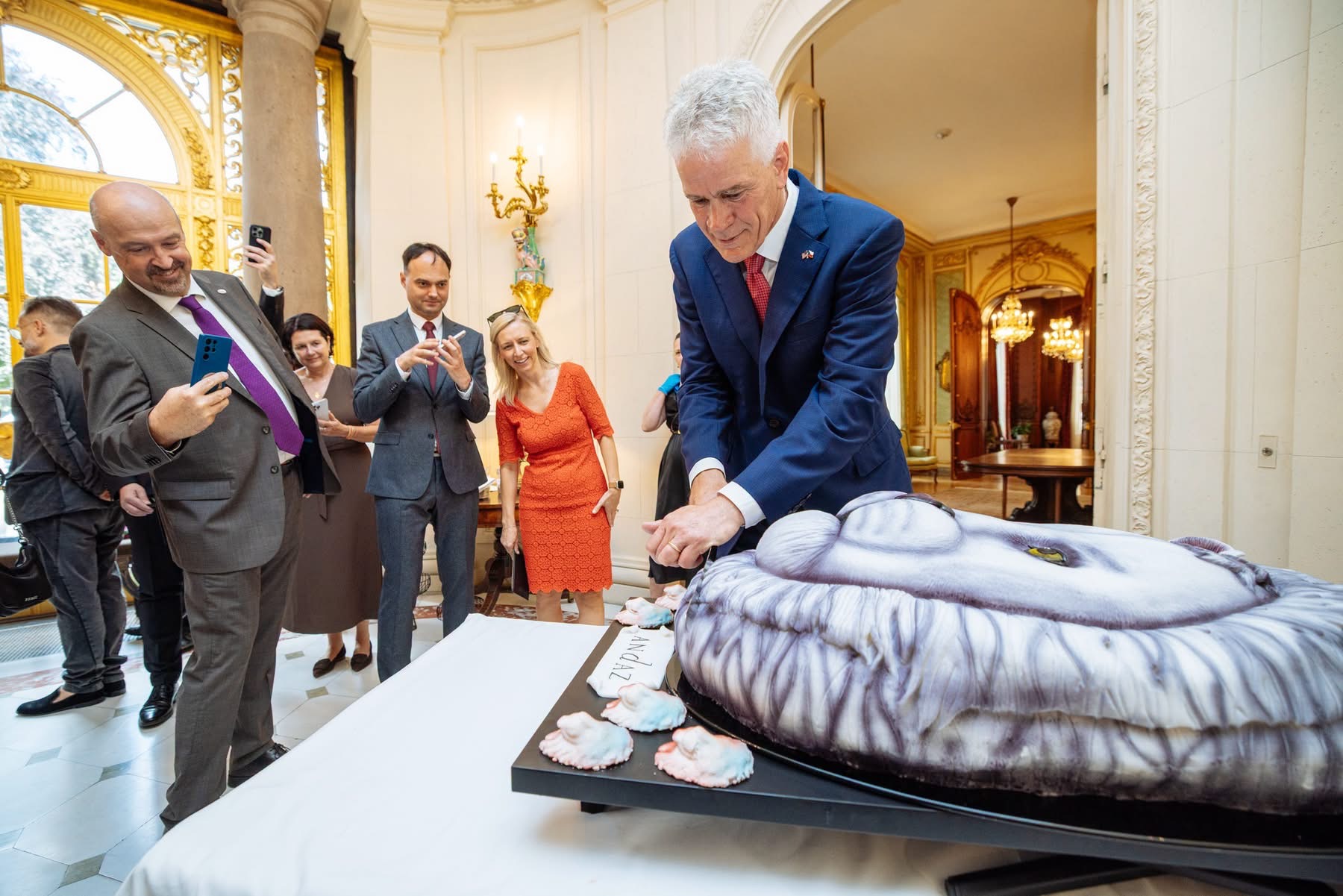
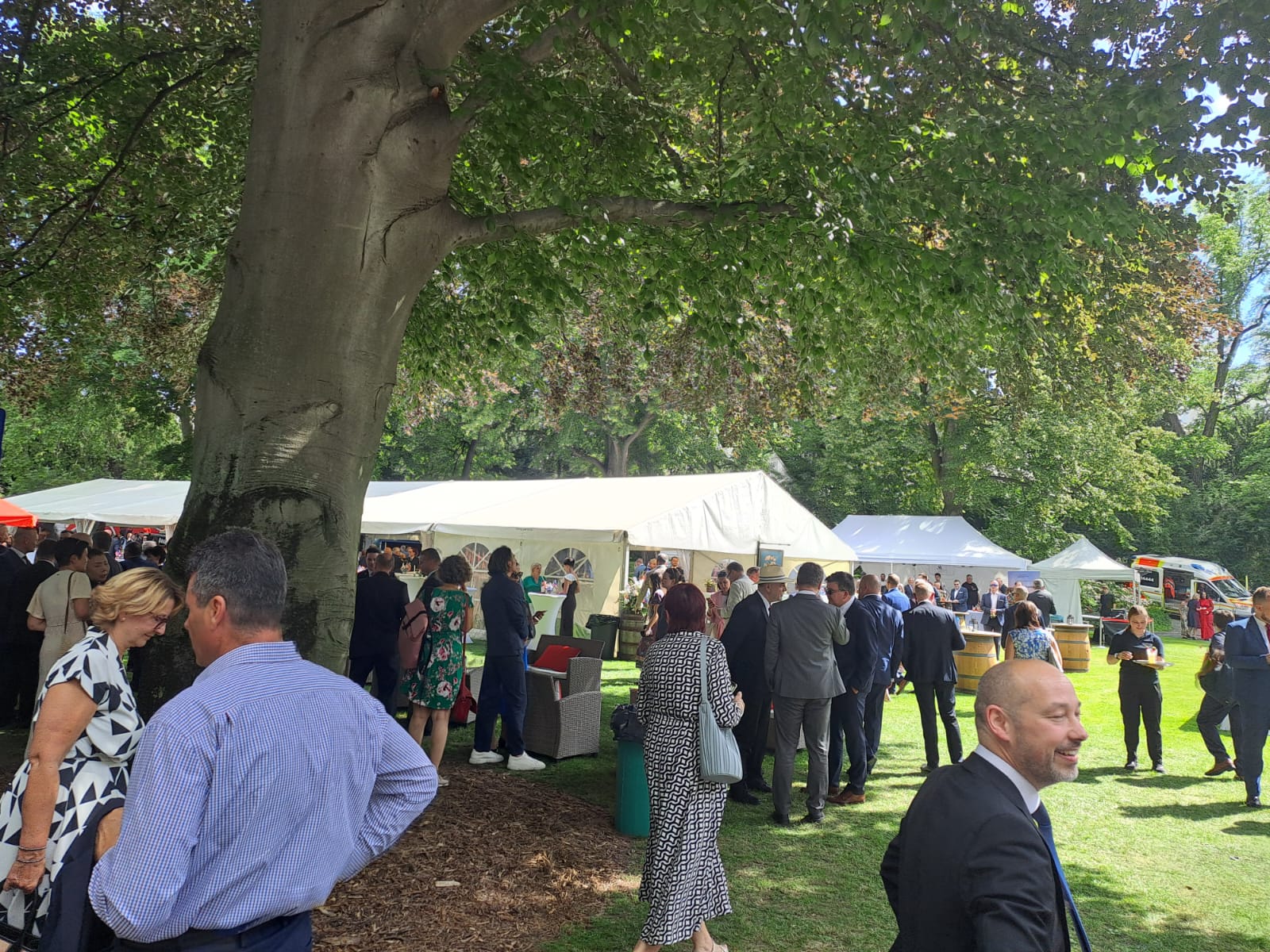
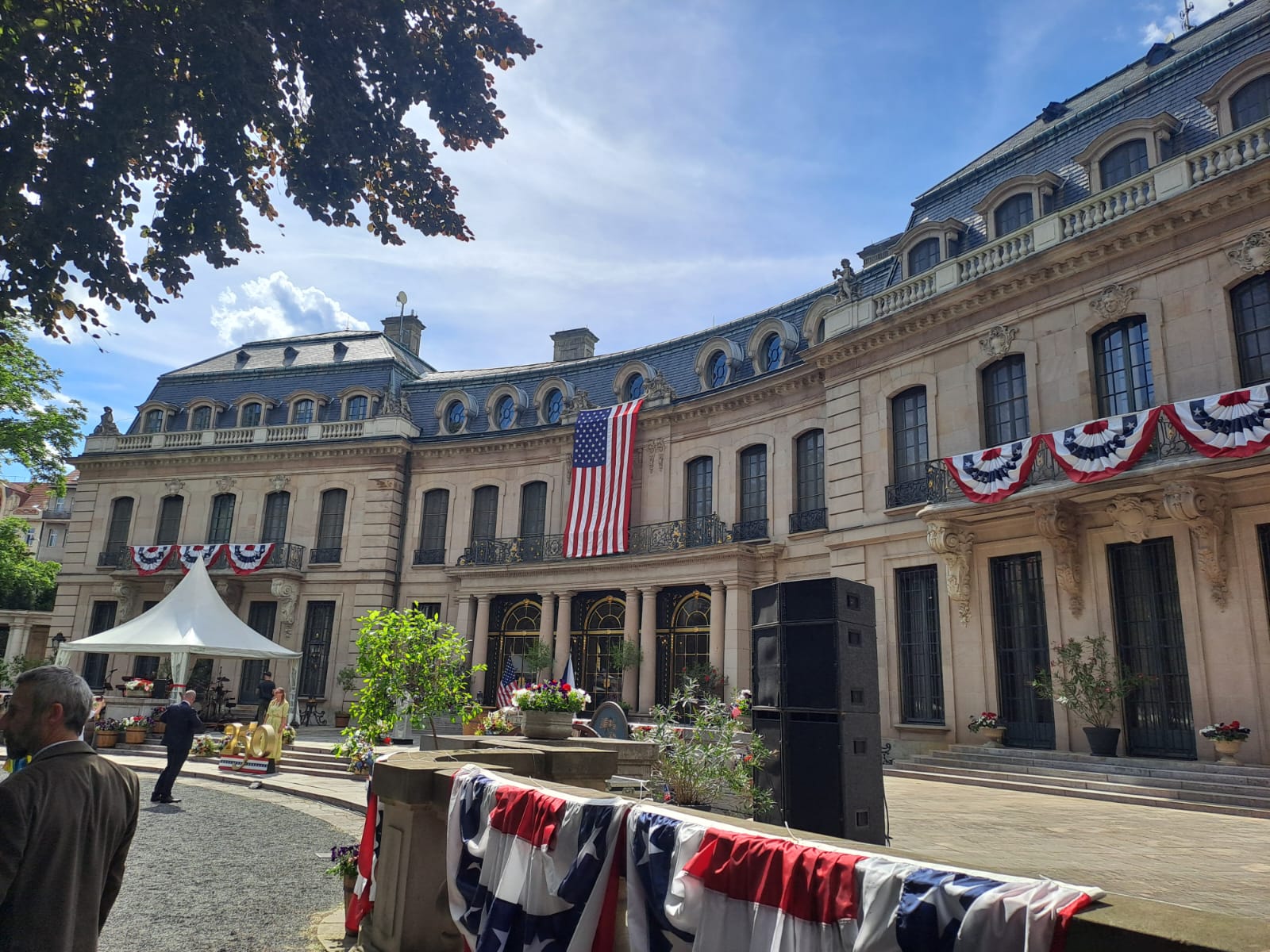
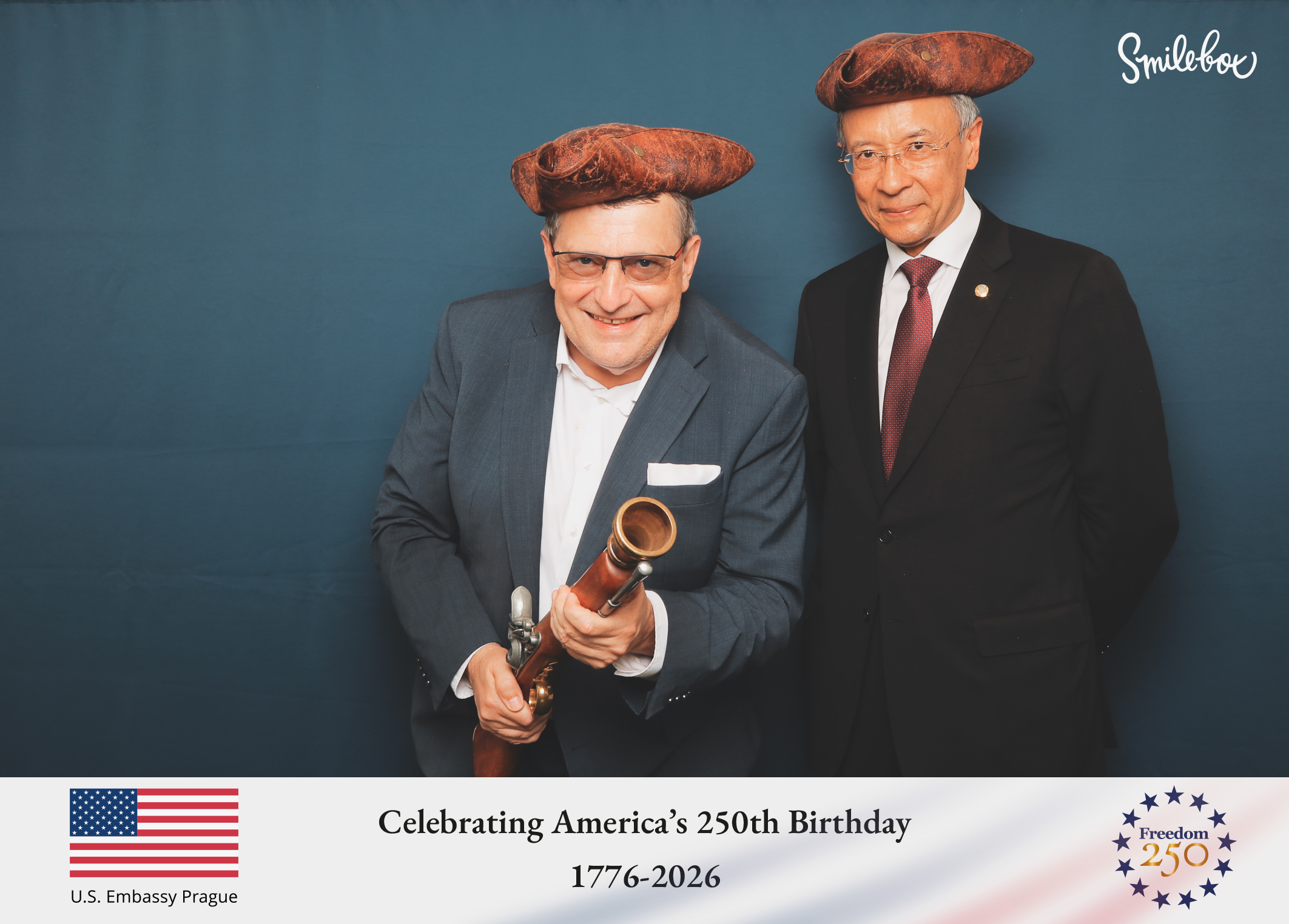
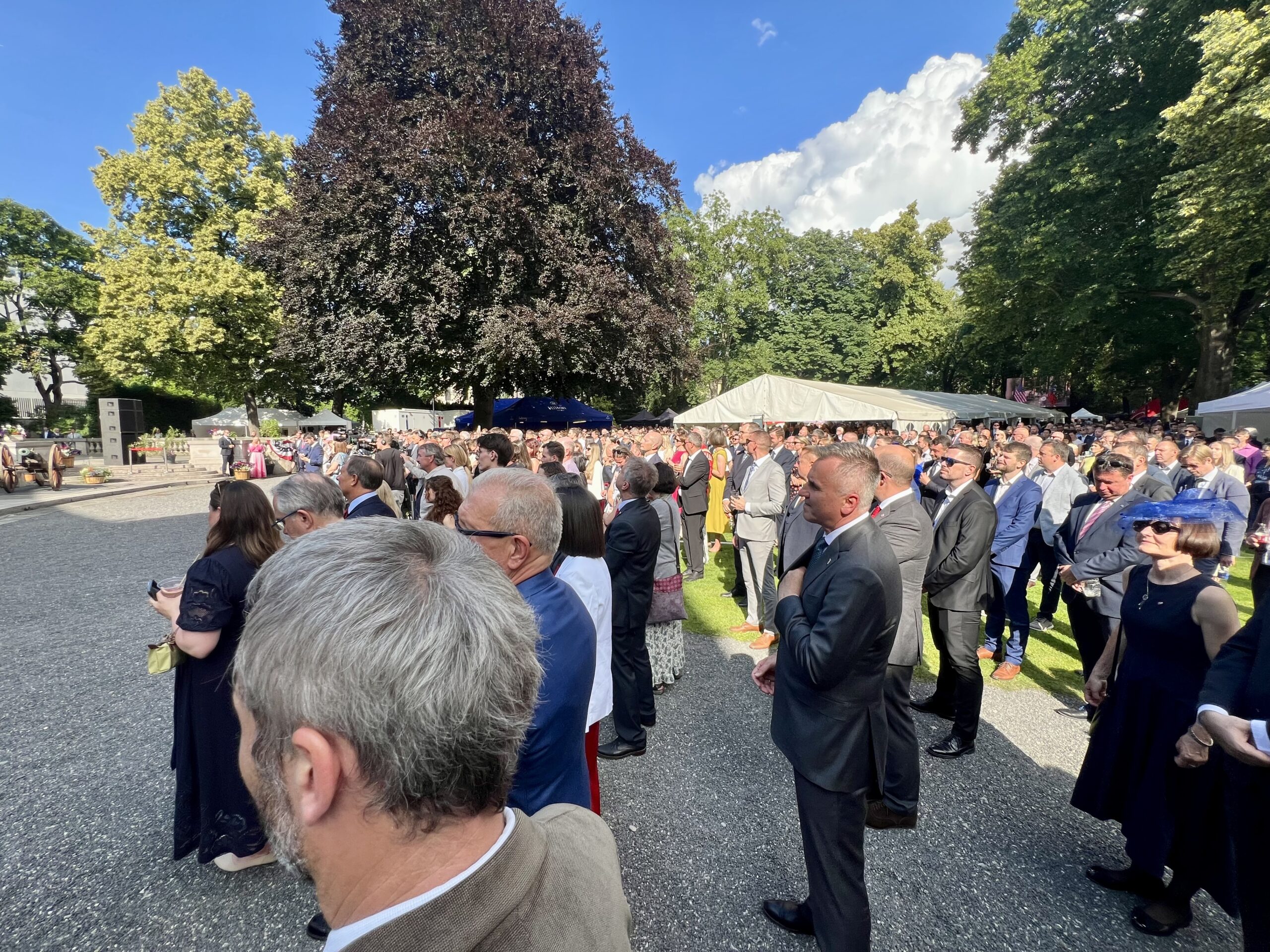
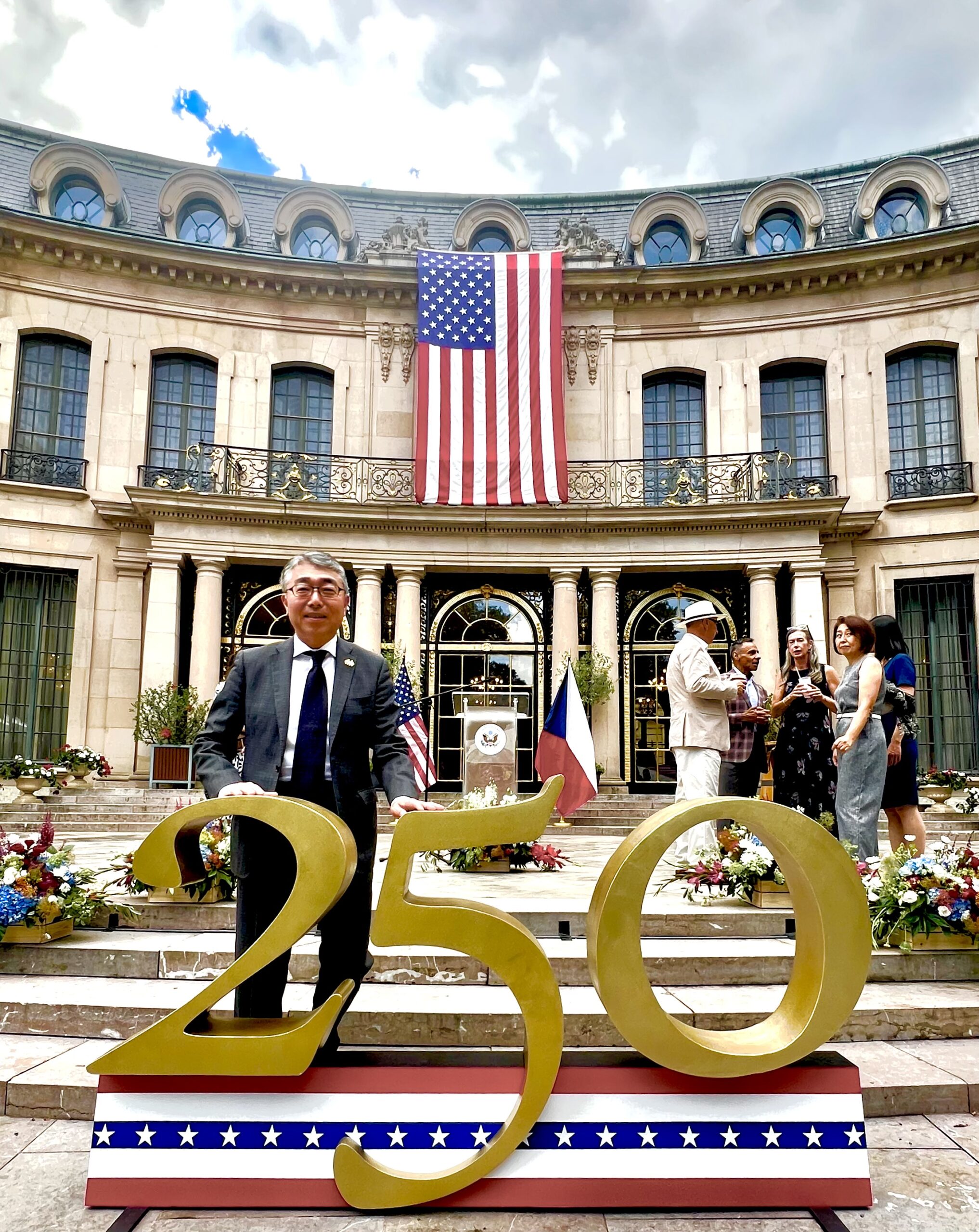
On 18 June 2026, the Embassy of the United States of America hosted one of Prague’s most prestigious diplomatic events of the year, celebrating America’s 250th Birthday (1776–2026). Held in the magnificent gardens of the Petschek Villa, the official residence of the Ambassador of the United States in Prague, the reception welcomed several hundred guests representing the Czech government, Parliament, the diplomatic corps, business, academia, the media and civil society.
For decades, the annual Independence Day reception organized by the U.S. Embassy has been regarded as one of the highlights of Prague’s diplomatic calendar. The 2026 celebration carried particular significance as it marked the 250th anniversary of the United States Declaration of Independence, a milestone commemorated not only throughout the United States but also by American diplomatic missions around the world.
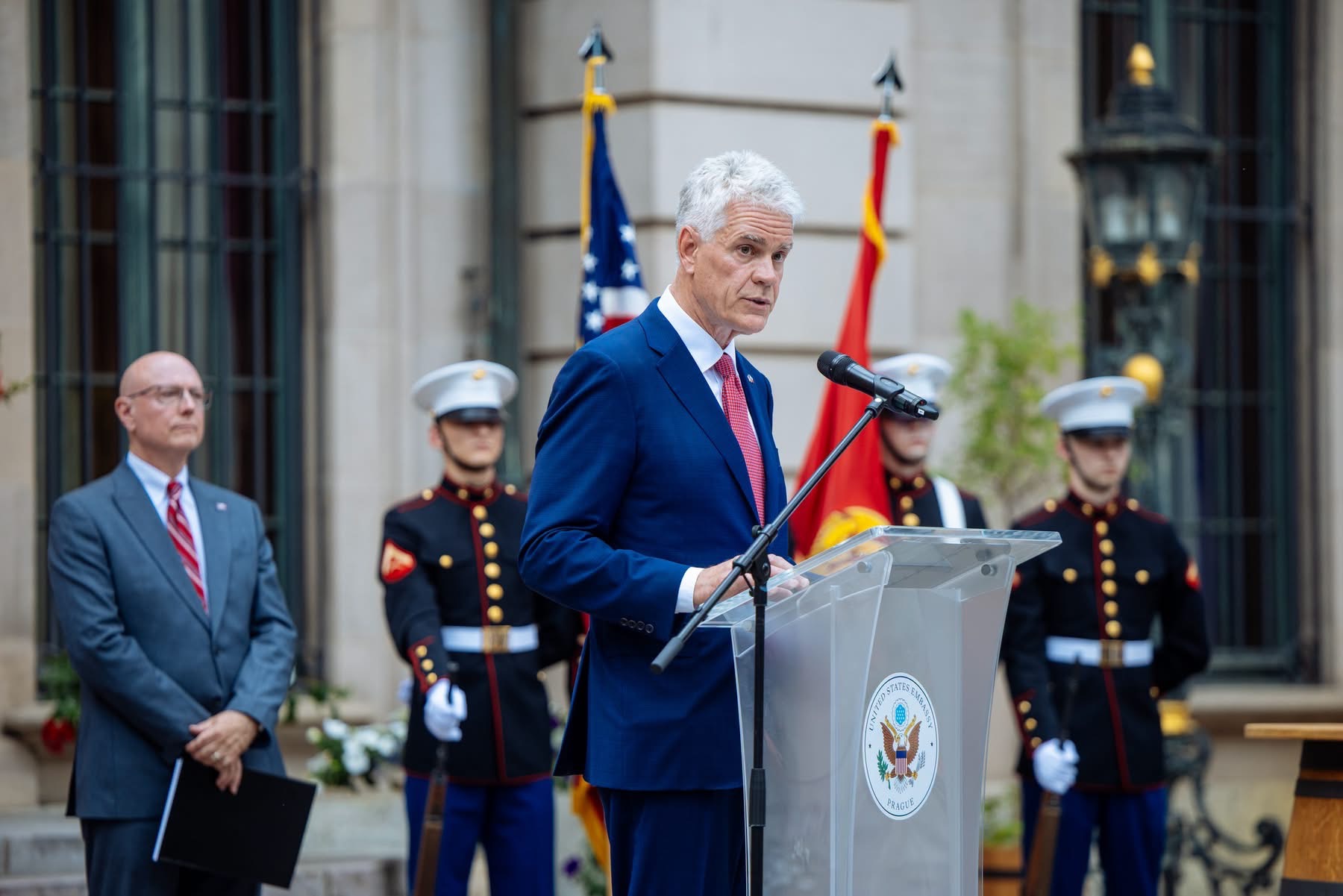
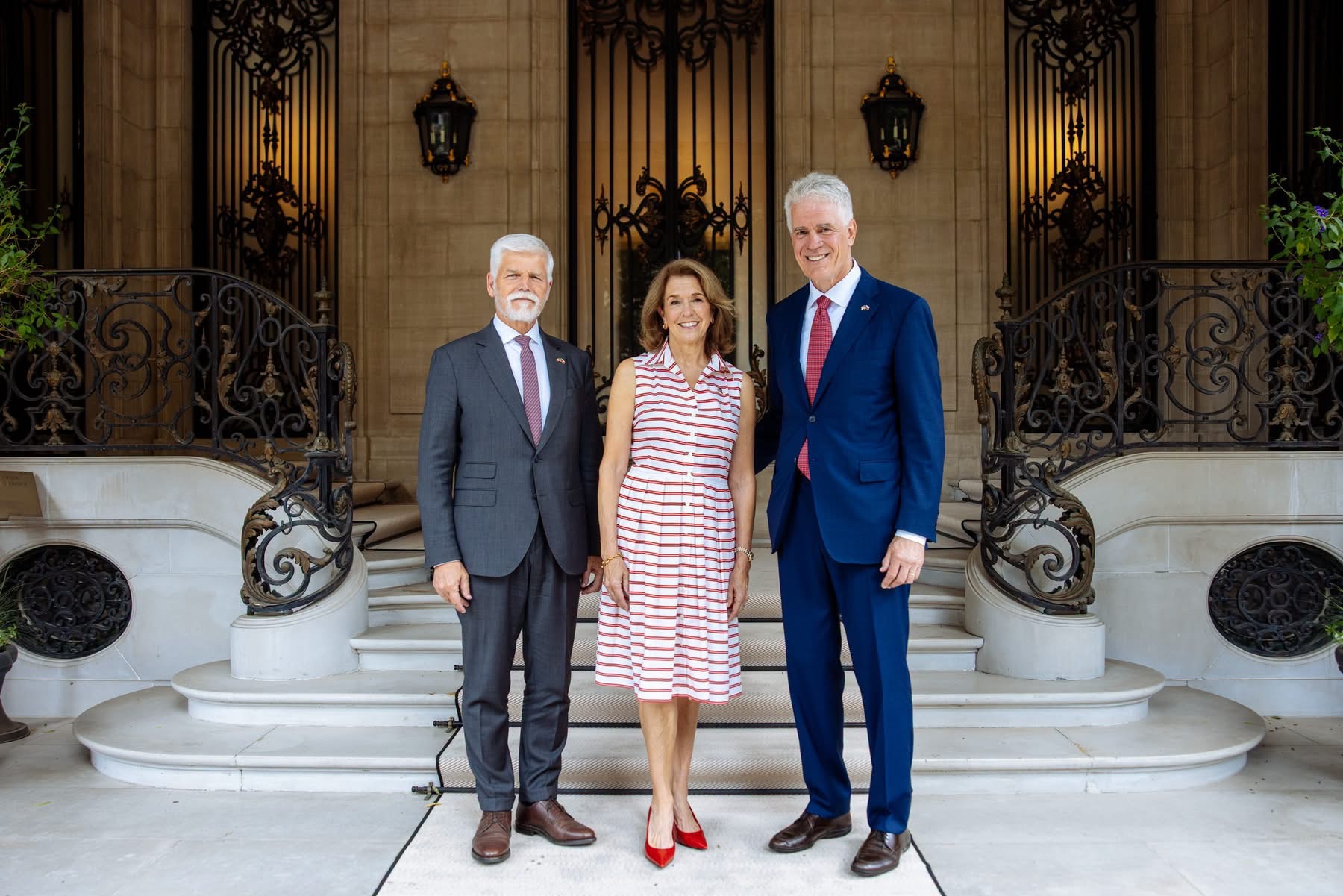
Guests were welcomed by H.E. Nicholas Merrick, Ambassador of the United States to the Czech Republic, whose first Independence Day reception in Prague coincided with this historic anniversary. The elegant setting of the Petschek Villa, one of Prague’s finest diplomatic residences, provided a fitting backdrop for an evening celebrating two and a half centuries of American democracy, constitutional government and international partnership.
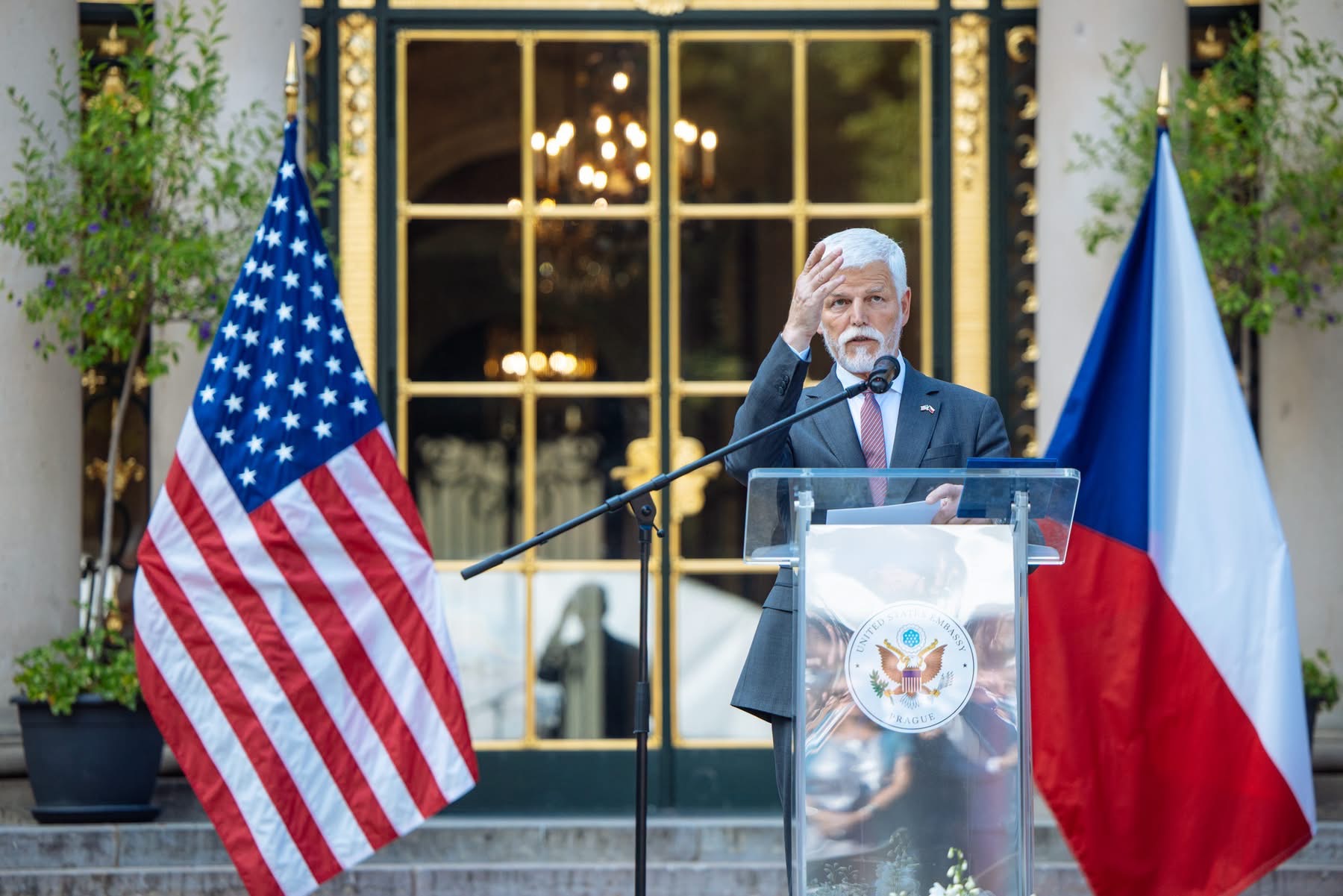
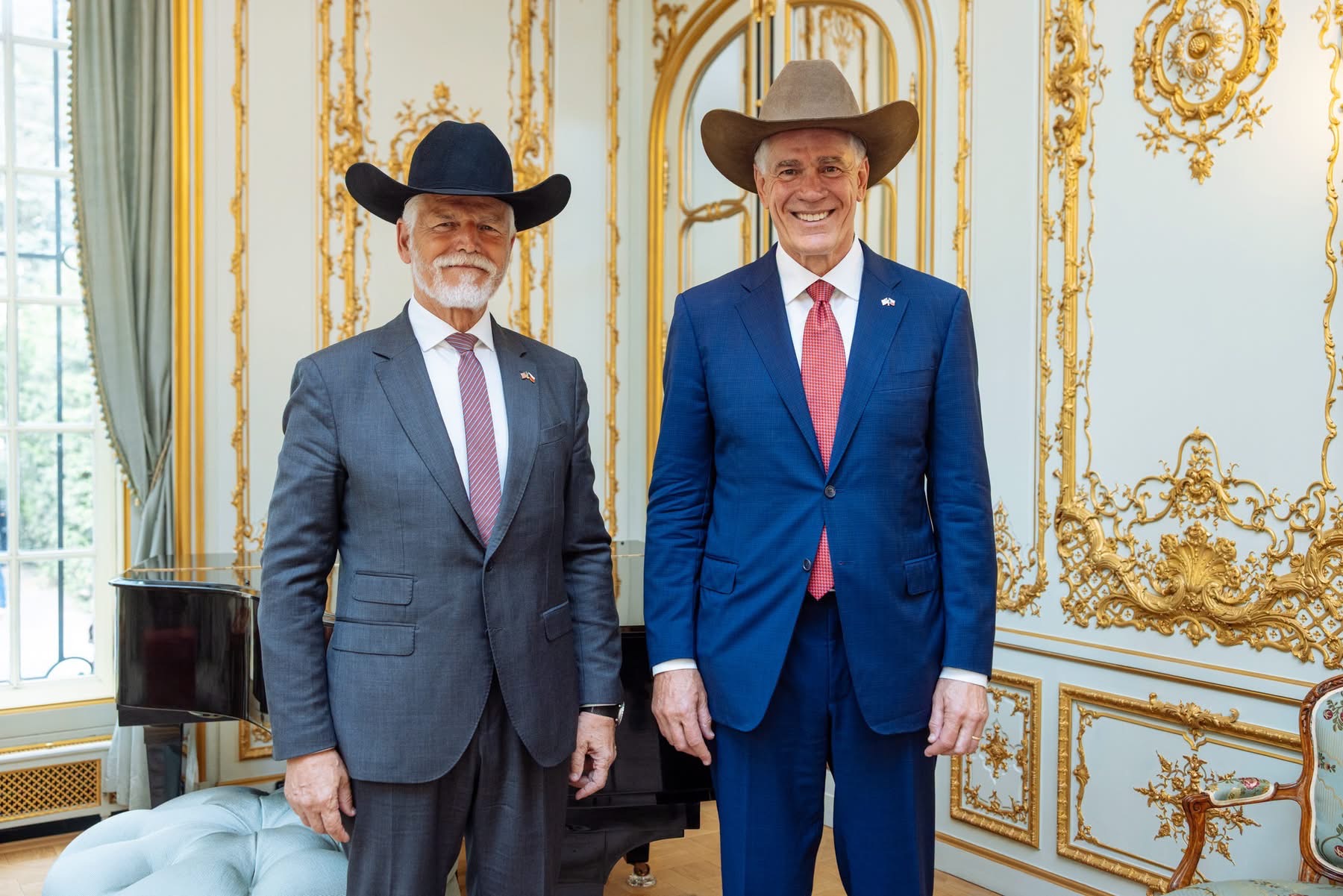
Among the distinguished guests was President Petr Pavel, who delivered the keynote address. He emphasized the enduring friendship between the Czech Republic and the United States, recalling the close cooperation between the two countries within NATO, their shared commitment to democratic values and their long-standing partnership in security, economic cooperation and international affairs.
The reception also attracted numerous senior members of the Czech Government, Parliament and public institutions, together with ambassadors accredited to Prague and representatives of the international business community. As is traditional, the event served not only as a celebration of the American national holiday but also as an important opportunity for diplomatic dialogue and professional networking.
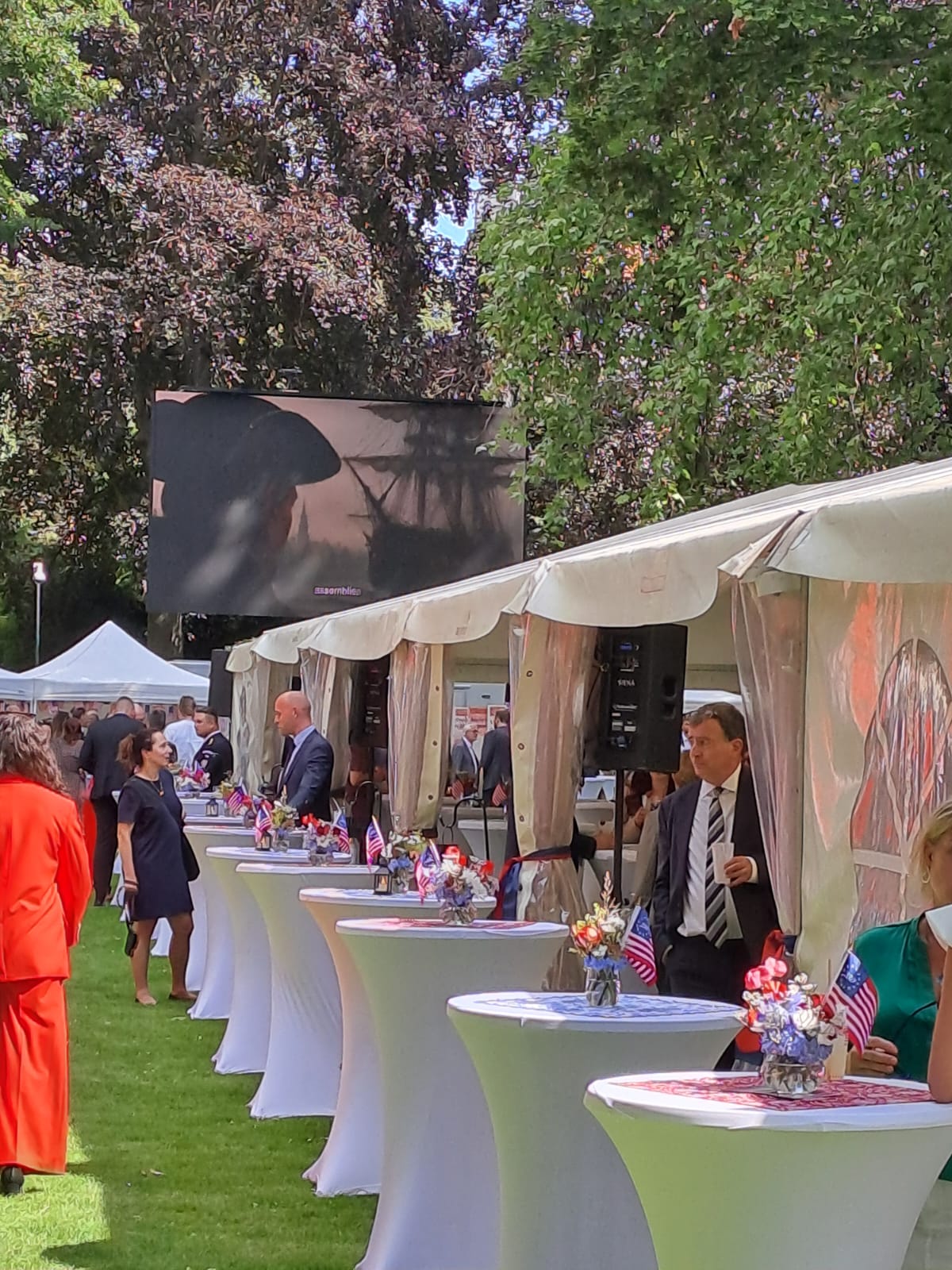
Throughout the evening, guests enjoyed a wide selection of American food and beverages prepared with the support of numerous corporate sponsors, reflecting the close ties between the U.S. Embassy and the American business community in the Czech Republic. Informal conversations took place throughout the beautifully landscaped gardens, where diplomats, entrepreneurs and public officials exchanged views in a relaxed atmosphere.
One of the most memorable moments of the evening came after the official programme had concluded, when a live outdoor screening of a FIFA World Cup match featuring the Czech national football team was shown in the embassy gardens. Many guests remained to watch the match together, creating a unique combination of American hospitality and Czech sporting enthusiasm.
The reception once again demonstrated why the annual Independence Day celebration at the residence of the American Ambassador is regarded as one of the premier diplomatic and social occasions in Prague. Combining history, tradition, friendship and informal dialogue, the evening reflected not only 250 years of American independence but also the enduring strength of Czech-American relations.
The Fourth of July – The Birth of the United States and the Meaning of America’s Independence Day
Every year on 4 July, millions of Americans celebrate Independence Day, the national holiday of the United States of America. More than any other civic celebration, the Fourth of July symbolizes the birth of the American nation and the ideals upon which the United States was founded: liberty, representative government, individual rights and the pursuit of self-government.
The origins of the holiday date back to the American Revolution (1775–1783), when thirteen British colonies in North America sought independence from the British Crown. Political disagreements over taxation, representation and colonial self-government gradually developed into armed conflict. What began with the battles of Lexington and Concord in April 1775 soon evolved into a revolutionary war that would fundamentally reshape world history.
On 4 July 1776, delegates of the Second Continental Congress meeting in Philadelphia formally adopted the Declaration of Independence, principally drafted by Thomas Jefferson with contributions from John Adams, Benjamin Franklin, Roger Sherman and Robert R. Livingston. The Declaration proclaimed that the thirteen colonies were “free and independent states” and articulated principles that have since become cornerstones of democratic thought throughout the world.
Perhaps its most famous passage declares that:
“All men are created equal” and are endowed with “certain unalienable Rights,” among them “Life, Liberty and the pursuit of Happiness.”
These words have inspired democratic movements far beyond the United States and continue to influence constitutional thinking around the world.
Although the Revolutionary War continued until 1783, when the Treaty of Paris formally recognized American independence, 4 July 1776 became the symbolic birthday of the United States because it marked the adoption of the Declaration itself.
During the nineteenth century, Independence Day gradually evolved into the country’s principal civic holiday. Communities organized public readings of the Declaration of Independence, military parades, patriotic speeches, church services and concerts. The tradition continues today, although modern celebrations also include family gatherings, sporting events, outdoor festivals and community picnics.
One of the most recognizable symbols of the Fourth of July is the spectacular fireworks display. Fireworks have been associated with Independence Day since the very first celebrations in 1777, when Philadelphia marked the anniversary with illuminations and cannon salutes. Today, major fireworks displays take place in cities across the United States, including the famous celebration over the National Mall in Washington, D.C., the Macy’s Fourth of July Fireworks in New York City, and countless local celebrations from small towns to major metropolitan areas.
The year 2026 holds exceptional significance because it marks the 250th anniversary of American independence, commonly referred to as the United States Semiquincentennial or simply America250. Across the nation, museums, historical societies, educational institutions, state governments and civic organizations have prepared commemorative programmes celebrating the country’s history, democratic institutions and cultural diversity.
The federal government has also supported nationwide commemorations, while communities throughout the country have organized exhibitions, concerts, educational projects, historical reenactments and public celebrations. The anniversary is intended not only to commemorate the nation’s founding but also to encourage reflection on the development of American democracy over the past two and a half centuries.
American embassies around the world traditionally celebrate Independence Day by hosting diplomatic receptions that bring together representatives of host governments, diplomatic missions, business communities and civil society. In 2026, these celebrations acquired additional symbolic importance as they commemorated one of the most significant anniversaries in American history.
The reception held by the Embassy of the United States in Prague therefore formed part of a worldwide series of events marking America’s 250th Birthday. While each embassy adapted its programme to local traditions, all shared the same central message: celebrating the enduring values of freedom, democracy, constitutional government and international friendship that have shaped the United States since 1776.
The Petschek Villa – One of America’s Most Historic Diplomatic Residences in Europe
Few diplomatic residences in Europe possess a history as fascinating as the Petschek Villa in Prague’s elegant district of Bubeneč. Surrounded by extensive gardens and located in one of the Czech capital’s most distinguished residential neighborhoods, the villa has served for decades as the official residence of the Ambassador of the United States to the Czech Republic. More than simply a diplomatic residence, it is a landmark that reflects the dramatic political and social transformations of twentieth-century Europe.
The villa was commissioned by the prominent Jewish industrialist and coal magnate Otto Petschek, whose family belonged to the most successful entrepreneurial dynasties of interwar Czechoslovakia. Construction began in the 1920s, and the residence was completed around 1930. Designed by architect Max Spielmann, the mansion combined elegant Neo-Classical architecture with the latest engineering innovations of its time.
The residence quickly became one of Prague’s most luxurious private homes. Containing almost 150 rooms, it featured state-of-the-art heating, ventilation and electrical systems, magnificent reception halls, marble staircases, richly decorated interiors and extensive landscaped gardens. Every detail reflected the prosperity and cosmopolitan outlook of the First Czechoslovak Republic.
The history of the villa changed dramatically with the rise of National Socialism. As antisemitic persecution intensified in Europe, the Petschek family left Czechoslovakia before the German occupation. During the years of the Protectorate of Bohemia and Moravia, the villa was taken over by the German authorities and became the official residence of General Rudolf Toussaint, Commander of the German Armed Forces in the Protectorate. The building therefore witnessed some of the most turbulent years in Czech history.
Following the liberation of Prague in May 1945, the villa briefly came under Soviet military control before being used by the Czechoslovak General Staff. Later that same year, it was made available to the United States for diplomatic purposes. In 1948, the United States Government acquired the property from the Czechoslovak state, and it has remained the official residence of successive American ambassadors ever since.
Throughout the Cold War, the Petschek Villa occupied a unique position. Located in a communist country yet representing the United States, it became a symbol of the continuing diplomatic relationship between two states divided by ideology. Numerous American ambassadors received political leaders, diplomats, intellectuals, journalists and cultural figures within its historic walls, maintaining dialogue even during periods of significant political tension.
Following the Velvet Revolution of 1989, the villa entered a new chapter in its history. As the Czech Republic re-established democratic institutions and renewed close cooperation with the United States, the residence became the setting for countless meetings that helped shape the modern Czech-American partnership. Presidents, prime ministers, cabinet ministers, members of Congress, senators, military leaders and distinguished guests from both countries have been welcomed there over the past three decades.
Today, the Petschek Villa continues to serve not only as the residence of the American Ambassador but also as an important venue for diplomatic receptions, national day celebrations, cultural events and discussions on international affairs. Its elegant gardens provide a unique setting for the annual Independence Day Reception, one of Prague’s most anticipated diplomatic events.
The celebration of America’s 250th Birthday on 18 June 2026 added another distinguished chapter to the villa’s remarkable history. Nearly a century after its construction, the residence continues to embody the enduring relationship between the United States and the Czech Republic while preserving the architectural legacy of one of Prague’s most extraordinary historic homes.
Ambassador Nicholas Merrick – A Political Appointee Representing a Long American Tradition
One of the central figures of the 2026 Independence Day Reception was H.E. Nicholas Merrick, Ambassador of the United States of America to the Czech Republic. His appointment reflects one of the distinctive characteristics of the American diplomatic system: unlike most European countries, the United States appoints both career diplomats and political ambassadors to represent the nation abroad.
Ambassador Merrick assumed his duties in Prague in 2025, arriving during a particularly important period in Czech-American relations. His first Independence Day reception coincided with the 250th anniversary of the United States, giving him the opportunity to host one of the most significant diplomatic celebrations of the year while introducing himself to a broad cross-section of Czech political, diplomatic and business leaders.
Before entering diplomatic service, Nicholas Merrick built his professional career in the private sector, where he gained extensive experience in business management, investment and international commercial relations. His background reflects a longstanding American tradition of selecting distinguished individuals from business, academia, law, public service and philanthropy to represent the United States abroad. Such appointments are made by the President of the United States and require confirmation by the United States Senate, ensuring both executive nomination and legislative oversight.
This approach differs significantly from the diplomatic systems of most European countries. In nations such as the Czech Republic, Germany, France, Italy or Spain, ambassadors are almost exclusively career diplomats who have spent decades within their respective foreign ministries, gradually progressing through diplomatic ranks before assuming ambassadorial responsibilities.
The United States, by contrast, has traditionally combined both systems. Approximately two-thirds of American ambassadors are usually career members of the United States Foreign Service, while roughly one-third are political appointees selected directly by the President. These individuals often bring considerable expertise from outside government, particularly in business, finance, law, higher education, technology, philanthropy or public administration.
Supporters of this model argue that political ambassadors frequently contribute fresh perspectives, broad management experience and close connections with the President and senior policymakers in Washington. Critics, however, maintain that career diplomats possess greater professional expertise in international affairs and regional politics. Successive American administrations—both Republican and Democratic—have continued to employ a combination of both approaches, reflecting a long-established feature of U.S. diplomacy.
Throughout American history, many prominent political figures, entrepreneurs and philanthropists have served successfully as ambassadors. Their appointments illustrate the belief that diplomacy benefits not only from professional diplomatic training but also from experience gained in leadership, negotiation and public life.
In Prague, Ambassador Merrick has sought to strengthen cooperation between the United States and the Czech Republic in the fields of security, economic development, technological innovation and education. The annual Independence Day reception provided an ideal opportunity to meet government representatives, members of Parliament, business leaders and fellow diplomats in an informal setting while reaffirming the close partnership between the two countries.
As host of the celebration marking America’s 250th Birthday, Ambassador Merrick welcomed several hundred guests to the historic Petschek Villa, where history, diplomacy and friendship came together in one of Prague’s most prestigious diplomatic gatherings. His first Independence Day celebration as Ambassador therefore symbolized not only a historic national anniversary but also the beginning of a new chapter in American diplomatic representation in the Czech Republic.
The office of Ambassador to Prague has long been regarded as one of Washington’s most distinguished diplomatic postings in Central Europe. Ambassador Merrick now joins a long line of American representatives who have contributed to the development of Czech-American relations—from the years of the First Czechoslovak Republic, through the challenges of the Cold War, to today’s close cooperation within NATO, the transatlantic partnership and the broader democratic community.
Czech–American Relations Since 1918 – More Than a Century of Friendship and Partnership
The relationship between the United States of America and the Czech Republic, and previously Czechoslovakia, extends over more than a century and is rooted in a shared commitment to democracy, freedom and constitutional government. While the modern Czech Republic became independent only in 1993, the foundations of Czech-American relations were established during the final years of the First World War and the creation of Czechoslovakia in 1918.
No individual played a more important role in building these early ties than Tomáš Garrigue Masaryk, the future first President of Czechoslovakia. During the First World War, Masaryk spent considerable time in the United States seeking political support for the creation of an independent Czechoslovak state following the collapse of the Austro-Hungarian Empire.
The United States proved to be a decisive partner. President Woodrow Wilson’s principle of national self-determination created a favourable international environment for the establishment of new democratic states in Central Europe. During his American mission, Masaryk met leading politicians, intellectuals and representatives of the large Czech and Slovak communities living in the United States.
One of the most important milestones was the signing of the Pittsburgh Agreement on 30 May 1918, in which representatives of Czech and Slovak organisations in America expressed their support for a common Czechoslovak state. A few months later, the Washington Declaration, drafted largely under Masaryk’s leadership and published in October 1918, formally proclaimed the independence of Czechoslovakia. Together, these documents became cornerstones of the new republic.
Throughout the First Czechoslovak Republic (1918–1938), relations between Prague and Washington remained warm and friendly. The United States was widely regarded as a model of democratic government, while President Masaryk enjoyed enormous respect among American political leaders and the Czech-American community.
The situation changed dramatically after the Munich Agreement of 1938 and the subsequent German occupation of the Czech lands. During the Second World War, the United States became one of the principal Allied powers fighting against Nazi Germany. American forces played a decisive role in liberating western Bohemia in the spring of 1945, including the city of Plzeň, an event that remains deeply rooted in Czech historical memory and is commemorated annually.
The communist takeover of February 1948 fundamentally altered bilateral relations. During the following four decades, Czechoslovakia became part of the Soviet sphere of influence, while the United States emerged as the leading power of the Western alliance. Diplomatic relations continued, but political dialogue remained limited throughout much of the Cold War.
A new era began with the Velvet Revolution of November 1989, when communist rule collapsed peacefully. The United States strongly supported Czechoslovakia’s democratic transformation, economic reforms and integration into Euro-Atlantic institutions. President George H. W. Bush visited Prague in November 1990, symbolising America’s commitment to the country’s democratic future.
Following the peaceful division of Czechoslovakia in 1993, the United States quickly established close relations with the newly independent Czech Republic. One of the most significant milestones came in 1999, when the Czech Republic became a member of NATO, marking a fundamental step in its post-Cold War security policy and further strengthening transatlantic cooperation.
Today, Czech-American relations encompass far more than diplomacy and security. The two countries cooperate closely in defence, trade, investment, scientific research, higher education, cyber security, energy policy and cultural exchange. Thousands of Czech students have studied at American universities, while numerous American companies have invested successfully in the Czech Republic.
The celebration of America’s 250th Birthday at the residence of the U.S. Ambassador in Prague therefore carried significance extending well beyond a national holiday. It also celebrated more than a century of close Czech-American friendship—a relationship built upon shared democratic values, historical cooperation and a common belief in freedom, human dignity and international partnership.
From Tomáš Garrigue Masaryk’s diplomatic efforts in the United States to today’s cooperation within NATO and across the Atlantic alliance, the story of Czech-American relations remains one of the most enduring and successful partnerships in modern European and American history.
Distinguished American Ambassadors to Czechoslovakia and the Czech Republic
Throughout more than a century of diplomatic relations, a number of remarkable American ambassadors have left a lasting mark on the history of Czech-American relations. Some were distinguished career diplomats, while others came from politics, business or public life. Together, they have helped shape one of the strongest transatlantic partnerships in Central Europe.
Perhaps the best-known American ambassador ever to serve in Prague was Shirley Temple Black, whose appointment attracted worldwide attention. Famous as one of Hollywood’s greatest child stars during the 1930s, she later embarked on a distinguished diplomatic career after leaving the film industry. She served as United States Ambassador to Czechoslovakia from 1989 to 1992, arriving only months before the Velvet Revolution.
Her tenure coincided with one of the most dramatic periods in modern European history. Ambassador Shirley Temple Black witnessed the peaceful collapse of communist rule, the emergence of democratic institutions and the election of Václav Havel as President of Czechoslovakia. Her diplomatic skills, international reputation and personal warmth made her one of the most respected foreign ambassadors serving in Prague during this historic transition.
During the presidency of Václav Havel, Czech-American relations developed rapidly. The United States became one of the Czech Republic’s closest allies, supporting democratic reforms, economic transformation and integration into Western political and security structures. American ambassadors played an important role in strengthening these newly emerging partnerships through continuous dialogue with political leaders, universities, business organizations and civil society.
In the decades that followed, successive ambassadors continued to expand cooperation in areas including defence, trade, investment, science, innovation, higher education and cultural exchange. The Embassy of the United States became one of Prague’s most active diplomatic missions, organizing not only political meetings but also educational programmes, public diplomacy initiatives, cultural festivals and business events.
The annual Independence Day Reception at the Ambassador’s Residence gradually evolved into one of the Czech capital’s premier diplomatic occasions. Every June, several hundred invited guests—including ministers, members of Parliament, senior military officers, ambassadors, entrepreneurs, academics and representatives of cultural institutions—gather to celebrate the American national holiday while strengthening personal and professional relationships.
With the appointment of Ambassador Nicholas Merrick, another chapter has begun in this long tradition. Although he comes from the private sector rather than the professional Foreign Service, he joins a distinguished line of American representatives who have contributed to strengthening bilateral relations between the United States and the Czech Republic.
The history of American ambassadors in Prague also reflects the broader evolution of American diplomacy. Some ambassadors have been seasoned career diplomats with decades of international experience, while others have been political appointees bringing expertise from business, law, philanthropy or public service. Despite these different backgrounds, all have shared the same objective: representing the interests and values of the United States while promoting friendship and cooperation with the Czech Republic.
The celebration of America’s 250th Birthday in 2026 therefore represented not only a milestone in American history but also another important chapter in a diplomatic relationship that has flourished for more than one hundred years. It highlighted the continuity of Czech-American friendship and the important contribution made by generations of ambassadors who have helped build one of the closest partnerships between the United States and Central Europe.
The Reception – A Celebration of Friendship, Partnership and Shared Values
As the official programme drew to a close, the celebration continued in the magnificent gardens of the Petschek Villa, where several hundred invited guests enjoyed one of the most elegant diplomatic evenings of the year. Against the backdrop of the historic residence, beautifully illuminated on a warm June evening, the reception combined the traditions of American hospitality with the unique atmosphere of Prague’s diplomatic community.
Guests included members of the Czech Government, Parliament, the diplomatic corps, senior military officers, business leaders, academics, representatives of international companies, journalists and members of civil society. Conversations took place throughout the gardens, reflecting the importance of personal contacts in modern diplomacy. While official meetings often take place behind closed doors, events such as national day receptions create opportunities for informal exchanges that frequently contribute to closer international cooperation.
The reception was made possible with the generous support of numerous American and Czech corporate sponsors, whose participation has become a longstanding tradition of the annual Independence Day celebration. Their contribution reflected the strong presence of American companies in the Czech Republic and the dynamic economic partnership that has developed between the two countries over many decades.
Guests enjoyed a wide selection of American specialties, international cuisine, wines, cocktails and refreshments served throughout the evening. Live music created a relaxed atmosphere while visitors moved freely between the villa, the terraces and the beautifully maintained gardens. The combination of excellent hospitality and the historic surroundings made the event particularly memorable.
One of the evening’s most distinctive moments came after the formal diplomatic programme had concluded. A large outdoor screen had been installed in the gardens to broadcast a FIFA World Cup match involving the Czech national football team. Many guests remained to watch the game together, creating a unique atmosphere in which diplomacy and sport merged naturally. Diplomats from many countries joined Czech guests in supporting the home team, demonstrating how international sporting events can bring people together beyond political or cultural differences.
The relaxed environment encouraged conversations not only about international politics but also about business, investment, education, science, technology and cultural cooperation. Such informal exchanges are among the most valuable aspects of diplomatic receptions, where future cooperation often begins with personal introductions and friendly conversations rather than formal negotiations.
Throughout the evening, the significance of the occasion remained evident. Celebrating 250 years of American independence was not simply a commemoration of a historic event but also an opportunity to reflect upon the enduring values that have shaped the United States since 1776: constitutional government, individual liberty, democratic institutions and the rule of law.
For Czech guests, the celebration also recalled the long and close relationship between the two countries. From President Tomáš Garrigue Masaryk’s close contacts with the United States during the struggle for Czechoslovak independence, through the liberation of western Bohemia in 1945, to the democratic transformation following the Velvet Revolution and today’s close cooperation within NATO, Czech-American relations have been built upon shared ideals and mutual respect.
As the summer evening gradually came to an end, guests departed with the feeling that they had participated in far more than a traditional diplomatic reception. The event represented a celebration of history, friendship and international partnership while demonstrating the continuing importance of personal diplomacy in an increasingly interconnected world.
The 2026 Independence Day Reception at the residence of the American Ambassador therefore served not only as Prague’s celebration of America’s 250th Birthday, but also as a powerful reminder that the strongest international relationships are built not only through treaties and official meetings, but also through dialogue, trust and the friendships that develop between people.
Looking Ahead – The Future of Czech–American Relations
As the United States celebrates the 250th anniversary of its independence, the occasion offers not only an opportunity to reflect upon the past but also to consider the future of one of Central Europe’s strongest transatlantic partnerships. More than a century after the birth of Czechoslovakia, the relationship between the Czech Republic and the United States continues to evolve, responding to new global challenges while remaining firmly anchored in shared democratic values.
Today, cooperation between the two countries extends far beyond traditional diplomacy. As close allies within NATO, both nations work together to strengthen collective defence, support international security and uphold the rules-based international order. Joint military exercises, defence modernization, intelligence cooperation and support for Ukraine have further deepened the strategic partnership during recent years.
Economic cooperation has likewise become an increasingly important pillar of bilateral relations. The United States ranks among the Czech Republic’s most significant non-European trading partners, while numerous American companies have invested in advanced manufacturing, information technology, aerospace, healthcare, finance and research facilities throughout the country. At the same time, Czech companies continue expanding their presence in the American market, demonstrating the growing maturity of the bilateral economic relationship.
Scientific research, higher education and technological innovation also provide new opportunities for cooperation. Universities on both sides of the Atlantic maintain active exchange programmes, while researchers collaborate in medicine, engineering, artificial intelligence, cybersecurity and environmental sciences. Thousands of Czech students have studied in the United States over the decades, bringing home valuable academic and professional experience that continues to benefit Czech society.
Energy security has emerged as another important field of cooperation. Both countries have strengthened dialogue on nuclear energy, energy diversification, modern infrastructure and new technologies that contribute to economic resilience and long-term sustainability.
Cultural and educational exchanges remain equally significant. Music, literature, film, academic partnerships and people-to-people contacts continue to strengthen mutual understanding between both societies. The vibrant Czech-American community, built over generations of migration and family connections, remains an enduring bridge linking the two nations.
The celebration of America’s 250th Birthday at the Petschek Villa therefore symbolized much more than a national anniversary. It highlighted a partnership that has successfully adapted to changing historical circumstances—from the birth of Czechoslovakia in 1918, through the dramatic events of the twentieth century, to today’s close cooperation between two democratic allies.
As global challenges continue to evolve, diplomacy will remain indispensable. Events such as the annual Independence Day reception demonstrate that international relationships are built not only through official negotiations but also through personal trust, cultural understanding and long-term cooperation between governments, businesses, universities and civil society.
The history of Czech–American relations shows that the strongest partnerships are founded on shared principles rather than temporary political circumstances. Freedom, democracy, the rule of law and respect for human dignity have guided both nations for generations and continue to provide a solid foundation for future cooperation.
Looking ahead, there is every reason to believe that the friendship between the Czech Republic and the United States will continue to flourish. As both countries face new opportunities and new challenges, the partnership celebrated during the 2026 Independence Day Reception stands as a reminder that enduring alliances are strengthened through dialogue, mutual respect and a common commitment to the values that have united both nations for more than a century.
With the celebration of America’s 250th Birthday, Prague’s diplomatic community did more than commemorate an historic anniversary. It celebrated an enduring friendship
Recent posts
See AllPrague Forum Membership
Join us
Be part of building bridges and channels to engage all the international key voices and decision makers living in the Czech Republic.
Become a member