- Hans Weber
- October 8, 2026
Reception on the Occasion of Russia Day 2026
Article by Hans Weber
A New Chapter for Russian Diplomacy in Prague
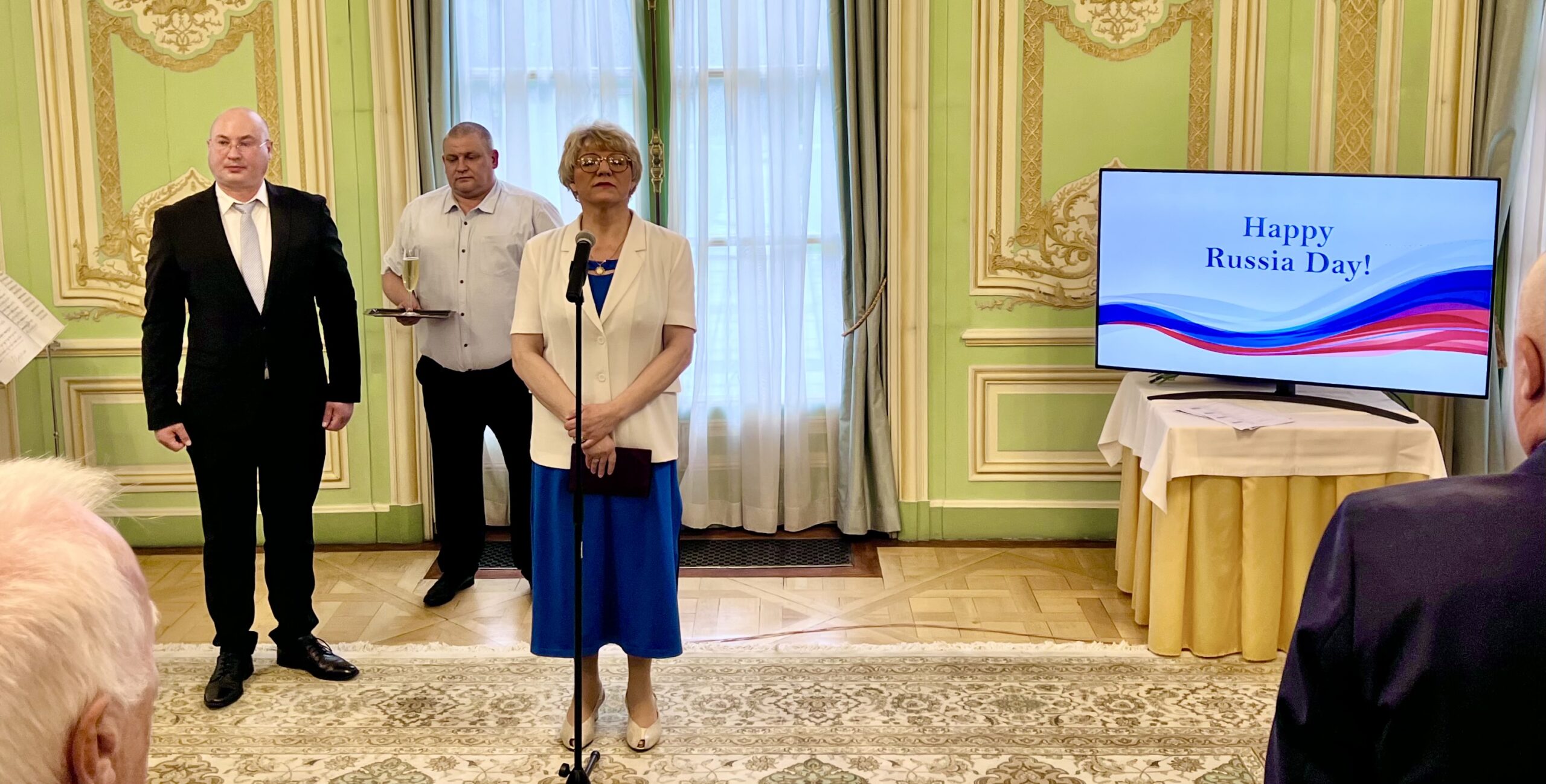
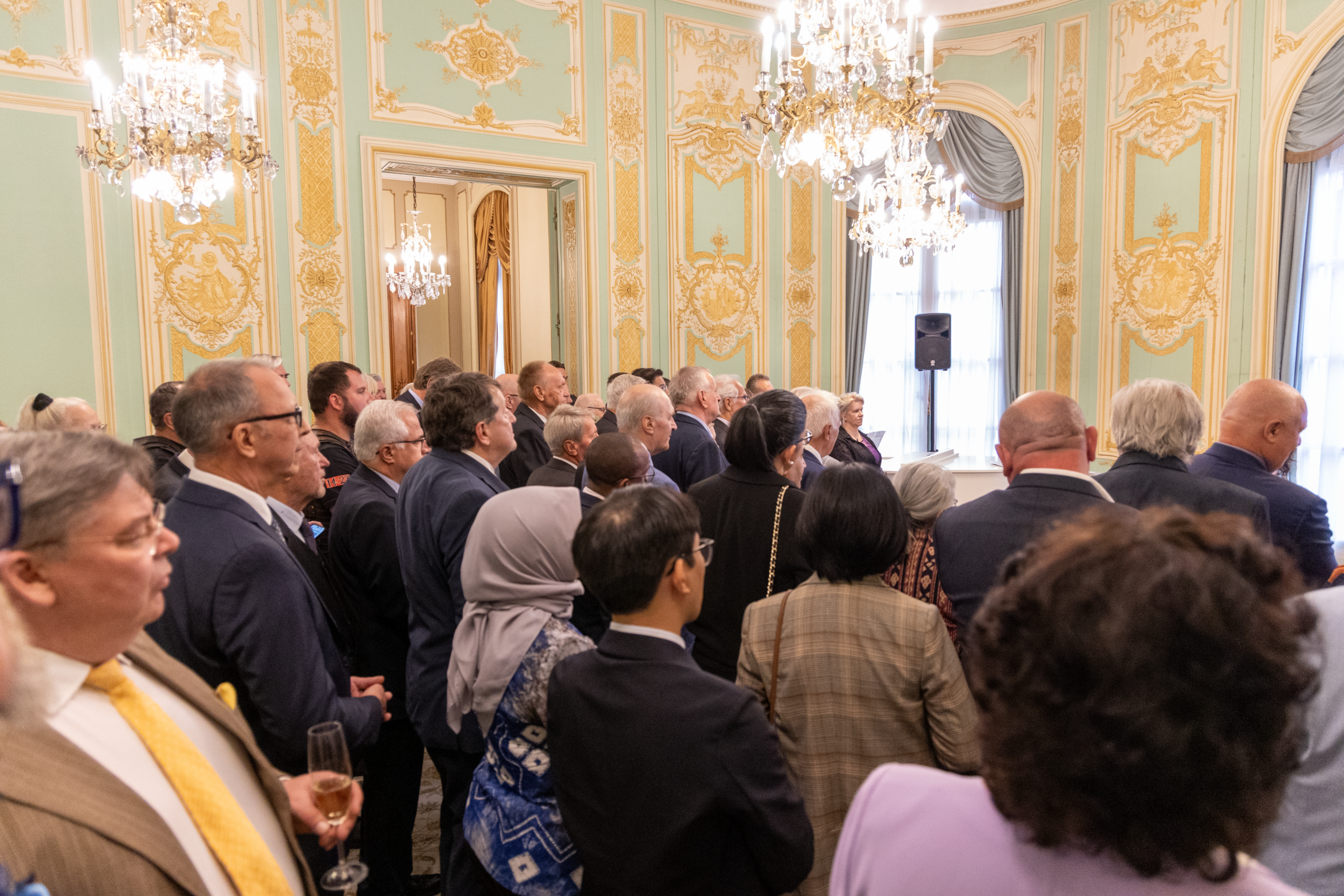
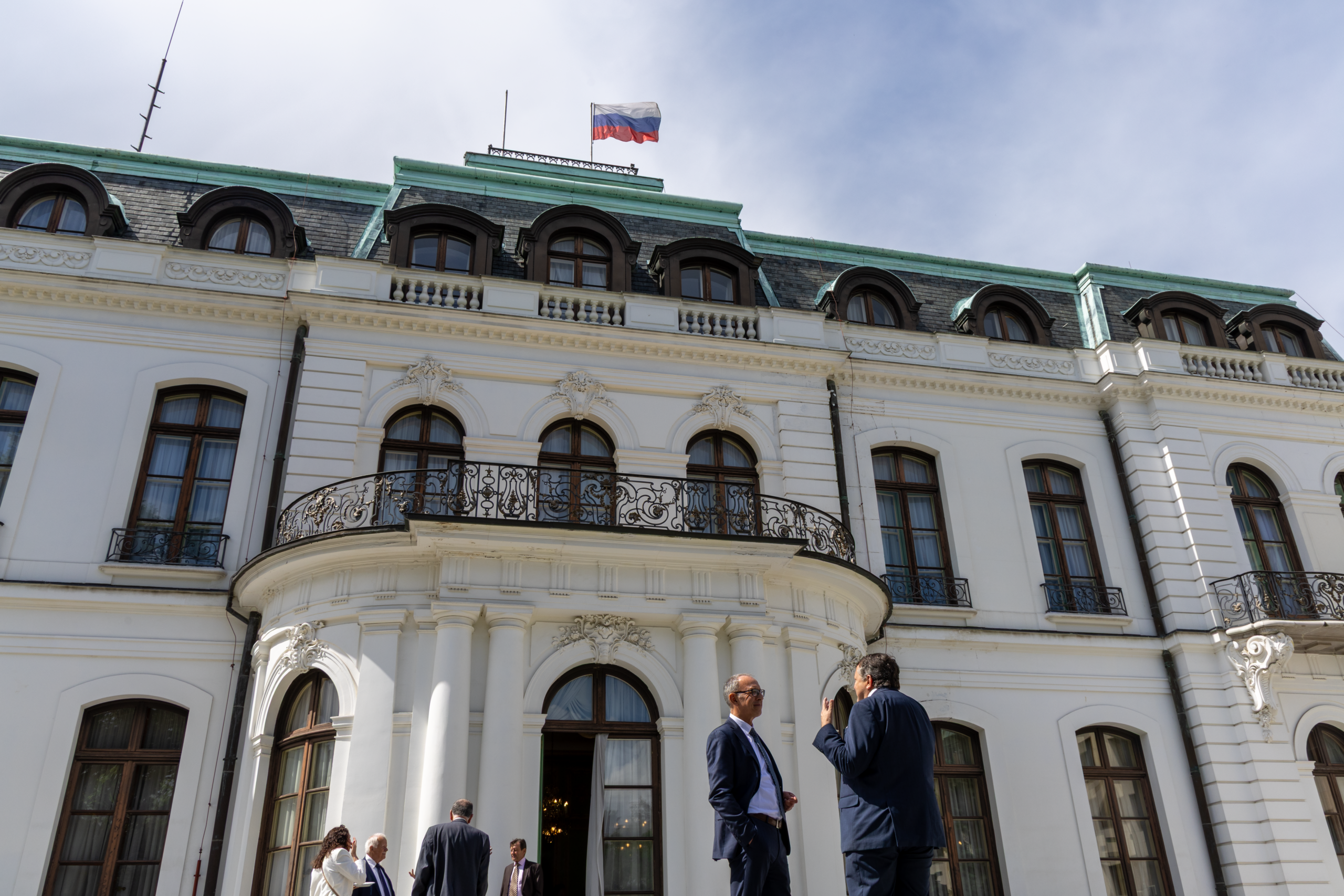
On the evening of 11 June 2026, the Embassy of the Russian Federation in Prague hosted its traditional Reception on the Occasion of Russia Day, one of the embassy’s most important annual diplomatic events. Held at the embassy’s historic compound in Prague 6, the reception brought together representatives of the diplomatic corps, government officials, politicians, business leaders, journalists and members of the international community.
The 2026 celebration carried particular significance because it marked the first major public appearance of Ambassador Anna Vladimirovna Ponomaryova. Although appointed at the end of December 2025, she arrived in Prague only at the end of May 2026 and presented her credentials to the President of the Czech Republic shortly before the national day celebrations.
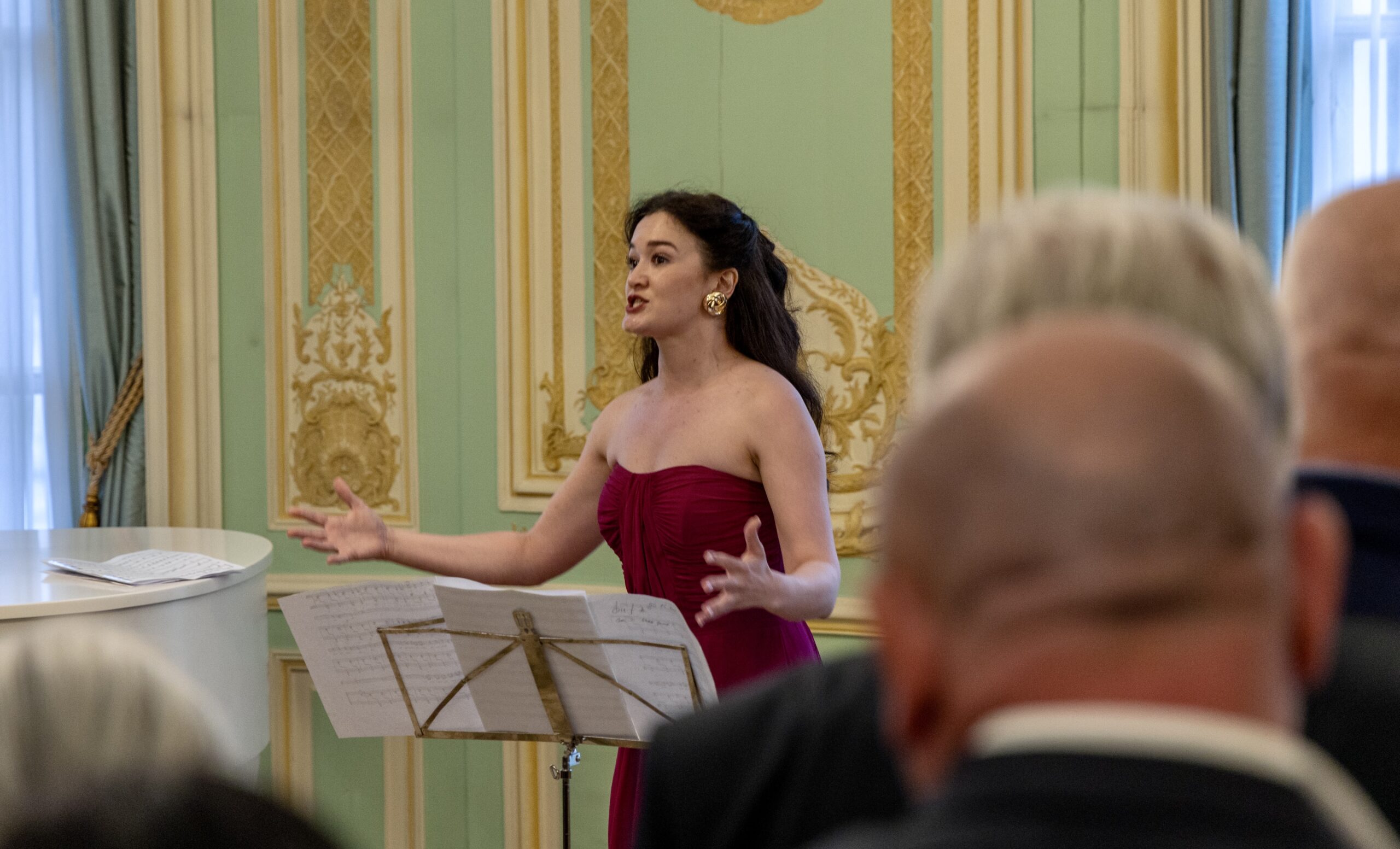
The official programme opened with the national anthems of the Russian Federation and the Czech Republic, followed by Ambassador Ponomaryova’s first Russia Day address in Prague. She emphasized the historical, cultural and economic ties linking Russia and the Czech lands and stressed the importance of diplomatic dialogue even during periods of political disagreement.
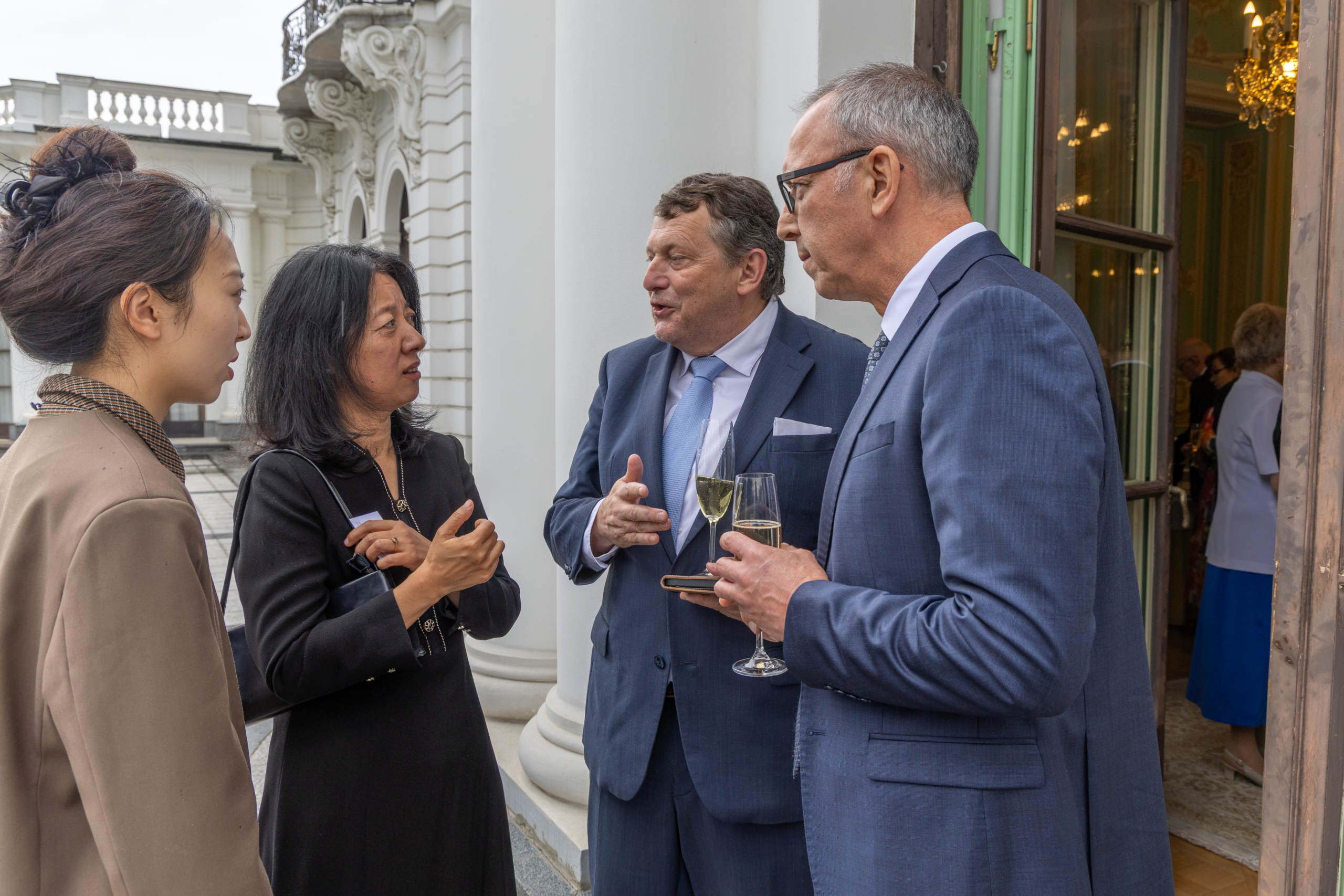
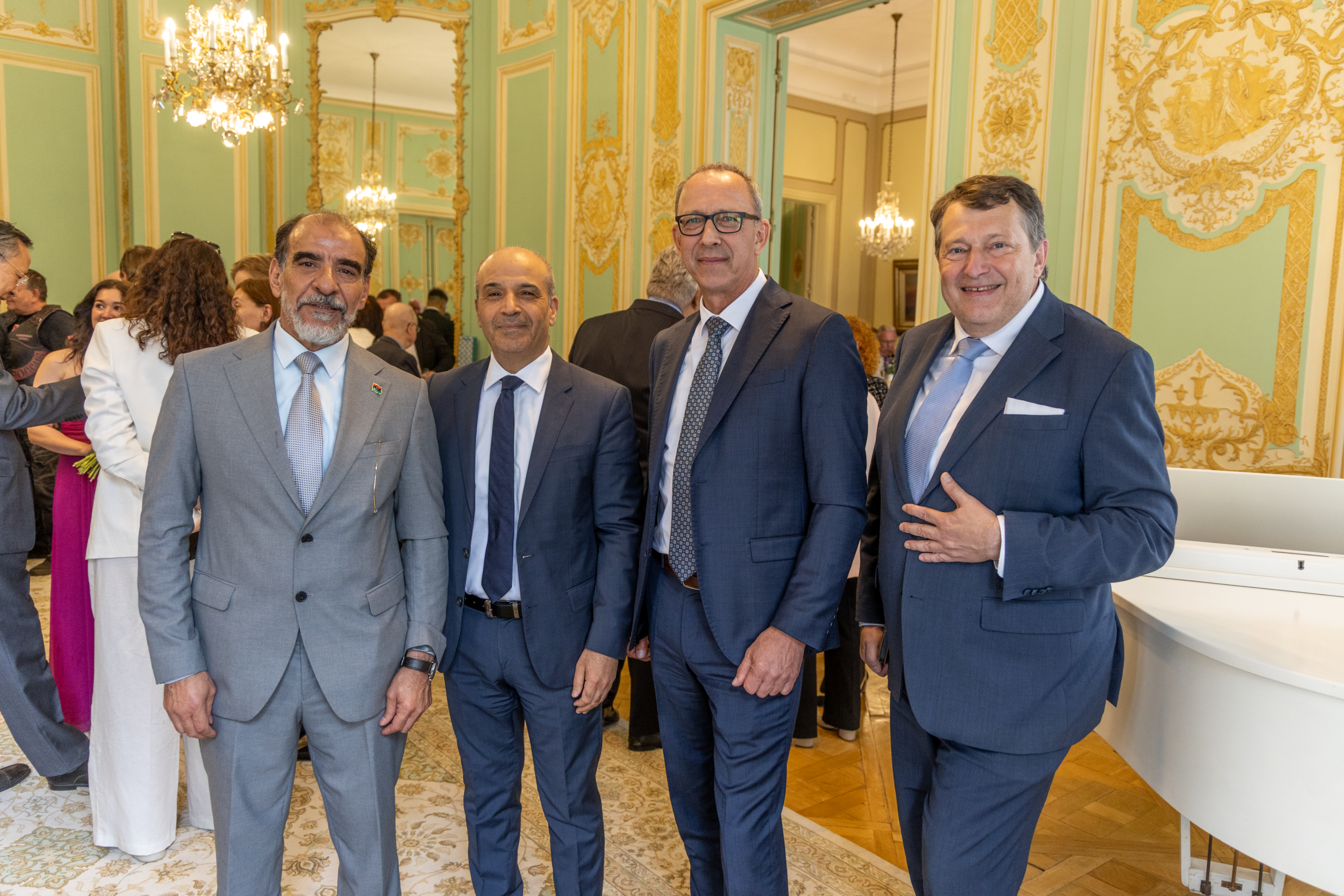
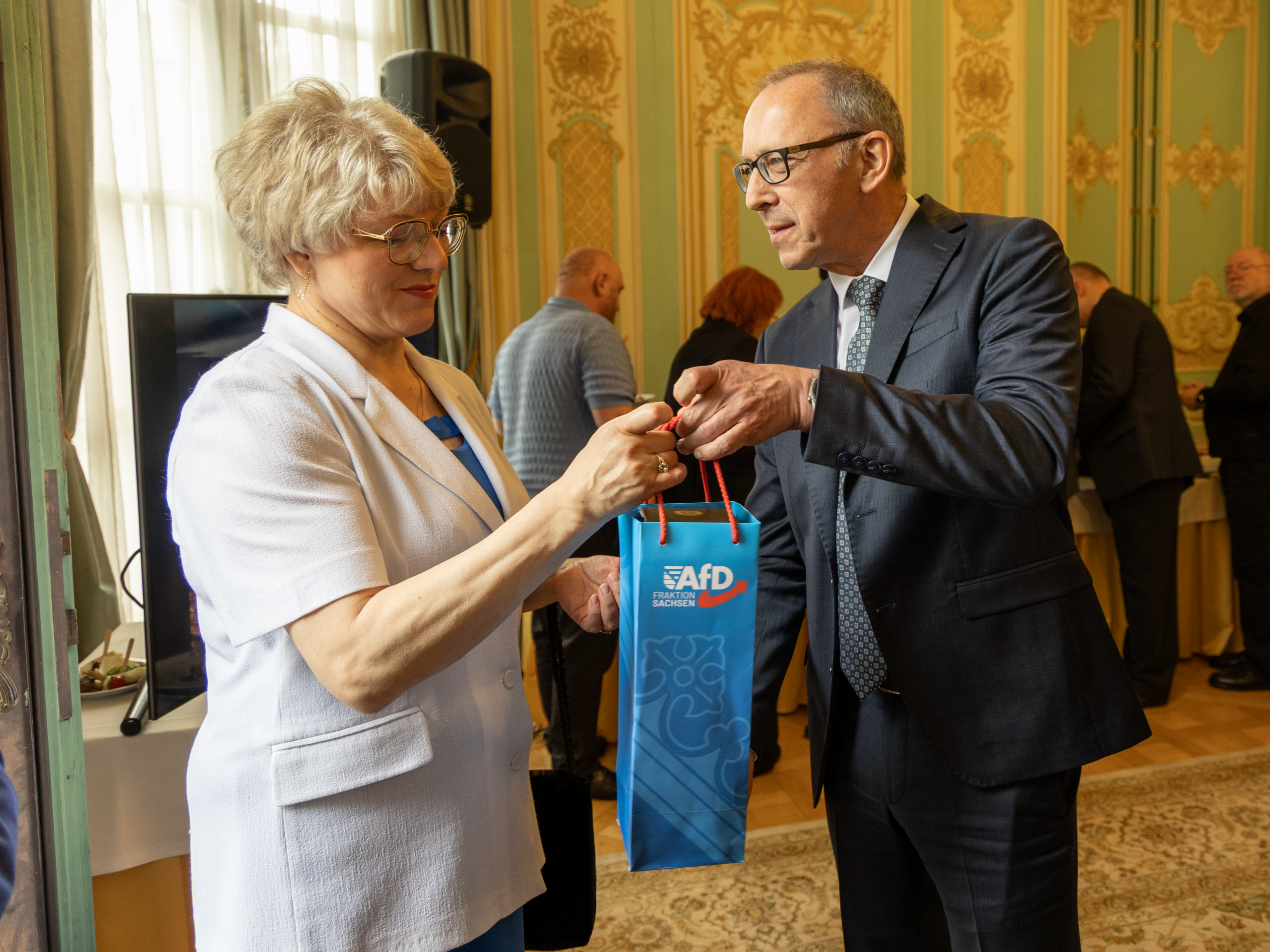
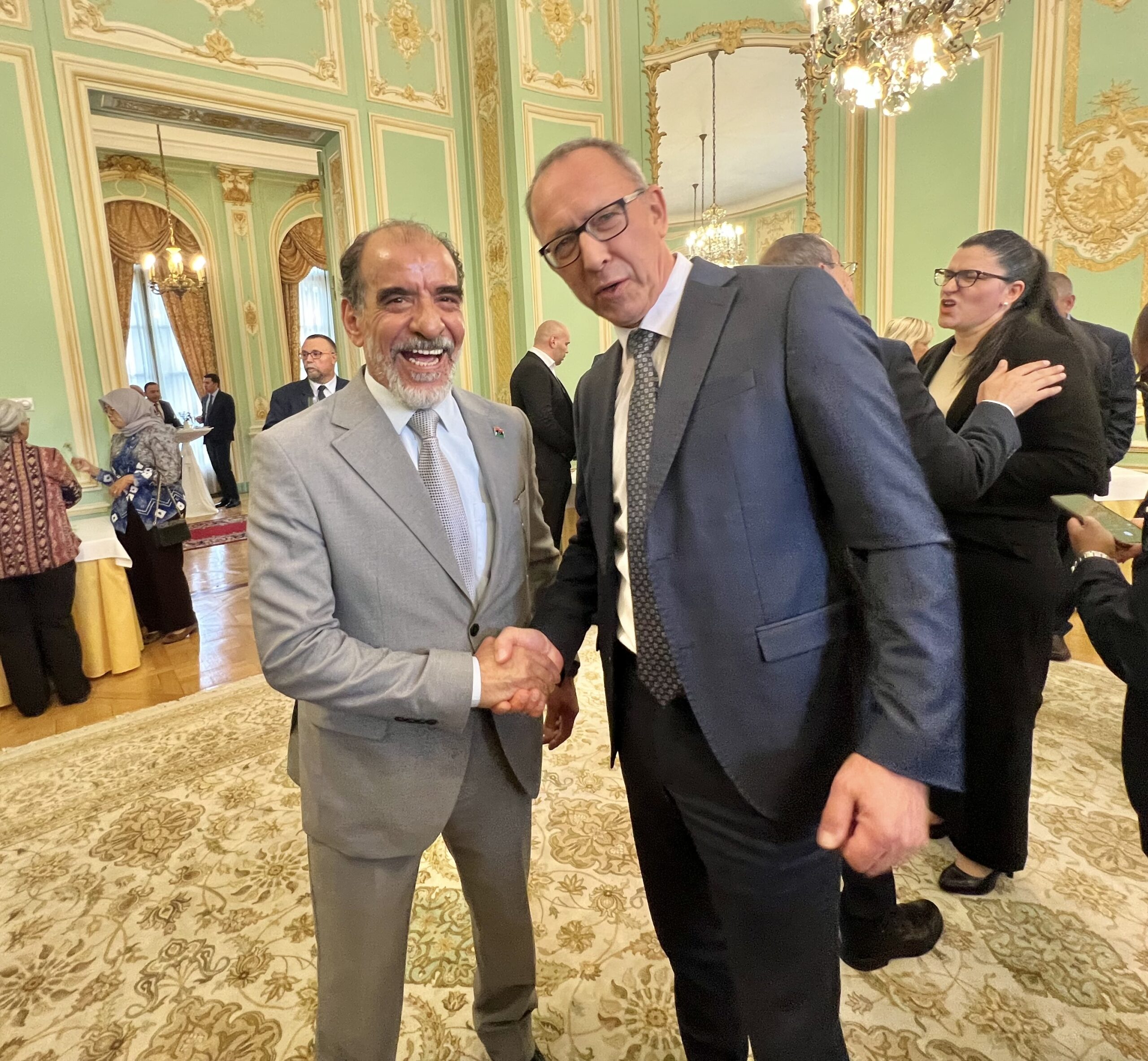
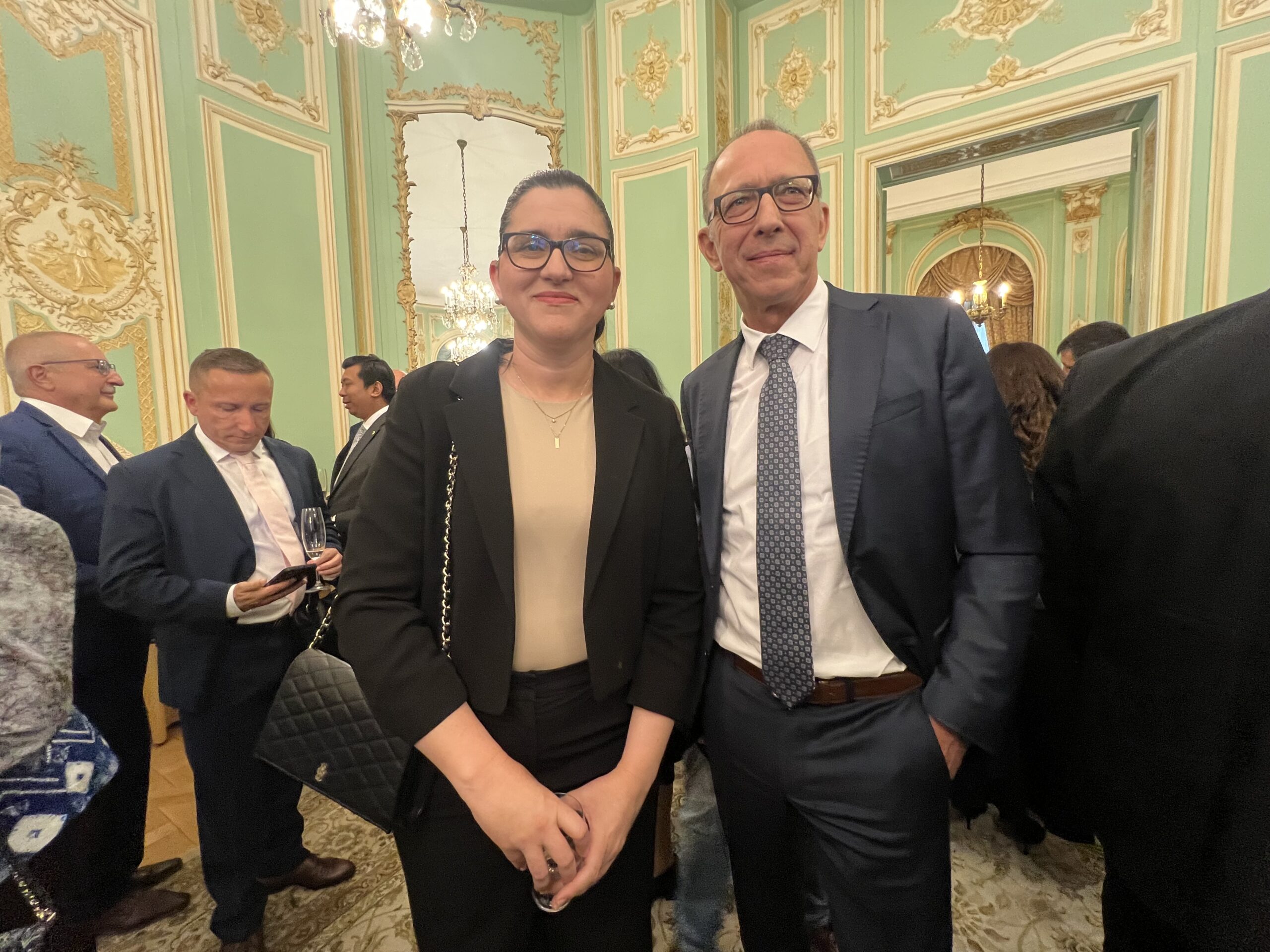
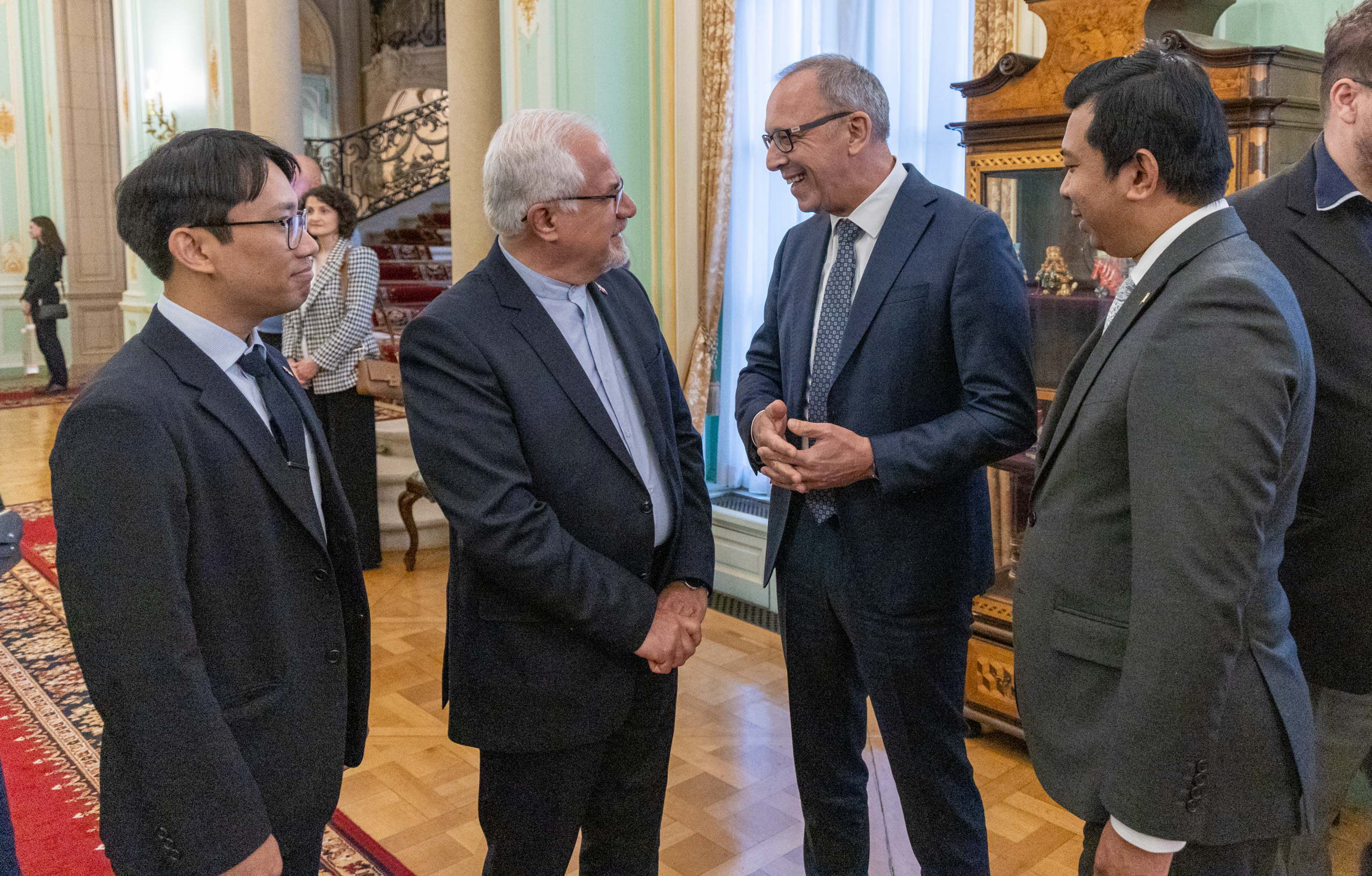
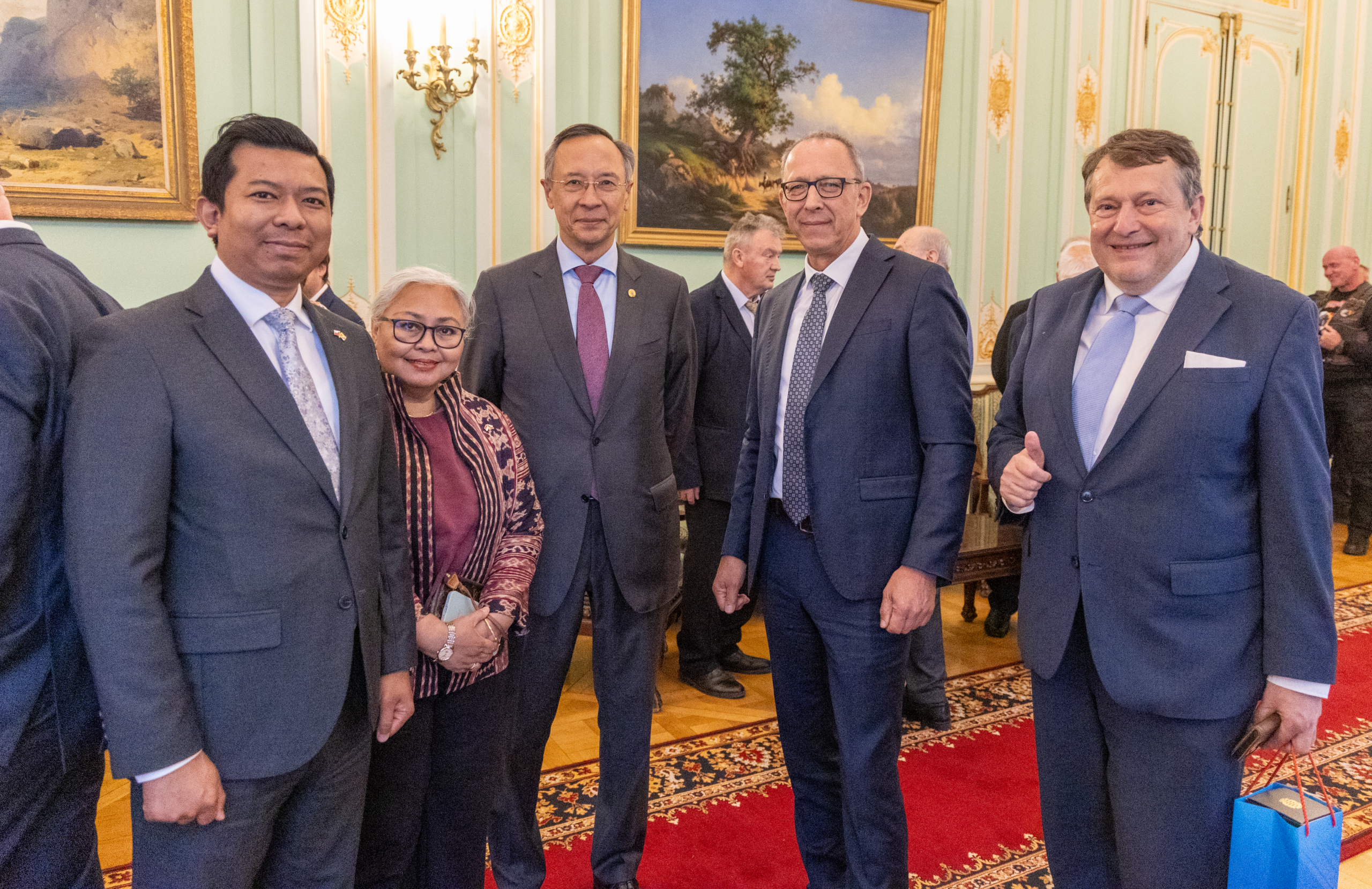
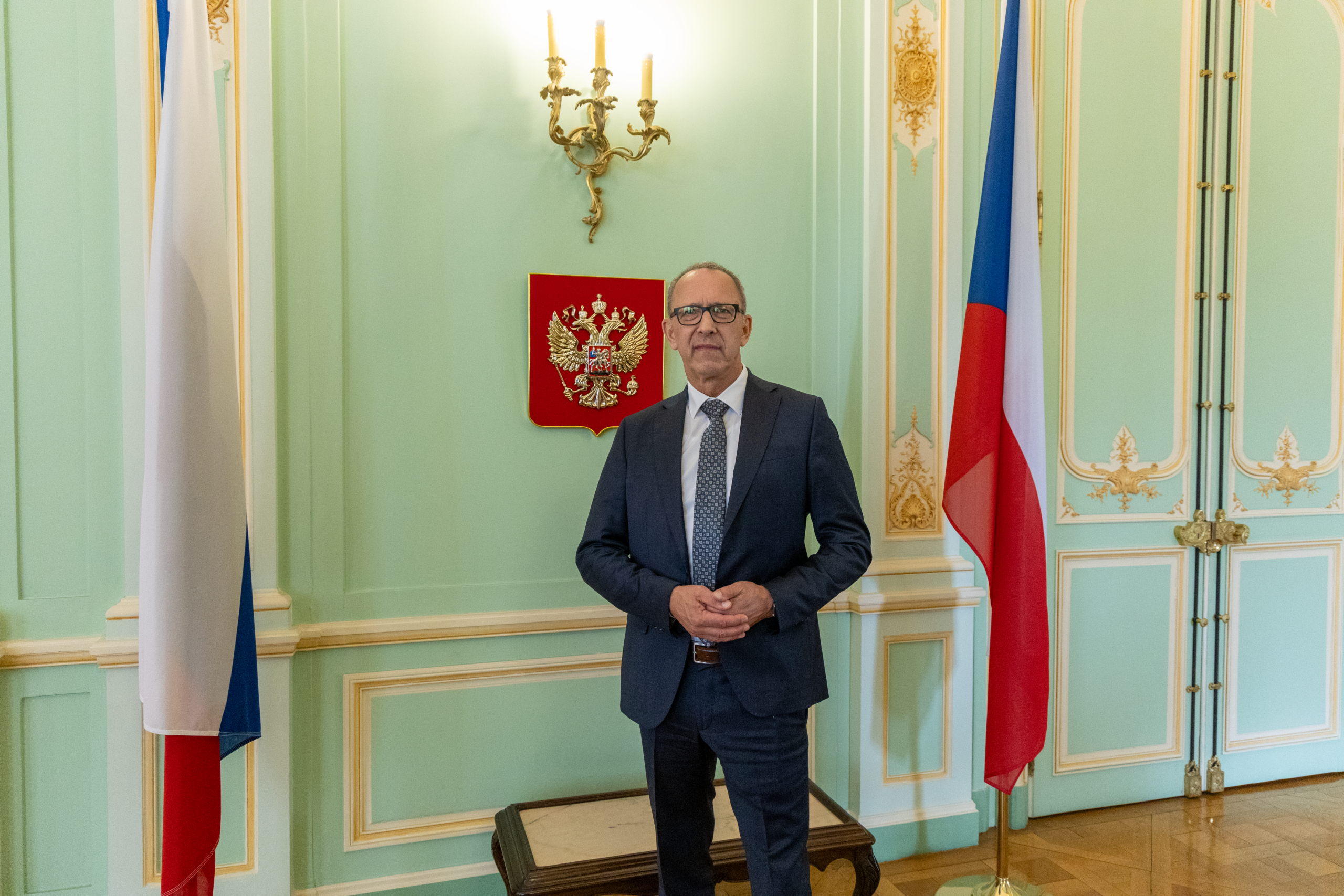
According to the author’s personal observations, ambassadors and senior diplomats from the BRICS countries and numerous nations from Asia, Africa, Latin America and the Middle East attended the reception. Jörg Urban, Chairman of the AfD in Saxony and Chairman of the AfD parliamentary group in the Saxon State Parliament, was among the invited guests.
In contrast, ambassadors representing most EU member states, NATO allies, Japan and South Korea were not present. This reflects the author’s personal observations during the event and should not be interpreted as an official attendance list.
After the formal programme, guests enjoyed a reception featuring traditional Russian cuisine and beverages while continuing discussions in an informal atmosphere. For Ambassador Ponomaryova, the evening marked not only the celebration of Russia Day but also the public beginning of her diplomatic mission in Prague.
The History of Russia Day
Every year on 12 June, the Russian Federation celebrates Russia Day (Den’ Rossii), its national holiday commemorating the Declaration of State Sovereignty adopted on 12 June 1990 by the Russian Soviet Federative Socialist Republic. The declaration established the supremacy of Russian law over Soviet legislation and marked the constitutional beginning of the modern Russian state.
One year later, on 12 June 1991, Boris Yeltsin was elected as the first President of Russia in the country’s first direct presidential election. Following the dissolution of the Soviet Union in December 1991, the Russian Federation emerged as its internationally recognised successor state.
Originally known as the Day of the Adoption of the Declaration of State Sovereignty, the holiday was officially renamed Russia Day in 2002. While it is sometimes informally described abroad as ‘Russian Independence Day’, this is not its official designation.
Today, Russia Day is celebrated across the country with concerts, cultural festivals, official ceremonies and fireworks. The central state ceremony traditionally takes place in the Kremlin, where the President presents State Prizes of the Russian Federation to distinguished citizens in science, culture, literature and the arts.
For Russian embassies around the world, Russia Day receptions represent an important diplomatic tradition, bringing together representatives of governments, diplomatic missions, business and cultural institutions in an atmosphere intended to encourage dialogue and international contacts.
The Embassy of the Russian Federation in Prague
The Embassy of the Russian Federation in Prague occupies one of the city’s most historically significant diplomatic compounds. The principal residence was originally built in 1927 as the villa of Prague banker Jiří Popper. During the Second World War the property was used by the German occupation authorities. After the war it passed into Soviet use and became the Embassy of the Soviet Union. Since the dissolution of the USSR in 1991 and the establishment of the Czech Republic in 1993, it has served as the Embassy of the Russian Federation.
Located in Prague 6, the extensive embassy complex has witnessed dramatic chapters of European history, from the Cold War to the political transformations following 1989. It has long been one of Russia’s most important diplomatic missions in Central Europe.
The reception on the occasion of Russia Day therefore takes place in surroundings that reflect nearly eight decades of Soviet and Russian diplomatic presence in Prague. The ceremonial halls, reception rooms and gardens provide an impressive setting for official meetings and national day celebrations.
In recent years the embassy has remained an important venue for contacts with representatives of countries maintaining diplomatic relations with Russia. The 2026 reception, introducing Ambassador Anna Vladimirovna Ponomaryova to Prague’s diplomatic community, added another chapter to the long history of this remarkable diplomatic residence.
Ambassador Anna Vladimirovna Ponomaryova
One of the defining moments of the 2026 Russia Day reception was the public introduction of Ambassador Anna Vladimirovna Ponomaryova, who had only recently assumed her duties as Ambassador Extraordinary and Plenipotentiary of the Russian Federation to the Czech Republic.
Ponomaryova has a long-standing connection with the Czech Republic. She graduated from Charles University in Prague in 1994, where she studied Czech language and related regional studies. Her years as a student provided her with an excellent command of Czech and a deep understanding of the country’s history, culture and society. In addition to Russian, she also speaks Czech, Slovak, English and Italian.
Following her university education, she joined the diplomatic service of the Russian Federation and built a career focused largely on Central Europe. Between 2012 and 2016 she served at the Russian Embassy in Prague as a senior diplomat, gaining first-hand experience of Czech politics, business, media and diplomatic life. Colleagues have often described her as a specialist on Czech affairs thanks to her linguistic abilities and extensive local knowledge.
After returning to Moscow, she held senior positions within the Ministry of Foreign Affairs before being appointed Ambassador to the Czech Republic at the end of December 2025. Although formally appointed at that time, she arrived in Prague only at the end of May 2026. Shortly before the Russia Day celebrations she presented her credentials to the President of the Czech Republic, thereby officially commencing her mission.
Her appearance at the embassy’s national day reception therefore represented much more than a ceremonial speech. It was her first opportunity to introduce herself personally to Prague’s diplomatic community, representatives of Czech public life and international guests attending one of the embassy’s most important annual events.
In her address she emphasized the importance of dialogue, cultural exchange and maintaining professional diplomatic communication even during periods of political disagreement. Her personal familiarity with the Czech Republic gives her a unique perspective among Russian diplomats serving abroad.
The author’s observation is that Ambassador Ponomaryova appeared confident, approachable and thoroughly familiar with the Czech environment, qualities that are likely to influence her diplomatic work during the coming years.
Ambassador Alexander Zmeyevsky: Nearly a Decade in Prague
Before Ambassador Anna Vladimirovna Ponomaryova assumed her post, the Russian Embassy in Prague was headed for almost a decade by Ambassador Alexander Vladimirovich Zmeyevsky. Appointed in February 2016, he became one of the longest-serving Russian ambassadors to the Czech Republic in the post-Cold War period.
His tenure coincided with one of the most challenging periods in Czech–Russian relations. During these years, bilateral relations deteriorated significantly due to geopolitical developments, diplomatic disputes and the consequences of Russia’s full-scale invasion of Ukraine in 2022. Diplomatic staff on both sides were reduced and official political dialogue became increasingly limited.
Despite these tensions, Ambassador Zmeyevsky remained the Russian Federation’s senior diplomatic representative in Prague. He regularly represented his country at official events hosted by the embassy and maintained contacts with those members of the diplomatic community who continued to engage with the Russian mission.
According to the author’s personal observations, Ambassador Zmeyevsky was still leading official functions at the Russian Embassy as recently as the reception marking Victory Day in early May 2026. Only towards the end of May did he conclude his mission and leave Prague, after which Ambassador Ponomaryova arrived to assume her duties.
Commentary by the Author: In my view, the unusually long duration of Ambassador Zmeyevsky’s assignment may have reflected the difficulty of accrediting a successor during the previous Czech government’s term. While Ambassador Ponomaryova had been formally appointed by Moscow in December 2025, she arrived in Prague only at the end of May 2026 and presented her credentials shortly before Russia Day. This interpretation is my personal assessment; neither the Russian nor the Czech authorities have publicly confirmed that this was the reason for the timing of the transition.
The transition from Ambassador Zmeyevsky to Ambassador Ponomaryova therefore represented not merely a routine diplomatic change but the beginning of a new phase in Russia’s representation in Prague.
The Reception and Its Atmosphere
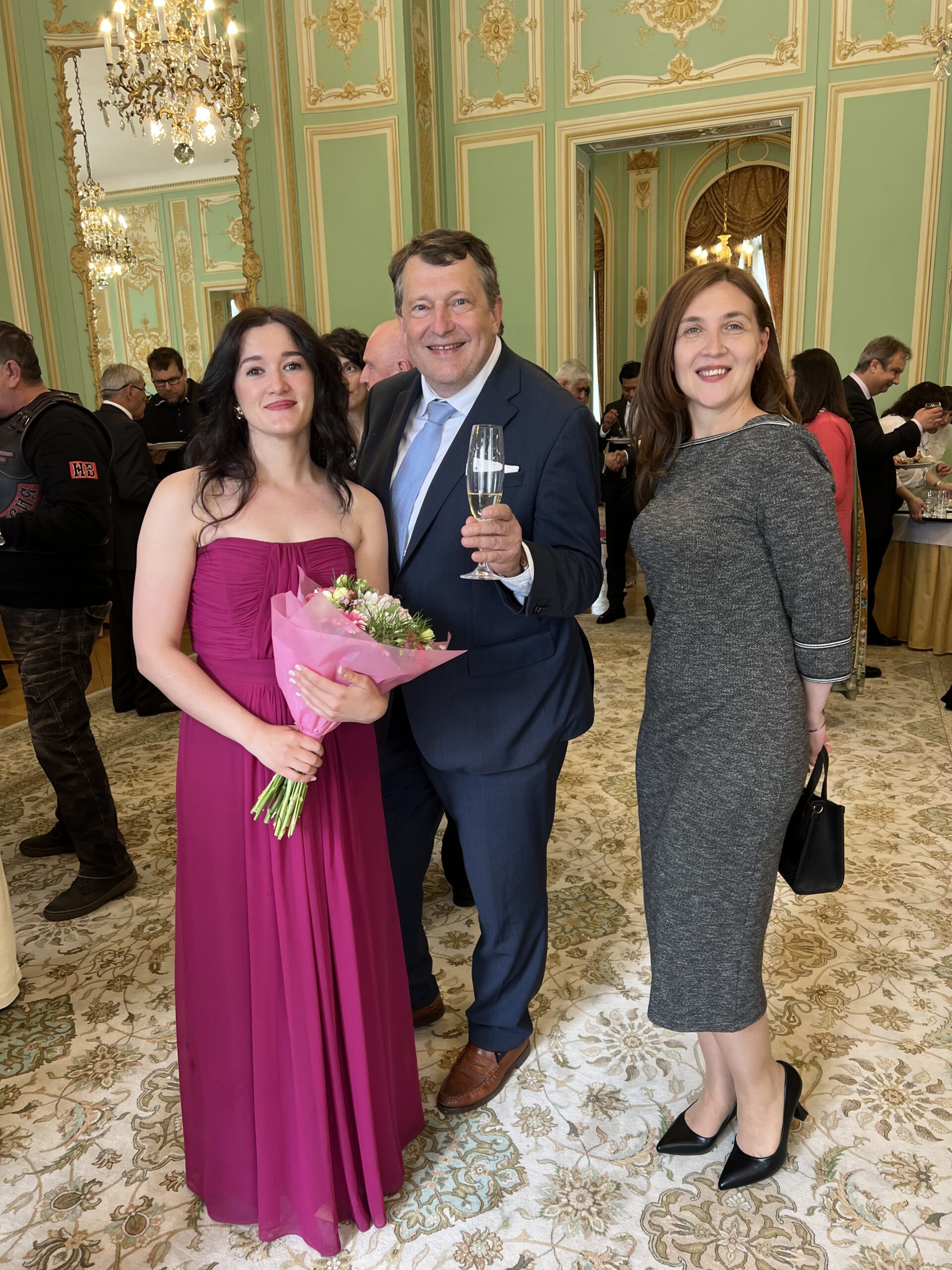
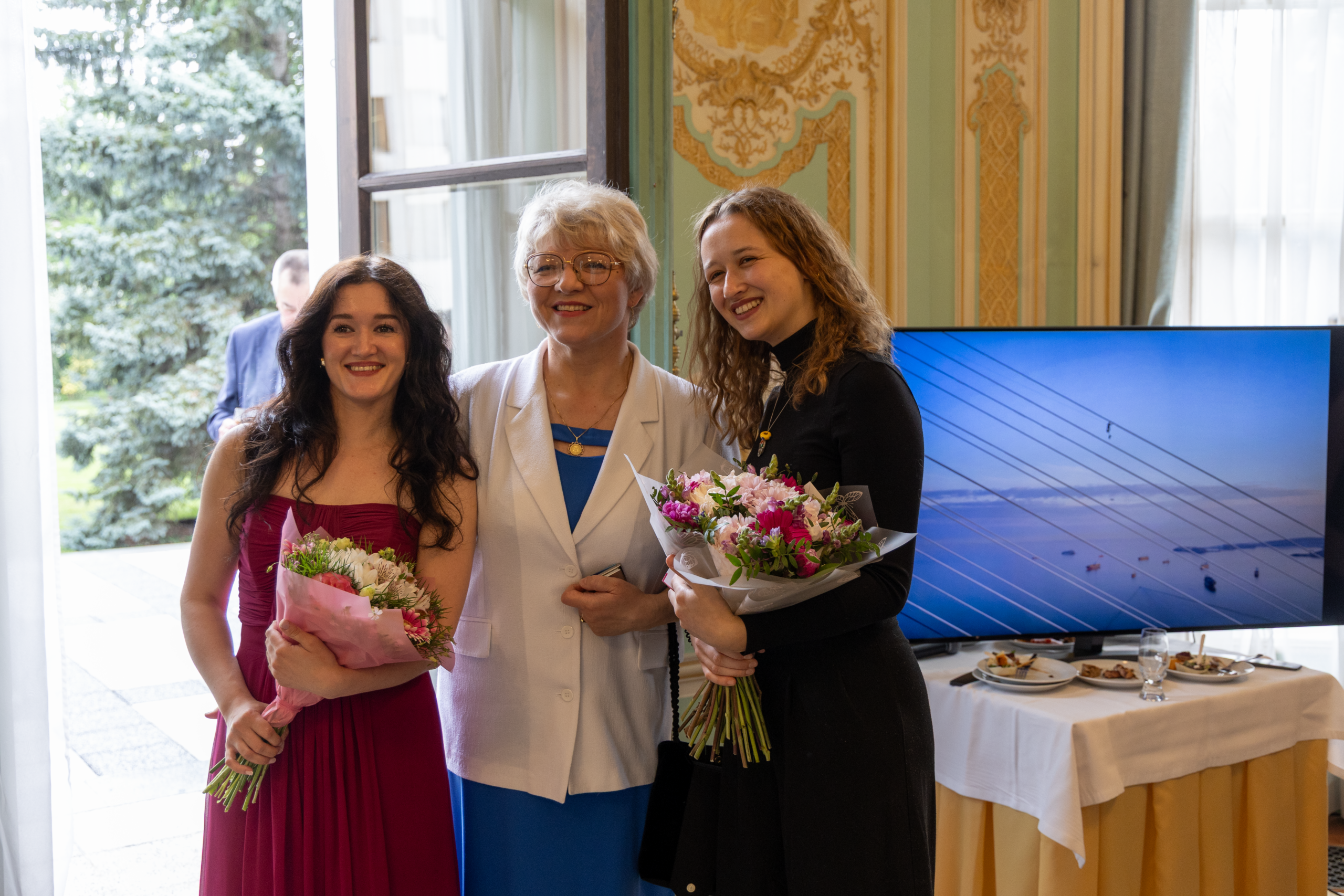
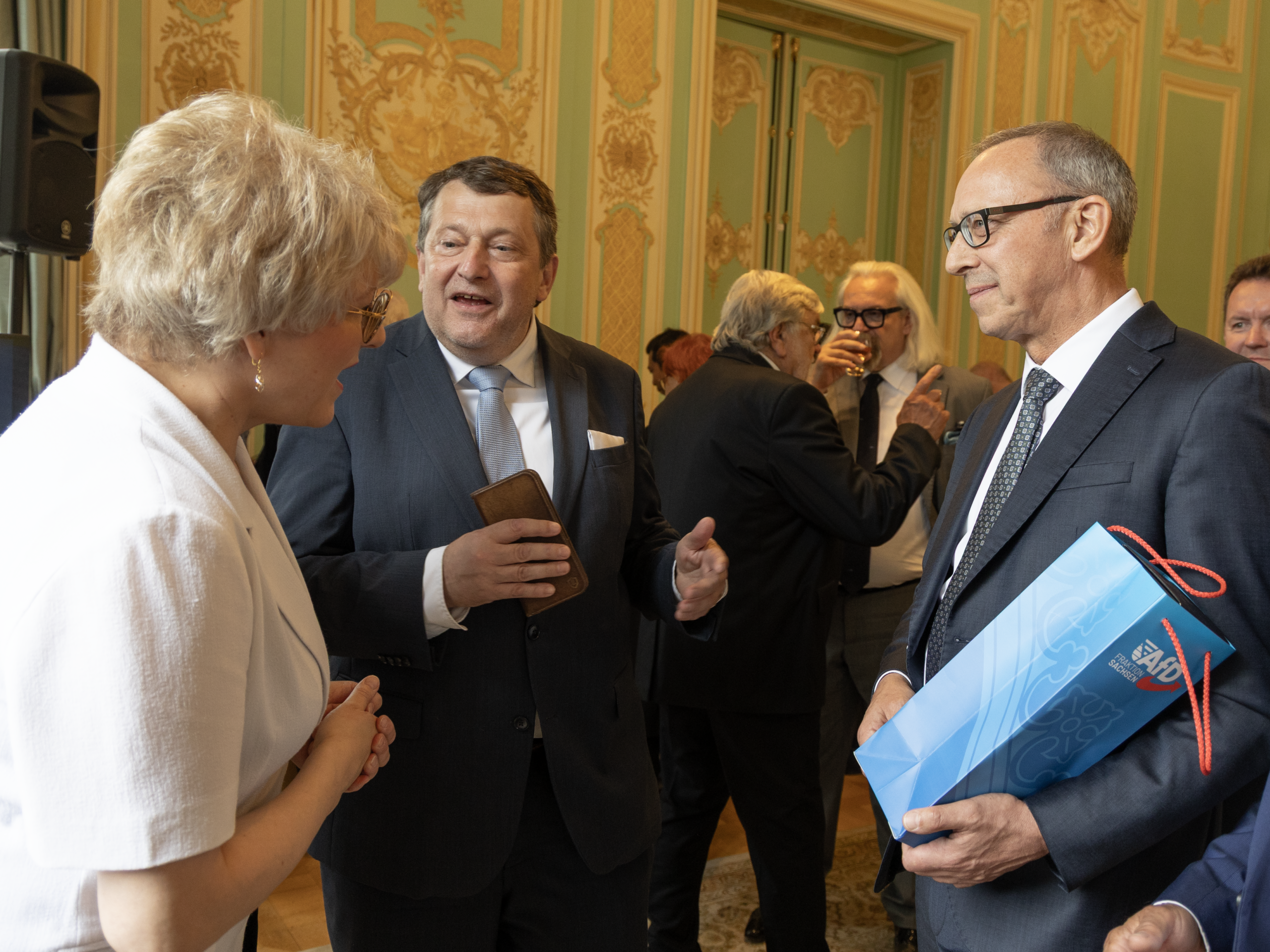
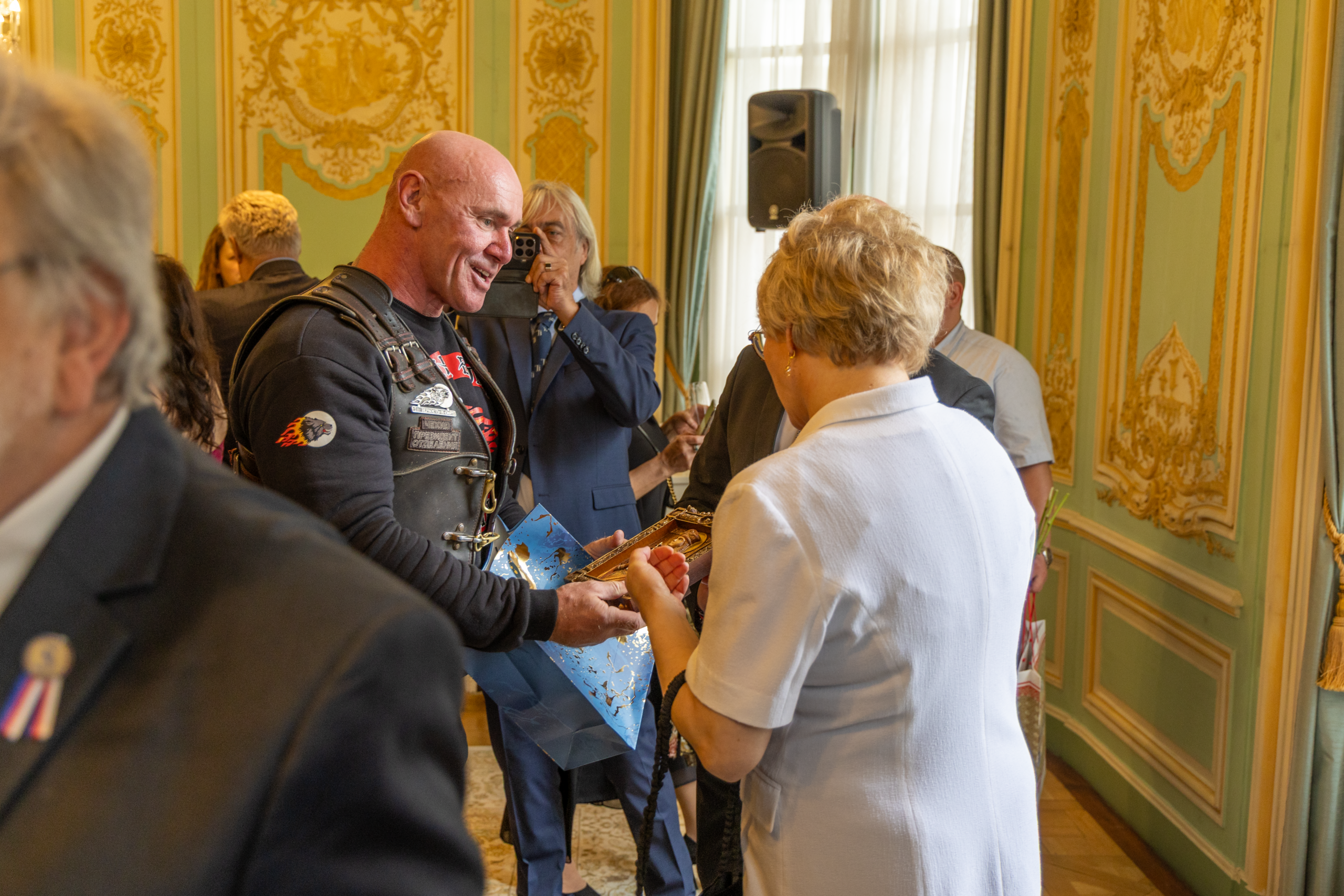
Following the official ceremony, the Russia Day reception continued in the elegant reception halls and gardens of the Embassy of the Russian Federation in Prague. Guests had the opportunity to meet members of the diplomatic corps, representatives of public life and the embassy staff in a relaxed setting that encouraged conversation and professional exchange.
According to the author’s personal observations, the event attracted a broad international audience. Ambassadors and senior diplomats from the BRICS countries, together with representatives from many nations in Asia, Africa, Latin America and the Middle East, were present throughout the evening. The author also observed that ambassadors representing most EU member states, NATO countries, Japan and South Korea did not attend. This reflects the author’s own observations and should not be interpreted as an official attendance record.
Among the guests was Jörg Urban, Chairman of the AfD in Saxony and Chairman of the AfD parliamentary group in the Saxon State Parliament, who attended as a guest of the Embassy.
After Ambassador Anna Vladimirovna Ponomaryova’s address and the performance of the national anthems of the Russian Federation and the Czech Republic, the formal programme gave way to informal discussions. Diplomats, politicians, business representatives and journalists exchanged views on current international developments as well as cultural and economic topics.
The reception featured a wide selection of traditional Russian cuisine, desserts and beverages. Guests sampled classic specialities while continuing conversations in an atmosphere that combined diplomatic protocol with Russian hospitality.
Despite the complex political environment, the evening illustrated one of diplomacy’s enduring characteristics: national day receptions remain valuable occasions for maintaining personal contacts and open channels of communication, even when formal political dialogue is limited.
The Diplomatic Significance of National Day Receptions
National day receptions are among the oldest traditions of modern diplomacy. Every embassy accredited abroad celebrates the national day of its home country by inviting representatives of the host government, the diplomatic corps, business leaders, academics, journalists and cultural figures.
Beyond protocol, these receptions provide valuable opportunities for informal dialogue. Conversations held during such events often help maintain personal contacts even when official political relations are strained.
In Prague, national day receptions form an important part of the diplomatic calendar. They enable embassies to present their history, culture and cuisine while strengthening relations with partners and friends. The Russia Day reception of 2026 illustrated how these traditions continue even during periods of geopolitical tension.
From the author’s perspective, the attendance of representatives from numerous countries demonstrated that diplomatic communication remains possible despite political differences.
Author’s Commentary
In my opinion, the appointment of Ambassador Anna Vladimirovna Ponomaryova marks the beginning of a new phase in Russian–Czech diplomatic relations.
Ambassador Alexander Zmeyevsky remained in office for almost ten years and was still representing Russia during the Victory Day reception in May 2026. Although Ambassador Ponomaryova had been appointed in December 2025, she arrived in Prague only at the end of May 2026.
My personal assessment is that the prolonged transition may have reflected the political circumstances surrounding the accreditation of a successor. This is my own opinion and has not been officially confirmed.
Regardless of political differences, maintaining diplomatic dialogue remains essential.
Conclusion
The Reception on the Occasion of Russia Day 2026 was more than an annual diplomatic celebration. It marked the public introduction of a new Russian ambassador and demonstrated the continuing importance of diplomacy.
History shows that political circumstances change, while dialogue remains indispensable.
For Ambassador Anna Vladimirovna Ponomaryova, the evening symbolized the beginning of her mission in Prague and another chapter in the long history of Russian diplomacy in the Czech Republic.
Recent posts
See AllPrague Forum Membership
Join us
Be part of building bridges and channels to engage all the international key voices and decision makers living in the Czech Republic.
Become a member